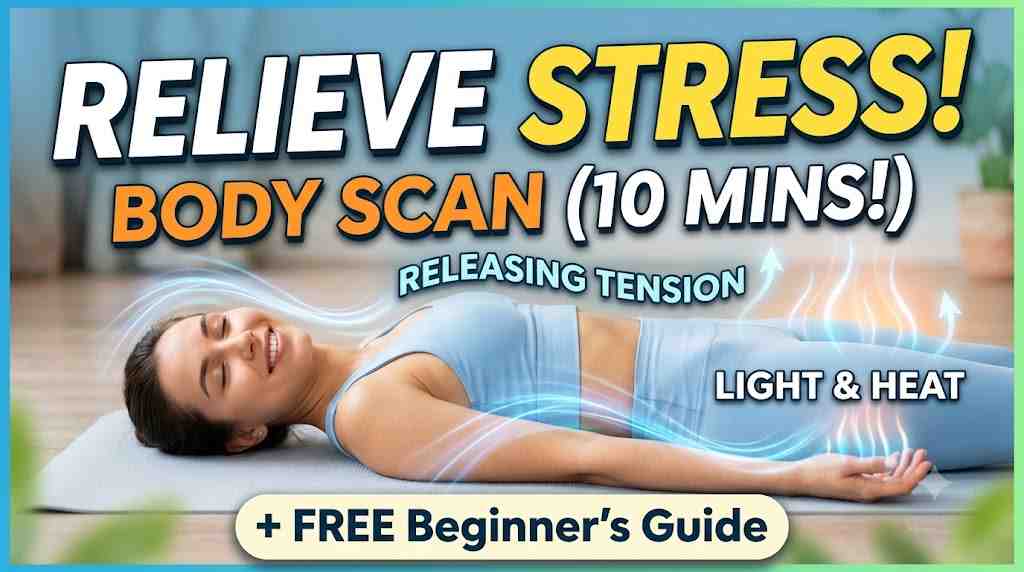
The body scan meditation is one of the foundational practices of mindfulness-based interventions — and it is particularly valuable because it bridges the gap between mental and physical stress. Many people carry significant physical tension (tight shoulders, clenched jaw, shallow breathing, braced abdomen) without awareness — the body holds stress that the conscious mind has learned to ignore. The body scan brings deliberate, nonjudgmental attention to each part of the body in turn, allowing this held tension to be noticed and released.
Body scan meditation is a cornerstone of Mindfulness-Based Stress Reduction (MBSR) — the 8-week program developed by Jon Kabat-Zinn at the University of Massachusetts Medical School that is now used in hundreds of hospitals and clinics worldwide and has the largest clinical evidence base of any mindfulness intervention.
Quick TakeawayBody scan meditation works by directing attention systematically through the body, activating the parasympathetic nervous system, reducing cortisol, and releasing chronically held muscular tension. Research has found it effective for chronic pain, insomnia, anxiety, and stress reduction — with meaningful benefits appearing after 3–4 weeks of regular practice.
Why the Body Scan Works
Chronic stress produces sustained activation of the sympathetic nervous system, which keeps muscles in a state of low-grade contraction, constricts breathing, and maintains cortisol at elevated levels. Most people are unaware of this physical stress holding because it has become their baseline — the tension in the shoulders or the shallow breathing feels "normal." The body scan interrupts this pattern by directing conscious attention to specific body regions, activating interoception (awareness of internal bodily sensations), and signaling the nervous system to downregulate through the attention and breath connection.
Research using physiological measures has found that body scan practice reduces muscle tension, lowers heart rate, decreases cortisol levels, and activates the parasympathetic (rest-and-digest) nervous system. A 2019 study found that a single body scan session reduced cortisol levels and self-reported stress significantly in a group of healthcare workers — with no prior meditation experience required.
Step-by-Step Body Scan Meditation (10–15 Minutes)
Setup (1 minute)
Lie on your back on a bed, yoga mat, or floor. If lying down makes you fall asleep, sit upright in a chair instead. Close your eyes. Allow your feet to fall naturally outward and your hands to rest comfortably at your sides, palms facing upward. Take three slow, deep breaths — in through the nose, out through the mouth — to begin shifting the nervous system toward a more receptive state.
Feet and Lower Legs (2 minutes)
Bring your full attention to the soles of your feet. Notice any sensations — warmth, coolness, tingling, pressure, or perhaps nothing at all. Simply notice, without trying to change anything. Allow the muscles of your feet to soften as you exhale. Slowly move your attention up through your ankles, the backs of your calves, your shins. Wherever you notice tension, allow each exhale to release it slightly. You're not forcing relaxation — simply inviting it with attention.
Knees, Thighs, and Hips (2 minutes)
Move attention up through the knees, noticing any sensation — and then into the thighs. The thighs often hold significant stress-related tension, particularly in people who sit for extended periods. Notice the weight of the thighs against the floor or chair. As you breathe out, invite the thigh muscles to let go of any held contraction. Move attention through the hips and gluteal muscles — areas that commonly accumulate tension from sitting and from stress-driven postural holding.
Abdomen and Lower Back (2 minutes)
Notice how the abdomen moves with the breath — rising on the inhale, falling on the exhale. Many people breathe shallowly into the chest during stress, leaving the abdomen rigid. Allow the belly to soften completely with each exhale. Move attention to the lower back — an area where stress and emotional tension are frequently held. Without forcing, notice whether this area can release slightly as you exhale.
Chest, Upper Back, and Shoulders (2 minutes)
The chest and shoulders are among the most common sites of stress-related tension. Notice whether you're holding the shoulders slightly raised — a very common stress-holding pattern. On the next exhale, allow the shoulders to drop toward the floor or chair back. Feel the chest expand slightly with each inhale and soften with each exhale. Notice the upper back — the area between the shoulder blades — and invite any held tension there to soften.
Neck, Face, and Scalp (2 minutes)
Move attention to the neck — the front, sides, and back. Notice any stiffness or tension. The face holds an extraordinary amount of stress — the jaw is one of the most common tension-holding locations in the body. Notice whether the teeth are slightly clenched — allow the jaw to relax so there is a small space between the upper and lower teeth. Soften the muscles around the eyes, the forehead, the scalp. Allow the entire face to become smooth and relaxed with each exhale.
Whole-Body Awareness (2 minutes)
After completing the scan, spend a final moment with awareness of the body as a whole — noticing how it feels in its entirety after the systematic attention. Take three slow, deep breaths, allowing the sense of ease to deepen with each exhale. When you're ready, gently move your fingers and toes, take a deeper breath, and open your eyes slowly.
Frequently Asked Questions
What if I fall asleep during the body scan?
Falling asleep during the body scan is extremely common — particularly when practiced lying down in the evening. If sleep is your goal, this is a feature rather than a problem. If you want to stay awake, practice sitting upright in a chair, keep your eyes slightly open with a downward gaze, practice earlier in the day, and keep the room slightly cool. Some teachers suggest that falling asleep frequently indicates significant sleep deprivation — the body scan may be revealing a need for more sleep as much as serving as a meditation practice.
Can body scan meditation help with chronic pain?
Yes — body scan meditation is one of the most evidence-supported non-pharmacological interventions for chronic pain management. MBSR programs (which feature body scan practice prominently) have been found in multiple randomized trials to reduce pain intensity, improve pain coping, and reduce pain-related disability in people with chronic low back pain, fibromyalgia, and other chronic pain conditions. The mechanism involves changing the relationship to pain — reducing the fear and resistance that amplify pain signals — rather than eliminating the sensation itself.
Medical Disclaimer: This article is for informational and educational purposes only. Body scan meditation is a wellness practice and is not a substitute for medical treatment for pain, anxiety, or other health conditions. Consult a healthcare provider for persistent pain or significant mental health concerns.