Snacking gets a bad reputation in weight loss conversations, but it doesn't deserve it. The problem isn't snacking itself — it's the type of snacks most Americans default to. Chips, crackers, cookies, and candy provide quick calories with little satiety, leaving you hungry again within an hour. High-protein snacks, by contrast, activate satiety hormones, take longer to digest, and help preserve the lean muscle mass that keeps your metabolism functioning optimally.
Each of the ten snacks below provides at least 10 grams of protein, keeps calories at or under 200, and requires minimal preparation. They're all available at any US grocery store.
Quick TakeawayHigh-protein snacks reduce hunger, support muscle preservation during weight loss, and have a higher thermic effect than carbohydrates or fat — meaning your body burns more calories digesting them. Aim for 15–25g of protein per snack to maximize satiety.
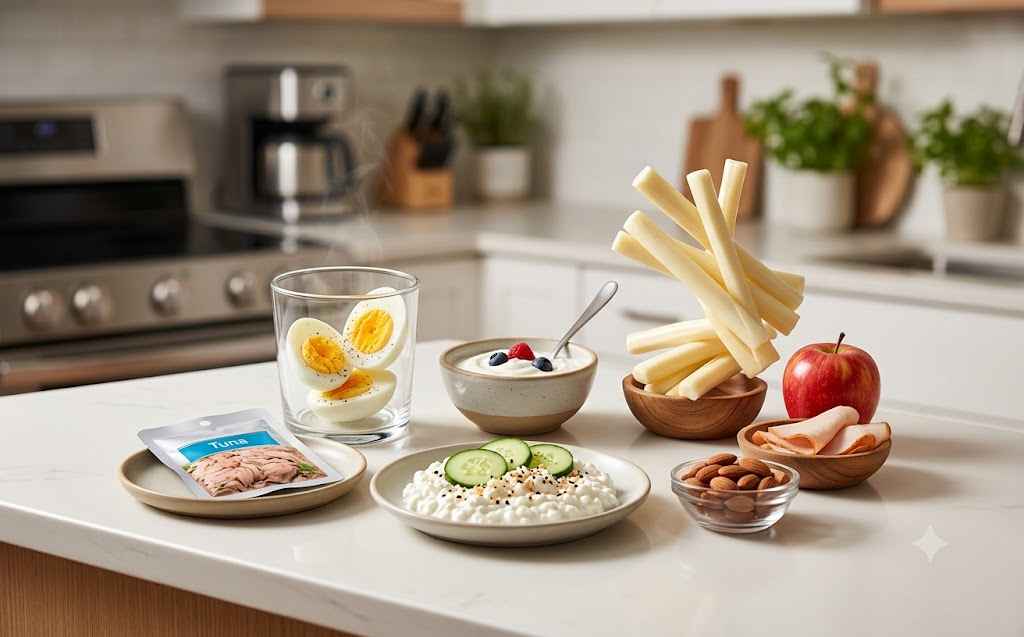
1. Hard-Boiled Eggs (2 eggs = ~140 calories, 12g protein)
Hard-boiled eggs are one of the most convenient, nutrient-dense, high-protein snacks available. Batch cook a dozen at the start of the week and keep them in the refrigerator for grab-and-go snacking. They provide complete protein, healthy fats, choline (important for brain health), and vitamin D. Add a pinch of everything bagel seasoning or a dash of hot sauce for variety.
2. Plain Greek Yogurt — ¾ cup (~120 calories, 15–18g protein)
Plain, non-fat or low-fat Greek yogurt is one of the highest protein-to-calorie ratios of any snack food. Choose plain varieties (avoid flavored versions with added sugar) and add a few berries and a drizzle of honey if you want sweetness. The probiotics in Greek yogurt also support gut health, providing an added benefit beyond protein.
3. Cottage Cheese — ½ cup (~90 calories, 12g protein)
Cottage cheese has made a major comeback in American food culture, and for good reason. It's high in casein protein — a slow-digesting form that promotes prolonged satiety — and very low in calories per gram of protein. Eat it plain, topped with berries, or savory-style with cucumber slices and cracked pepper. It's also an excellent late-night snack because casein digests slowly overnight.
4. Tuna Pouch — 1 packet (~100 calories, 20–22g protein)
Single-serve pouches of light tuna (in water) are one of the highest-protein, lowest-calorie snack options available. They require no refrigeration before opening and take 30 seconds to prepare. Eat straight from the pouch with a fork, mix with a small amount of Greek yogurt instead of mayo, or serve on cucumber slices. Wild-caught light tuna in water is the best option for a clean protein source.
5. String Cheese + a Small Apple (~160 calories, 8g protein)
This classic American snack combination works particularly well because the protein and fat from the cheese slows the digestion of the apple's natural sugars, preventing the blood sugar spike that fruit alone might cause. It's portable, requires no prep, and satisfies both sweet and savory cravings. Choose part-skim mozzarella string cheese for the best protein-to-calorie balance.
6. Roasted Edamame — ½ cup (~120 calories, 11g protein)
Edamame (young soybeans) is one of the few plant foods that provides complete protein — containing all nine essential amino acids. Roasted edamame is available in resealable bags at virtually every US grocery store and provides a satisfying crunch with a savory flavor that works well as a chip substitute. Lightly salted varieties keep sodium reasonable.
7. Almonds + Turkey Slice (~180 calories, 14g protein)
A small handful of almonds (about 15) paired with 2–3 slices of deli turkey creates a balanced snack with protein, healthy fat, and a satisfying texture combination. Choose low-sodium turkey breast. This combination is particularly effective at bridging the hunger gap between lunch and dinner — the period when most afternoon snack cravings hit hardest.
8. Hummus with Vegetables (~150 calories, 6–8g protein)
Two tablespoons of hummus with a generous serving of raw vegetables (carrots, celery, cucumber, bell pepper strips) provides a satisfying snack with plant-based protein from the chickpeas, fiber from the vegetables, and healthy fat from the olive oil in the hummus. This snack is also rich in potassium, vitamin C, and antioxidants. Make your own hummus for an even more affordable and customizable version.
9. Ricotta Cheese with Berries — ½ cup ricotta + berries (~160 calories, 14g protein)
Ricotta is an underrated high-protein snack in the US. Half a cup of part-skim ricotta provides about 14 grams of protein with a mild, creamy flavor. Top with a small handful of blueberries and a drizzle of honey for a snack that feels indulgent but is nutritionally excellent. It also works well as a quick breakfast.
10. Pumpkin Seeds — 1 oz (~160 calories, 9g protein + 156mg magnesium)
Pumpkin seeds (pepitas) are one of the most nutritionally complete plant snacks available. In addition to their protein content, they provide the highest amount of magnesium of any snack food — a mineral most Americans are deficient in, which plays a key role in muscle function, sleep quality, and blood sugar regulation. A small handful eaten plain or lightly salted is a convenient desk snack.
How to Use Protein Snacks Strategically for Weight Loss
Protein snacks work best when used to bridge the gap between meals rather than as additions to an unchanged meal pattern. The goal is to prevent the extreme hunger that leads to overeating at the next meal. A practical approach:
Eat a protein-rich snack 2–3 hours after lunch if dinner is more than 5 hours away
Have a small protein snack before social or work events involving food — it reduces the likelihood of overeating in those settings
If you exercise after work, eat a protein snack 30–60 minutes before to fuel your workout and reduce post-workout hunger
Frequently Asked Questions
How much protein should I aim for per day when trying to lose weight?
Research generally supports 0.7–1 gram of protein per pound of body weight per day for adults actively trying to lose fat while preserving muscle. This is higher than the general RDA, which is set for baseline function rather than body composition goals. Spreading protein intake throughout the day (at meals and snacks) is more effective than consuming most of it at one sitting.
Are protein bars a good alternative to these snacks?
Protein bars vary enormously in quality. Some are essentially candy bars with added protein powder — high in added sugars, artificial ingredients, and unnecessary calories. Others are genuinely good, minimally processed options. If using protein bars, look for ones with fewer than 5g of added sugar, at least 15g of protein, and a short ingredient list. Whole food protein snacks like those above are generally preferable when practical.
Medical Disclaimer: This article is for informational and educational purposes only. It is not intended to provide medical or nutritional advice for weight loss. Calorie and protein needs vary significantly by individual. Consult a registered dietitian or healthcare provider for personalized nutrition guidance.