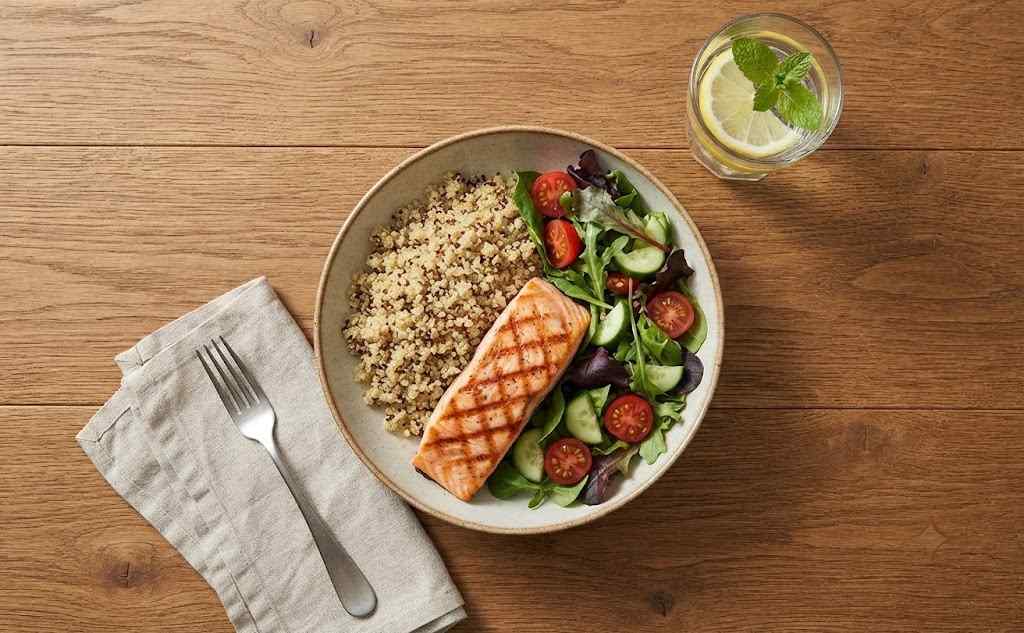
Portion sizes in America have expanded dramatically since the 1970s. Restaurant meals are now 2–5 times larger than they were 40 years ago. Packaged food serving sizes have inflated. Plates, bowls, and glasses have grown larger — and research shows people consistently fill whatever container is in front of them. The result is a systematic underestimation of food intake: studies find that people underestimate how much they eat by 20–50%, with the discrepancy growing as portions get larger. Portion control for weight loss doesn't require measuring every gram of food — it requires understanding the behavioral and environmental factors that drive portion size and using them strategically.
Quick TakeawayThe most effective portion control strategies work with human psychology rather than against it — using smaller plates, pre-portioning food, eating protein and vegetables first, and changing the environment to make smaller portions feel natural. Willpower-based approaches to portion control are consistently the least effective; environment-based approaches are consistently the most sustainable.
1. Use Smaller Plates and Bowls
The Delboeuf illusion — a well-documented optical phenomenon — causes the same amount of food to look like less when placed on a large plate and more when placed on a small plate. Research by Cornell Food and Brand Lab's Brian Wansink found that reducing plate diameter from 12 inches to 10 inches led to a 22% reduction in calories served — without participants reporting any difference in satisfaction. When the plate looks full, the brain registers a full portion regardless of absolute quantity.
Replace large dinner plates (12 inches) with salad plates (9–10 inches) for everyday eating. Use smaller bowls for cereal, pasta, and snacks. Use tall, narrow glasses instead of wide short glasses for caloric beverages — the same volume appears greater in a taller container, producing smaller pours.
2. The Hand Portion Method
Your hand provides a surprisingly accurate and always-available portion guide that scales with your body size. Research has validated the hand method as a reasonable proxy for more precise measurement for most foods:
Protein (meat, fish, tofu): Palm of your hand (thickness and diameter) = one serving
Starchy carbohydrates (rice, pasta, potatoes): Cupped hand = one serving
Fats (oils, nut butter, cheese): Thumb = one serving
Vegetables: Two fists = one serving (eat as many as desired)
Nuts and seeds: One closed handful = one serving
This method requires no measuring cups or food scales, travels everywhere you do, and automatically scales to body size — a larger person with a larger hand gets a slightly larger portion, which is physiologically appropriate.
3. Eat Vegetables and Protein First
The order in which foods are eaten at a meal significantly affects total calorie intake. Research has found that eating vegetables first — before starches and protein — reduces total meal calorie intake by 10–15% because the fiber and water content of vegetables begins filling the stomach and triggering satiety signals before the higher-calorie foods are consumed. Similarly, eating protein before carbohydrates at a meal produces earlier satiety.
A practical meal structure: begin every plate with vegetables, then protein, then starches last. This simple resequencing — without changing what you eat — naturally reduces the portion of the highest-calorie components of every meal.
4. Pre-Portion Snacks — Never Eat From the Bag
Research consistently finds that people eat more from larger packages than from smaller ones — a phenomenon called the "unit bias." When a bag of chips or a box of crackers is eaten directly, consumption continues until a psychological stopping point (the bottom of the bag, feeling uncomfortably full, or social cues) rather than a physiological one. Pre-portioning snacks into appropriate-sized containers or bags before eating creates a defined stopping point that prevents mindless continuation.
At the start of the week, portion snacks into individual servings in small bags or containers. When a snack craving arises, take one pre-portioned unit — not the full bag. This single habit change reduces snack calorie intake dramatically for most people who eat directly from packages.
5. The 20-Minute Rule
Satiety hormones — particularly cholecystokinin (CCK) and peptide YY — take approximately 20 minutes to signal the brain that the stomach has received food. Eating quickly consistently overrides this feedback system, allowing significant overeating before fullness is registered. Extending meal duration to at least 20 minutes gives the satiety system time to function as designed.
Practical strategies: put down your fork between bites; chew each mouthful thoroughly before swallowing; take a sip of water between bites; engage in conversation during meals; and set a timer if needed. Research has found that simply eating more slowly, without any other dietary change, reduces calorie intake at meals by 10–15%.
6. Serve Food from the Kitchen — Not the Table
Keeping serving dishes on the table during a meal produces significantly more food intake than serving food at the stove and bringing only plated portions to the table. When the food is visible and reachable, the decision to take more requires almost no effort — the food is already there. When getting more requires getting up, going to the kitchen, and serving a second plate, most people don't bother — not from willpower, but from the friction of the extra step. Research finds this simple environmental change reduces intake at family-style meals by 19–29%.
7. Start Every Meal with Water and Soup
Drinking 16 ounces of water before meals and starting with a low-calorie soup or broth reduces total meal calorie intake by pre-filling the stomach with a satiating, low-calorie volume. Research published in Obesity found that people who drank water before meals lost significantly more weight over 12 weeks than those who didn't. A study on soup found that eating the same ingredients as a chunky soup versus a casserole produced 26% fewer calories at the meal — the liquid volume increased fullness disproportionately to calories.
Frequently Asked Questions
Is portion control or food quality more important for weight loss?
Both matter — but they work through different mechanisms and serve different people. Portion control creates a calorie deficit by reducing quantity. Food quality creates a calorie deficit by shifting toward more satiating, less calorie-dense foods (protein, fiber, water-rich vegetables) that make smaller quantities feel more satisfying. For most people, the most effective approach combines both: choosing higher-quality foods (which naturally reduce portion sizes by increasing satiety) and applying the environmental and behavioral portion strategies above. Neither alone is as effective as both together.
Do I need to weigh and measure food for portion control to work?
Weighing and measuring food produces the most precise portion control and is useful for people who want exact data — particularly those tracking macros or managing specific medical conditions. However, research has found that the behavioral and environmental strategies above produce meaningful reductions in calorie intake without any measurement. For sustainable long-term weight management, the environmental approach — smaller plates, pre-portioned snacks, eating order, serving from the kitchen — tends to be more maintainable than measurement-based approaches because it requires less ongoing effort and doesn't create the psychological burden of food restriction.
Medical Disclaimer: This article is for informational and educational purposes only. It is not intended to provide medical or nutritional advice for weight management. Consult a qualified healthcare provider or registered dietitian before beginning any weight loss program.