Bad breath, clinically called halitosis, is estimated to affect approximately 25% of the global population — making it one of the most common health complaints worldwide. Despite its prevalence, many people manage it only superficially with mints, gum, or commercial mouthwash that mask the odor without addressing the underlying cause. The result is temporary relief and a persistent problem.
The good news: most bad breath originates from just a few well-understood sources — oral bacteria, dry mouth, food breakdown, and occasionally systemic health issues — and most of these respond well to natural, home-based approaches. Here are nine effective home remedies for bad breath that address the root causes.
Quick TakeawayApproximately 85–90% of bad breath originates in the mouth — primarily from the back of the tongue, where anaerobic bacteria break down food particles and produce volatile sulfur compounds (VSCs). The most effective home remedies target these bacteria directly through tongue cleaning, hydration, and natural antimicrobial agents.
1. Tongue Scraping
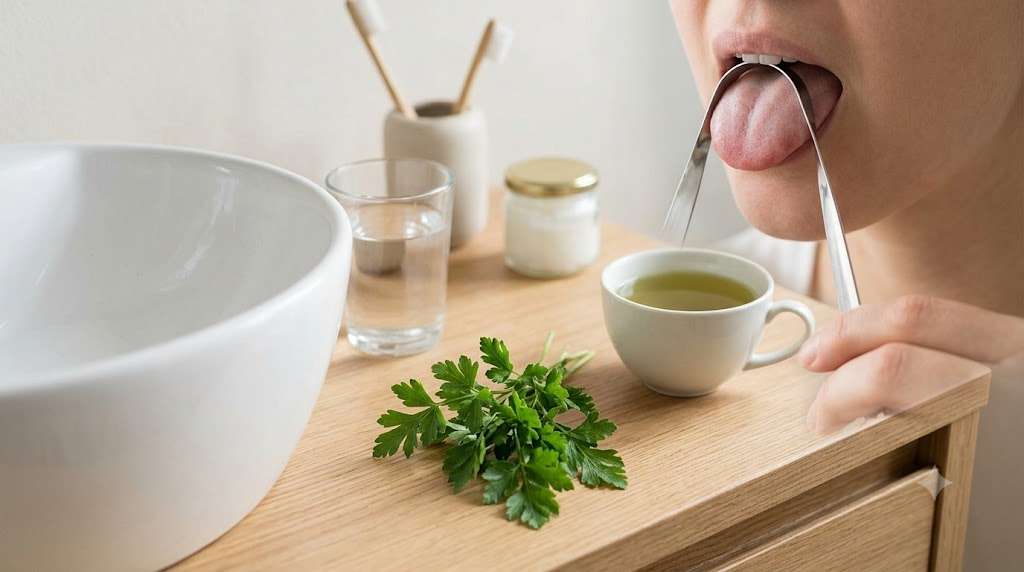
The single most impactful home remedy for bad breath is one of the least practiced: tongue scraping. Research has consistently found that the back third of the tongue harbors the highest concentration of odor-producing bacteria — far more than any other area of the mouth. Tongue scrapers physically remove this bacterial biofilm and the food debris and dead cells it feeds on.
A 2004 study in the Journal of Periodontology found that tongue scrapers reduced volatile sulfur compounds by 75% compared to 45% for toothbrushes. Use a stainless steel or copper tongue scraper (available for under $10 at most US pharmacies) every morning before eating. Scrape from back to front 5–7 times, rinsing the scraper between strokes.
2. Hydration — Dry Mouth Is a Major Cause
Saliva is your mouth's natural defense against bad breath. It continuously washes away food particles, neutralizes acids, and contains antimicrobial compounds that inhibit odor-producing bacteria. When saliva production drops — during sleep, dehydration, mouth breathing, or as a medication side effect — bacteria proliferate rapidly and produce significantly more volatile sulfur compounds.
Drinking adequate water throughout the day is one of the simplest and most effective home remedies for bad breath. Morning breath is universally worse because saliva production drops during sleep — drinking a glass of water and scraping the tongue first thing in the morning addresses both the dehydration and the bacterial buildup simultaneously.
3. Oil Pulling with Coconut Oil
Oil pulling — swishing a tablespoon of oil around the mouth for 10–20 minutes — is an ancient Ayurvedic practice with some modern research support for reducing oral bacteria and bad breath. Coconut oil is the most commonly used oil due to its lauric acid content, which has documented antimicrobial properties against common oral bacteria including Streptococcus mutans.
A 2015 study in the Journal of Traditional and Complementary Medicine found that oil pulling with coconut oil significantly reduced oral bacterial counts and bad breath scores after two weeks of daily practice. Swish one tablespoon of virgin coconut oil around the mouth for 10–15 minutes each morning before brushing, then spit into a trash can (not the sink — oil can clog drains) and brush normally.
4. Parsley and Fresh Herbs
Parsley has been used as a breath freshener for centuries — and there is physiological rationale behind this practice. Parsley is rich in chlorophyll, which has documented deodorizing properties and may neutralize the volatile sulfur compounds responsible for bad breath. Chewing a small sprig of fresh parsley after meals is one of the most pleasant and accessible home remedies for bad breath.
Other chlorophyll-rich herbs with similar properties include mint, cilantro, and basil. Fresh mint leaves — not mint-flavored candy or gum, which only mask odor — contain actual antimicrobial compounds that temporarily reduce oral bacteria counts.
5. Apple Cider Vinegar Rinse
Apple cider vinegar's acidic environment is inhospitable to many oral bacteria and may help reduce the bacterial load that produces bad breath. A diluted ACV rinse — one tablespoon in a cup of water, used as a mouthwash for 30 seconds — may temporarily reduce bacterial counts and neutralize odorous compounds.
Use sparingly and always diluted — the acidity of undiluted ACV can erode tooth enamel with regular use. Rinse with plain water afterward. This is best used as an occasional remedy rather than a daily routine.
6. Green Tea
Green tea contains polyphenols — particularly catechins — that inhibit the growth of odor-producing oral bacteria and reduce the production of volatile sulfur compounds. Research has found that green tea extract is more effective than peppermint and parsley at reducing VSC production in laboratory settings. Drinking 1–2 cups of plain green tea daily may contribute meaningfully to reducing chronic bad breath.
Avoid adding sugar — sugar feeds the very bacteria that produce bad breath. Unsweetened green tea, either hot or cold, provides the most antibacterial benefit.
7. Baking Soda Tooth Brushing
Baking soda (sodium bicarbonate) creates an alkaline environment in the mouth that is hostile to the acid-producing bacteria responsible for both tooth decay and bad breath. Research has found that baking soda toothpaste is more effective than regular fluoride toothpaste at reducing oral bacteria and improving breath scores. It also gently polishes the tooth surface to remove odor-trapping staining and biofilm.
Dip a wet toothbrush in baking soda and brush normally, or use a commercial baking soda toothpaste. Rinse thoroughly. Use 3–4 times per week — daily use is generally safe but check with your dentist if you have sensitive enamel.
8. Cloves, Fennel, or Cardamom Seeds
Several spices have genuine antimicrobial and breath-freshening properties beyond simply masking odor. Cloves contain eugenol — a powerful antimicrobial compound used in dentistry. Fennel seeds contain anethole with antimicrobial properties. Cardamom seeds have a pleasant aromatic compound (1,8-cineole) that temporarily reduces oral bacterial counts. Chewing 2–3 whole cloves, fennel seeds, or cardamom pods after meals provides a practical, chemical-free breath remedy.
These are also the reason many Indian restaurants provide fennel seeds at the exit — it's a culturally embedded functional practice with real antimicrobial rationale.
9. Address Food Triggers Systematically
Some bad breath is dietary rather than bacterial — caused by foods whose aromatic compounds enter the bloodstream and are exhaled through the lungs. Garlic and onion are the most well-known examples: their sulfur compounds are absorbed into the bloodstream after digestion and exhaled for up to 72 hours regardless of how thoroughly you brush. Coffee produces a similar (though less intense) effect. No amount of brushing or mouthwash eliminates these food-derived odors until the compounds clear the bloodstream.
For garlic and onion specifically, eating raw apple, spinach, or fresh mint alongside or immediately after garlic-containing foods has been found in research to partially neutralize garlic's odor compounds through enzymatic deactivation. Drinking green tea alongside garlic-heavy meals provides additional odor reduction.
When to See a Dentist or Doctor
Persistent bad breath that doesn't respond to thorough oral hygiene and the above remedies may indicate: gum disease (periodontitis), tooth decay or abscess, sinus infection or postnasal drip, acid reflux (GERD), or — in rarer cases — systemic conditions including kidney disease, liver disease, or uncontrolled diabetes. A dentist should be the first point of contact for persistent halitosis — they can identify oral causes and refer appropriately if the source is elsewhere.
Frequently Asked Questions
Does mouthwash actually fix bad breath?
Most commercial mouthwashes provide temporary masking of bad breath odor rather than addressing its bacterial source. Alcohol-based mouthwashes can actually worsen chronic bad breath by drying out the mouth, reducing saliva production, and creating a more hospitable environment for anaerobic bacteria over time. Chlorhexidine mouthwash (prescription) is the most evidence-supported antimicrobial option, but it's recommended only for short-term use due to tooth staining. For daily use, the home remedies above address root causes more effectively than most commercial mouthwashes.
Why is my breath worse in the morning?
Morning breath is worse for everyone due to the significant reduction in saliva production during sleep. Saliva is the mouth's primary self-cleaning mechanism — without it, bacteria multiply rapidly overnight, feeding on food particles and dead cells and producing volatile sulfur compounds at an accelerated rate. Mouth breathing during sleep makes this dramatically worse by further drying the oral environment. Tongue scraping and drinking a glass of water immediately upon waking are the most effective morning breath remedies.
Medical Disclaimer: This article is for informational and educational purposes only. Persistent bad breath should be evaluated by a dentist or healthcare provider to rule out underlying dental or medical conditions. These remedies are not a substitute for regular dental care.