Dry skin — clinically called xerosis — is one of the most common skin complaints in America, affecting people of all ages but becoming more prevalent with age and during cold, dry winter months. Symptoms range from mild tightness and flakiness to significantly itchy, cracked, or inflamed skin. While severe dry skin conditions like eczema and psoriasis require medical attention, most everyday dry skin responds well to simple moisturizing and lifestyle approaches — many of which start right in your kitchen.
Quick TakeawayDry skin results from a compromised skin barrier that loses moisture faster than it can retain it. The most effective kitchen remedies work by either physically restoring the skin's lipid barrier (oils) or drawing moisture into the skin (humectants like honey and oatmeal). Always apply to damp skin — not dry — for maximum effectiveness.
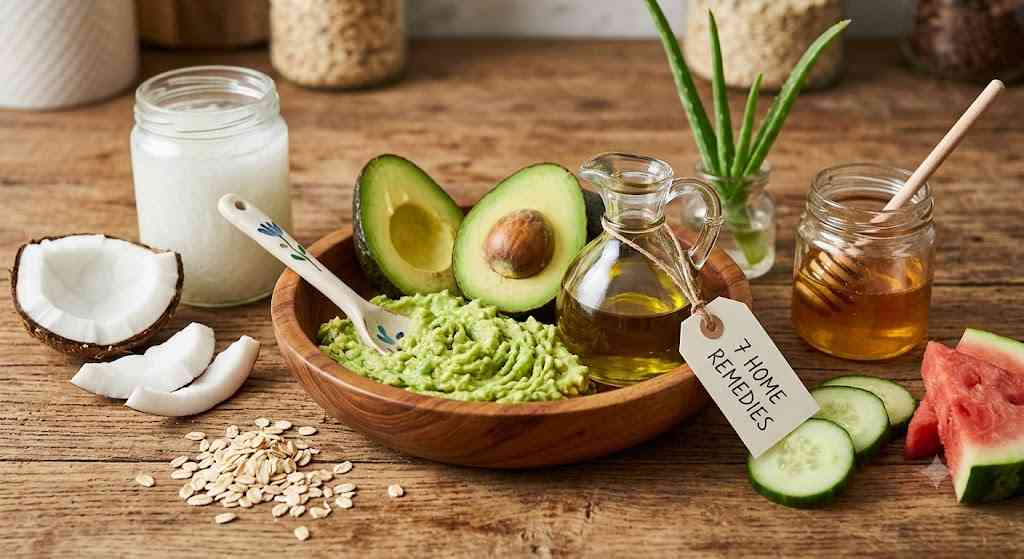
1. Coconut Oil
Coconut oil is one of the most widely used natural skin moisturizers in America, and research supports its effectiveness. A clinical study published in the International Journal of Dermatology found that virgin coconut oil was as effective as mineral oil for treating dry skin — improving skin hydration and reducing transepidermal water loss (TEWL), the primary mechanism of dry skin.
Coconut oil is rich in lauric acid, which has antimicrobial properties, and medium-chain fatty acids that penetrate the skin barrier and provide both occlusive (sealing in moisture) and emollient (softening) effects. Apply a thin layer of virgin coconut oil to damp skin immediately after showering, while the skin is still slightly moist. It absorbs better than on completely dry skin.
2. Oatmeal Baths
Colloidal oatmeal — finely ground oats — is recognized by the FDA as a skin protectant ingredient and is the active ingredient in several clinical dry-skin products. Oats contain beta-glucan and avenanthramides — compounds that soothe inflammation, reduce itching, and help restore the skin's protective barrier. An oatmeal bath is particularly effective for full-body dry skin relief.
Grind regular rolled oats in a blender to a very fine powder. Add 1 cup to a warm (not hot) bath and soak for 15–20 minutes. Pat skin gently dry — don't rub — and apply a moisturizing oil immediately afterward while skin is still damp. Do this 2–3 times per week during dry periods.
3. Raw Honey
Honey is a natural humectant — it draws moisture from the environment into the skin — and has documented antimicrobial and anti-inflammatory properties that are particularly beneficial for dry, irritated skin. Manuka honey is the most researched variety for skin applications, but raw local honey from any source provides similar humectant and barrier-supportive benefits.
Apply a thin layer of raw honey to clean, slightly damp skin. Leave on for 15–20 minutes, then rinse with lukewarm water and pat dry. Follow with a moisturizing oil or cream. Particularly effective as a face mask for dry, flaky facial skin.
4. Avocado
Avocado — both eaten and applied topically — supports skin health through its rich content of monounsaturated fats, vitamins E and C, and biotin. Topically, the fat content in avocado creates an occlusive barrier that reduces moisture loss, while vitamins E and C support collagen production and antioxidant protection. Avocado oil is one of the most deeply penetrating plant-based skin oils available.
Mash half a ripe avocado and apply to clean, damp skin as a face or body mask. Leave for 15–20 minutes and rinse with lukewarm water. Alternatively, avocado oil (available at most US grocery stores) can be applied like any body oil to damp skin after bathing.
5. Olive Oil
Olive oil has been used for skin care since ancient times, and modern research confirms its moisturizing properties. It contains squalene (a naturally occurring skin lipid also produced by human sebaceous glands), oleic acid, and polyphenol antioxidants including hydroxytyrosol. Extra-virgin olive oil has been studied as a treatment for dry skin conditions including eczema with positive results.
Apply a small amount of extra-virgin olive oil to damp skin after showering. It absorbs readily and leaves skin soft without excessive greasiness when applied in a thin layer. Works particularly well for very dry areas like elbows, knees, and heels.
6. Aloe Vera Gel
Aloe vera contains mucopolysaccharides — compounds that bind moisture to the skin — along with anti-inflammatory glycoproteins that soothe irritated, dry skin. Research has found aloe vera gel effective for improving skin moisture and reducing scaling in people with dry skin conditions. It is one of the few gel-based skin remedies, making it ideal for people whose skin feels too oily with oil-based moisturizers.
Use pure aloe vera gel (not the green-dyed drugstore variety) from a plant or a food-grade bottled product. Apply to clean skin and allow to absorb. Refrigerated aloe gel has an additional cooling, soothing effect on itchy or irritated skin. Avoid applying to broken or cracked skin as it can cause mild stinging.
7. Drink More Water — and Eat Water-Rich Foods
Skin hydration starts from the inside. While topical remedies address the skin barrier directly, chronic mild dehydration contributes to dull, dry, less resilient skin over time. Research has found that adequate water intake improves skin hydration — particularly in people who are chronically under-hydrated. Increasing daily water intake to 8–10 cups produces noticeable skin improvement for many people within 4–6 weeks.
Water-rich foods also contribute significantly to skin hydration: cucumbers (96% water), watermelon, celery, strawberries, lettuce, and zucchini are all excellent sources. Additionally, foods rich in essential fatty acids — avocado, walnuts, flaxseed, fatty fish — support the skin's lipid barrier from the inside, working synergistically with topical moisturizers.
Pro Tips for Maximum Effectiveness
Apply to damp skin: Any moisturizer — kitchen remedy or commercial — is significantly more effective when applied to skin that is still damp from a shower or bath. The moisturizer seals in the water already on the skin rather than trying to add moisture to dry skin.
Use lukewarm water: Hot showers strip natural skin oils and worsen dry skin. Limit shower temperature to lukewarm and duration to 10 minutes.
Humidify your bedroom: Indoor heating in winter drops humidity to 10–20%, far below the 40–50% optimal for skin hydration. A bedroom humidifier prevents overnight moisture loss from skin.
Patch test new remedies: Apply any new kitchen remedy to a small area (inside of elbow) and wait 24 hours before full application to check for sensitivity.
Frequently Asked Questions
Can I use these kitchen remedies on my face?
Most of the remedies above are suitable for facial use with some caveats. Coconut oil and olive oil are comedogenic (may clog pores) for acne-prone skin — patch test first. Honey and aloe vera gel are generally safe for most facial skin types. Avocado masks work well for normal to dry facial skin. If you have active acne, rosacea, or a diagnosed skin condition, consult a dermatologist before trying new topical remedies on your face.
When should I see a dermatologist for dry skin?
See a dermatologist if: dry skin is severe, cracked, or bleeding; itching is intense and disrupts sleep; skin shows signs of infection (warmth, pus, spreading redness); home remedies and over-the-counter moisturizers provide no relief; or you suspect an underlying condition like eczema, psoriasis, or thyroid disease (both hypothyroidism and hyperthyroidism can cause skin changes).
Medical Disclaimer: This article is for informational and educational purposes only. It is not intended to diagnose, treat, cure, or prevent any skin condition. Persistent, severe, or worsening dry skin should be evaluated by a qualified dermatologist or healthcare provider.