Dandruff (seborrheic dermatitis of the scalp) is caused primarily by an overgrowth of a naturally occurring scalp yeast called Malassezia — which feeds on the natural oils of the scalp and produces oleic acid as a byproduct. Oleic acid triggers an inflammatory response in sensitive individuals, accelerating skin cell turnover and producing the characteristic flaking. Dry scalp dandruff — a related but distinct condition — results from insufficient moisture rather than fungal overgrowth, and requires different treatment approaches.
Here are nine home remedies for dandruff with practical application guidance and the research rationale behind each.
Quick TakeawayMost effective home remedies for dandruff target either the Malassezia yeast (with antifungal agents like tea tree oil, apple cider vinegar, or coconut oil) or the inflammatory response it triggers (with anti-inflammatory agents like aloe vera or aspirin-based treatments). Identifying whether you have oily fungal dandruff or dry scalp flaking helps choose the right approach.
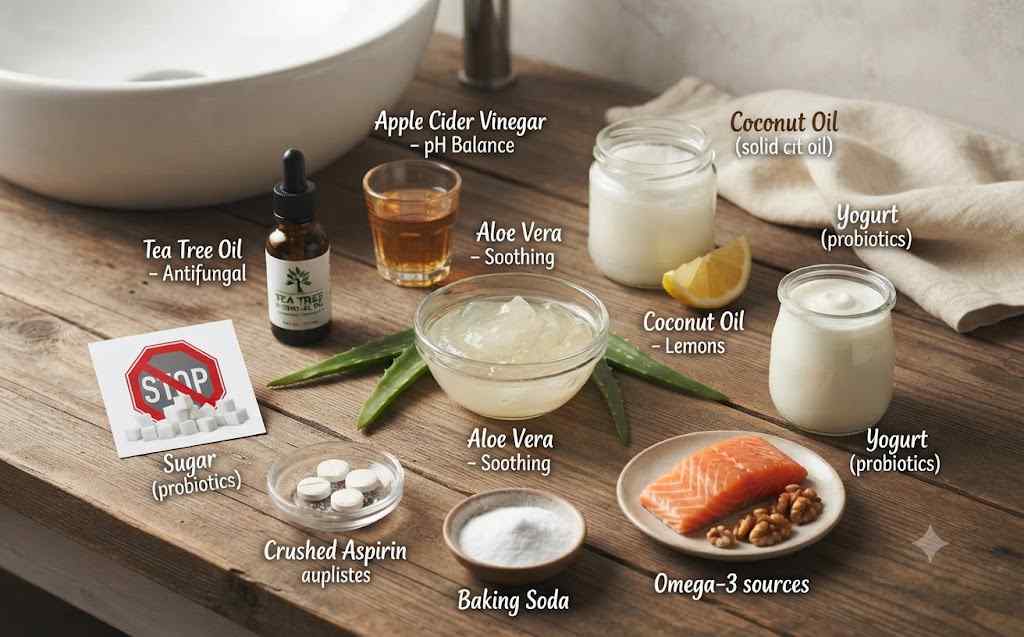
1. Tea Tree Oil
Tea tree oil is the most evidence-supported natural antifungal remedy for dandruff. It contains terpinen-4-ol — a compound with documented activity against Malassezia and other scalp fungi. A randomized controlled trial published in the Journal of the American Academy of Dermatology found that a 5% tea tree oil shampoo significantly reduced dandruff severity, scalp itchiness, and greasiness compared to placebo after four weeks of use.
Add 5–10 drops of tea tree essential oil to your regular shampoo bottle and shake before each use. Alternatively, mix 5 drops with a tablespoon of carrier oil (coconut or jojoba), massage into the scalp, leave 20 minutes, then shampoo out. Always dilute — undiluted tea tree oil irritates the scalp and skin.
2. Apple Cider Vinegar Rinse
Apple cider vinegar changes the scalp's pH to a more acidic environment that is hostile to Malassezia growth. The scalp's optimal pH is slightly acidic (4.5–5.5), and many shampoos and tap water make the scalp more alkaline — creating conditions where dandruff-causing yeast thrive. ACV rinses restore this acidic pH while also dissolving product buildup that clogs follicles.
Mix equal parts raw apple cider vinegar and water in a spray bottle. After shampooing, spray onto the scalp, massage gently, and leave for 2–5 minutes before rinsing thoroughly. Use 2–3 times per week. The vinegar smell dissipates completely once the hair dries. Avoid contact with eyes.
3. Coconut Oil with Lemon Juice
Coconut oil's lauric acid has documented antifungal properties, while lemon juice provides citric acid that further acidifies the scalp environment and provides vitamin C that may support scalp skin health. This combination addresses both the fungal overgrowth and the scalp condition that allows it.
Mix 2 tablespoons of virgin coconut oil with 1 tablespoon of fresh lemon juice. Warm slightly, massage into the scalp, and leave for 30 minutes before shampooing out. Use twice weekly. Particularly effective for oily dandruff with visible flaking. Avoid on dry scalp dandruff — the lemon juice can be drying.
4. Aloe Vera Gel
Aloe vera contains antifungal compounds alongside strong anti-inflammatory agents — acemannan and aloin — that reduce the scalp inflammation responsible for the itching and irritation of dandruff. Research has found aloe vera gel effective for seborrheic dermatitis, producing significant reductions in scaling, itching, and redness. Its moisturizing properties also address the dry scalp component of dandruff.
Apply pure aloe vera gel directly to the scalp, massage gently to ensure contact with the skin, and leave for 30–60 minutes before shampooing. Use 3 times per week for best results. Pure aloe gel from a plant is most effective — alternatively, use fragrance-free food-grade bottled aloe.
5. Aspirin Scalp Scrub
Regular aspirin contains salicylic acid — the same active ingredient in many prescription dandruff shampoos and scalp treatments. Salicylic acid is a keratolytic agent that breaks down the bonds between skin cells, helping loosen and remove the excess skin buildup that causes flaking. It also has mild antifungal properties.
Crush 2–3 uncoated aspirin tablets into a fine powder and mix into your regular shampoo. Apply to the scalp, leave for 2 minutes, then rinse thoroughly. Use once or twice per week. Do not use if you have aspirin allergy or sensitivity. This approach is particularly effective for thick, scaly scalp buildup rather than fine, powdery dandruff.
6. Baking Soda Scalp Exfoliation
Baking soda acts as a gentle physical and chemical exfoliant on the scalp — physically removing excess skin cell buildup while its alkaline properties may temporarily inhibit Malassezia growth. Many people find it provides rapid relief from itching and visible flaking, though with long-term use it can dry the scalp excessively.
Wet the hair, apply a tablespoon of baking soda directly to the scalp, massage for 2–3 minutes, and rinse thoroughly without using shampoo afterward (baking soda acts as the cleanser). Limit use to once weekly — more frequent use disrupts the scalp's natural oil balance.
7. Omega-3 Rich Diet for Scalp Health
Dandruff has an internal component that is frequently overlooked: scalp inflammation driven by a pro-inflammatory dietary pattern. Diets high in omega-6 fatty acids and low in omega-3s create an inflammatory environment systemically — including in the scalp. Research has found associations between omega-3 intake and scalp condition, with higher omega-3 consumption linked to reduced seborrheic dermatitis severity.
Prioritize omega-3 rich foods — fatty fish (salmon, sardines, mackerel), walnuts, flaxseed, and chia seeds — as part of the internal approach to dandruff management. This is a longer-term strategy (effects develop over weeks to months) but addresses a root driver that topical treatments alone cannot reach.
8. Probiotics for Gut-Scalp Connection
Emerging research has identified a connection between gut microbiome health and skin conditions including seborrheic dermatitis. The gut-skin axis — the bidirectional communication between intestinal microbiota and skin immune function — means that dysbiosis (gut bacteria imbalance) may worsen dandruff by promoting systemic inflammation and altered immune responses. Several small studies have found probiotic supplementation reduces seborrheic dermatitis severity.
Incorporating fermented foods — yogurt, kefir, kimchi, sauerkraut — into the daily diet provides probiotic support that may contribute to reduced scalp inflammation over time. This works alongside topical remedies rather than replacing them.
9. Reduce Sugar and Refined Carbohydrates
Malassezia yeast feeds on scalp oils — but high blood sugar and insulin spikes promote sebum (oil) production in the scalp, creating a more hospitable environment for yeast overgrowth. Many people with dandruff notice significant flare-ups after periods of high sugar intake. Reducing refined carbohydrates, added sugars, and highly processed foods addresses this internal trigger while also reducing systemic inflammation that worsens scalp irritation.
Frequently Asked Questions
What is the difference between dandruff and dry scalp?
Dandruff (seborrheic dermatitis) produces larger, oily, yellowish flakes and is often accompanied by scalp redness and itching. It is caused by Malassezia yeast overgrowth and responds to antifungal treatments. Dry scalp produces smaller, dry, white flakes without oiliness and results from insufficient moisture — often worsened by cold weather, low humidity, and harsh shampoos. Dry scalp responds to moisturizing treatments (coconut oil, aloe) and improved hydration. Using antifungal treatments on dry scalp can worsen symptoms. If unsure, try a moisturizing approach first — if flaking worsens or the scalp becomes red and irritated, switch to an antifungal approach or consult a dermatologist.
How long do home remedies for dandruff take to work?
Most topical home remedies produce visible reduction in flaking within 1–2 weeks of consistent use. Complete resolution of active dandruff typically takes 4–6 weeks of regular treatment. Because dandruff tends to recur, ongoing maintenance use (1–2 times per week) of effective remedies is usually more effective than intensive short-term treatment. If there is no improvement after 4–6 weeks of consistent home treatment, or if the scalp develops significant redness, scaling extending beyond the scalp, or skin sores, consult a dermatologist for prescription treatment.
Medical Disclaimer: This article is for informational and educational purposes only. Persistent, severe, or worsening dandruff should be evaluated by a qualified dermatologist. These remedies are not intended to diagnose or treat scalp conditions requiring medical attention.