When people talk about "taking B vitamins," they're often referring to a supplement that contains all eight members of the B vitamin family combined — a B-complex. But these eight vitamins are chemically distinct, perform different functions, and are found in different foods. Understanding what each B vitamin actually does helps you identify which ones may be missing from your diet and which food sources provide the most complete coverage.
Quick TakeawayAll eight B vitamins are water-soluble — meaning the body cannot store large reserves and needs regular dietary replenishment. They work as coenzymes: biological tools that enable enzymes to carry out essential reactions in energy metabolism, DNA repair, neurotransmitter synthesis, and red blood cell production. Deficiency in any single B vitamin disrupts multiple downstream processes simultaneously.
B1 — Thiamine: The Energy Gateway
Thiamine (B1) is the gatekeeper of carbohydrate metabolism — it is required for the enzyme that converts pyruvate into acetyl-CoA, the compound that enters the Krebs cycle for energy production. Without adequate thiamine, carbohydrates cannot be efficiently converted to cellular energy, producing fatigue, nerve damage, and in severe deficiency, the neurological condition beriberi. The brain and nervous system are particularly dependent on thiamine because they rely almost exclusively on glucose for fuel.
Signs of deficiency: Fatigue, nerve tingling, muscle weakness, irritability, poor memory. Alcoholism significantly depletes thiamine and is the most common cause of deficiency in the US (Wernicke's encephalopathy).
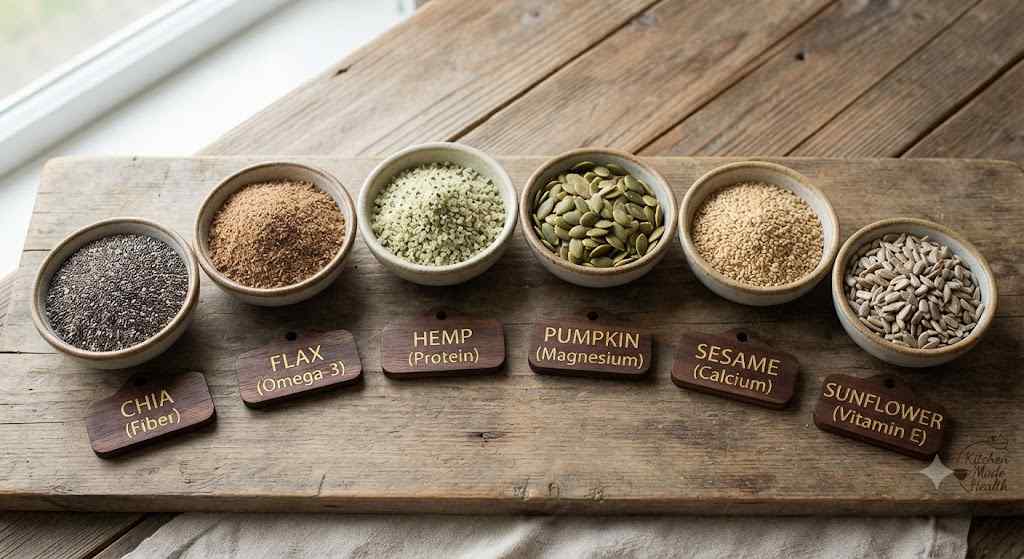
Best US food sources: Whole grain bread and cereal (fortified), pork (richest natural source — 0.9mg per 3oz), black beans, edamame, sunflower seeds, and nutritional yeast.
B2 — Riboflavin: The Antioxidant Partner
Riboflavin (B2) is a component of FAD and FMN — coenzymes essential for the electron transport chain (the final step of cellular energy production) and for recycling glutathione, the body's master antioxidant. It also plays a role in converting B6 and folate into their active forms, making it a critical enabler of other B vitamin functions.
Signs of deficiency: Cracked corners of the mouth (angular cheilitis), sore throat, inflamed tongue, skin rashes, and sensitivity to light. Deficiency often accompanies other B vitamin deficiencies.
Best US food sources: Beef liver (highest source — 2.9mg per 3oz), dairy (milk provides 0.45mg per cup), eggs (0.27mg per egg), almonds, and fortified cereals. Riboflavin is destroyed by light exposure — store milk in opaque containers.
B3 — Niacin: The Cholesterol Vitamin
Niacin (B3) is a component of NAD and NADP — coenzymes involved in over 400 enzymatic reactions including energy metabolism, DNA repair, and cell signaling. At therapeutic doses (far above dietary amounts), niacin is used medically to raise HDL cholesterol and lower triglycerides — making it one of the only B vitamins with a well-established pharmaceutical application.
Signs of deficiency: Pellagra (the "4 Ds" — diarrhea, dermatitis, dementia, death in severe cases) — now rare in the US due to food fortification, but seen in populations subsisting primarily on corn without lime processing.
Best US food sources: Chicken breast (11mg per 3oz), tuna (11mg per 3oz), turkey, beef, peanuts (4mg per oz), and fortified bread and cereal. The body can also synthesize niacin from the amino acid tryptophan — making adequate protein intake relevant to niacin status.
B5 — Pantothenic Acid: The Hormone Builder
Pantothenic acid (B5) is a component of coenzyme A — one of the most central molecules in metabolism, involved in synthesizing and metabolizing fats, carbohydrates, and proteins. It is also required for the synthesis of steroid hormones (including cortisol and sex hormones) and the neurotransmitter acetylcholine. The name pantothenic comes from the Greek for "from everywhere" — it is found in virtually all foods, making isolated deficiency rare.
Signs of deficiency: Rare in the general population. Produces fatigue, irritability, numbness and tingling of hands and feet (burning feet syndrome), and headache when it occurs.
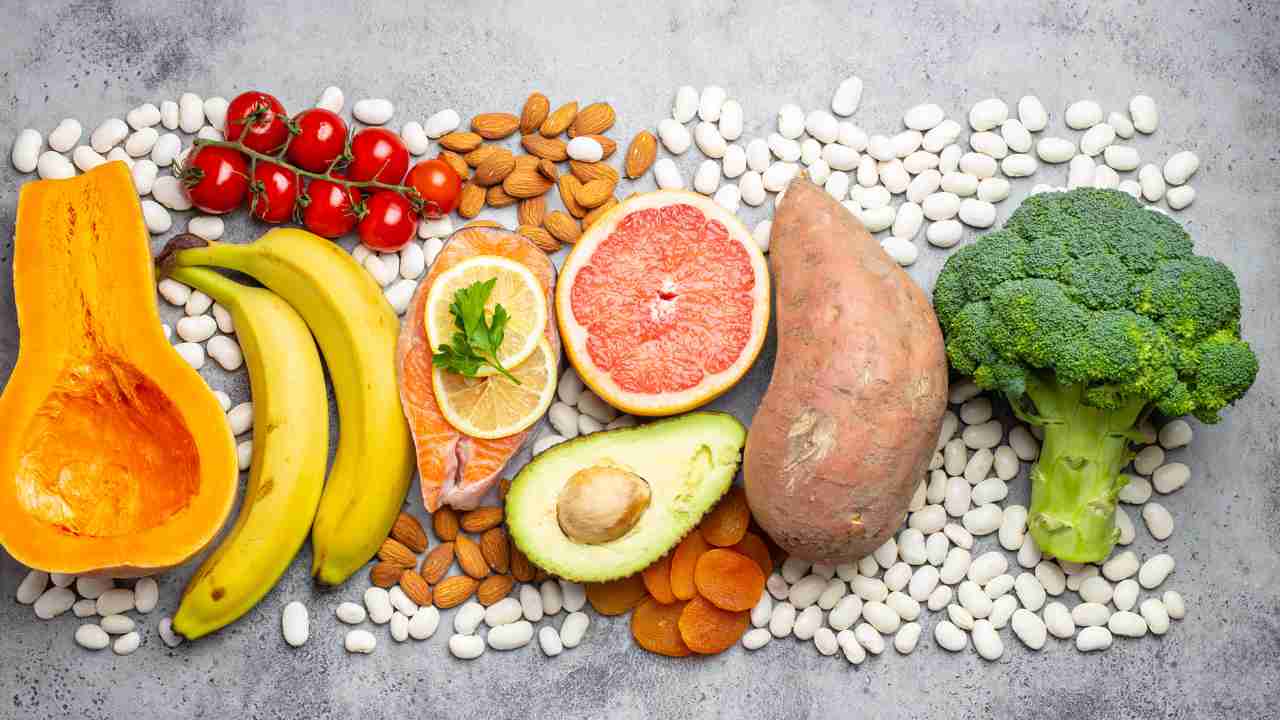
Best US food sources: Beef liver (most concentrated source), sunflower seeds, chicken breast, mushrooms (especially shiitake — 2.6mg per cup cooked), avocado, and sweet potato.
B6 — Pyridoxine: The Mood Vitamin
Vitamin B6 is involved in over 100 enzyme reactions — most critically the synthesis of neurotransmitters including serotonin, dopamine, GABA, and norepinephrine. This makes B6 status directly relevant to mood, sleep quality, and anxiety. B6 is also required for the conversion of homocysteine to cysteine — elevated homocysteine (associated with B6, B9, and B12 deficiency) is a risk factor for cardiovascular disease and cognitive decline.
Signs of deficiency: Depression, irritability, brain fog, weakened immune function, and in severe cases, peripheral neuropathy and confusion. Deficiency is more common than recognized — particularly in older adults and women on hormonal contraceptives.
Best US food sources: Chickpeas (highest food source — 1.1mg per cup cooked), tuna (0.9mg per 3oz), salmon, chicken breast, potatoes, bananas (0.4mg each), and fortified cereal.
B7 — Biotin: The Hair and Metabolism Vitamin
Biotin (B7) is required for carboxylase enzymes involved in fatty acid synthesis, amino acid catabolism, and glucose production. It is widely marketed for hair and nail health — and while true biotin deficiency does cause hair loss and brittle nails, most Americans eating a varied diet have adequate biotin, making supplementation for hair growth largely ineffective unless deficiency is present. Biotin is produced in small amounts by gut bacteria, and consuming raw egg whites regularly depletes biotin by binding it in the gut.
Best US food sources: Cooked eggs (most bioavailable source — always cook eggs to avoid the raw egg white avidin problem), beef liver, salmon, sunflower seeds, sweet potato, and almonds.
B9 — Folate: The DNA Vitamin
Folate (B9) is essential for DNA synthesis and repair, cell division, and amino acid metabolism. Its role in preventing neural tube defects during early pregnancy (before many women know they're pregnant) makes it one of the most critically important nutrients for women of reproductive age. The synthetic form, folic acid, is added to most enriched grain products in the US under a federal mandate implemented in 1998 — which reduced neural tube defect rates significantly.
Signs of deficiency: Megaloblastic anemia (large, poorly functioning red blood cells), neural tube defects in developing fetuses, elevated homocysteine, fatigue, and mouth sores.
Best US food sources: Beef liver (215mcg per 3oz), lentils (358mcg per cup cooked — highest plant source), spinach (263mcg per cooked cup), black-eyed peas, asparagus, and fortified cereal and bread.
B12 — Cobalamin: The Nerve Protector
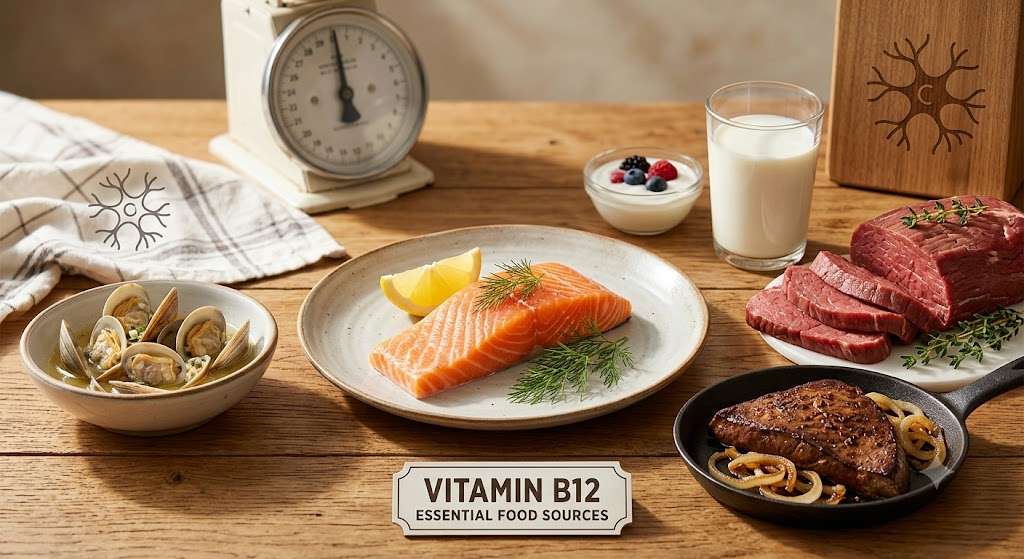
Vitamin B12 maintains myelin sheaths around nerve fibers, supports DNA synthesis, and enables red blood cell maturation. Deficiency develops slowly (the liver stores 3–5 years' worth) but can cause irreversible neurological damage — making it the most medically serious B vitamin deficiency. Found almost exclusively in animal products, making it the most commonly discussed nutritional concern for plant-based eaters. We covered B12 in depth in a previous article — see our full B12 guide for detailed food sources and supplementation guidance.
Best US food sources: Clams (84mcg per 3oz — highest food source), beef liver, salmon, tuna, dairy products, eggs, and fortified plant milks and nutritional yeast.
The Best B-Complex Food: Beef Liver
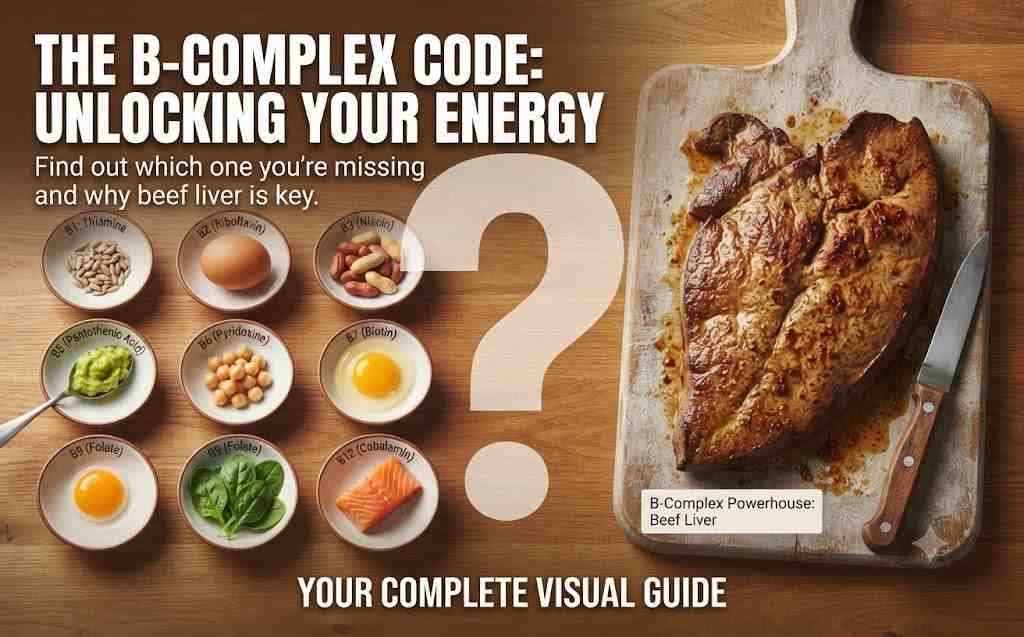
If you want to understand why beef liver has been called "nature's multivitamin," the B vitamin profile makes it clear. A single 3-ounce serving of cooked beef liver provides: B1 (12% DV), B2 (215% DV), B3 (87% DV), B5 (69% DV), B6 (51% DV), B7 (abundant), B9 (54% DV), and B12 (1,386% DV). No other single food comes close to this comprehensive B vitamin coverage. For people who find the flavor challenging, chicken liver is milder, and pâté makes it more approachable.
Frequently Asked Questions
Should I take a B-complex supplement?
B-complex supplements are reasonable for people who eat plant-based diets (particularly for B12), older adults (B12 absorption declines with age), people on metformin (which depletes B12), women planning pregnancy (folate is critical before and during early pregnancy), and people with restricted diets or digestive conditions affecting absorption. For most people eating a varied diet including animal products, food sources are sufficient. Excessive B vitamin supplementation is generally excreted in urine (they are water-soluble) but very high doses of B6 (above 100mg daily long-term) can cause peripheral neuropathy — more is not better for B6 specifically.
Why does urine turn yellow after taking B vitamins?
Bright yellow urine after taking B vitamins is caused by riboflavin (B2) — which has a natural yellow-orange color and is water-soluble, so any excess beyond what the body needs is excreted in urine. This is completely harmless and is simply a sign that you've consumed more riboflavin than your body needed at that time. It does not indicate that all the B vitamins were wasted — most are absorbed and used before the remainder is excreted.
Medical Disclaimer: This article is for informational and educational purposes only. B vitamin deficiencies require diagnosis through blood testing and treatment guided by a healthcare provider. Do not self-diagnose or self-treat suspected vitamin deficiencies.