The "eat more seeds" advice is everywhere in nutrition circles — but which seeds deserve a place in your daily diet, and what specific benefits does each one provide? Seeds vary enormously in their nutritional profiles: some are omega-3 powerhouses, others lead in protein or zinc, and still others provide unique lignans or antioxidants found nowhere else in the food supply. This seeds comparison gives you a clear, practical breakdown of the six most nutritionally significant seeds available at US grocery stores.
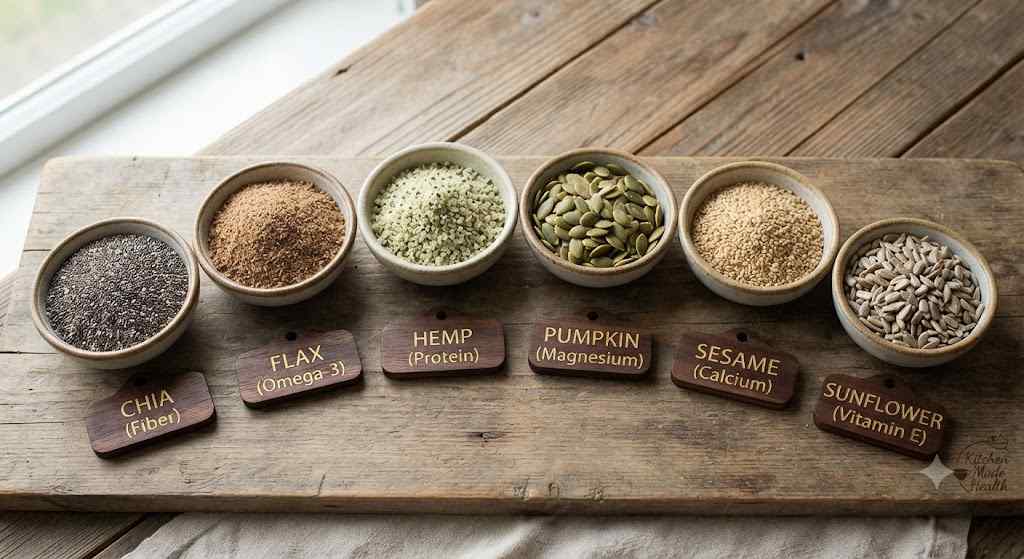
Quick TakeawayNo single seed is "the best" — each has a different primary strength. For omega-3s: flaxseed leads. For complete protein: hemp seeds. For zinc and magnesium: pumpkin seeds. For fiber and satiety: chia seeds. For calcium: sesame seeds. For antioxidants and lignans: flaxseed and sesame. Eating a variety provides the most comprehensive benefit.
1. Chia Seeds — Best for Fiber and Satiety
Chia seeds are the highest-fiber seed available, providing 10 grams of fiber per two-tablespoon serving — approximately 36% of the daily recommended intake in a single small addition. When combined with liquid, chia seeds absorb up to 12 times their weight in water, forming a gel that slows digestion, blunts post-meal blood sugar spikes, and creates a pronounced and sustained feeling of fullness. This makes them particularly valuable for blood sugar management and weight control.
Nutritional highlights (2 tbsp): 140 calories, 4g protein, 9g fat (5g omega-3 ALA), 12g carbs, 10g fiber, 18% DV calcium, 30% DV magnesium. Can be eaten whole (unlike flaxseed) — add to yogurt, oatmeal, smoothies, or make overnight chia pudding. No prep required.
2. Flaxseeds — Best for Omega-3s and Lignans
Flaxseeds are the richest plant source of ALA omega-3 fatty acids (6,400mg per tablespoon of ground flax) and the most abundant dietary source of lignans — plant compounds with phytoestrogenic and antioxidant properties that research has associated with reduced breast cancer risk, improved hormone balance, and cardiovascular protection. Flaxseeds must be ground to be absorbed — whole flaxseeds pass through the gut undigested.
Nutritional highlights (1 tbsp ground): 37 calories, 1.3g protein, 3g fat (2.3g omega-3 ALA), 2g carbs, 1.9g fiber, 800 lignans (highest food source by far). Grind in a coffee grinder or buy pre-ground. Store in the refrigerator. Add to oatmeal, smoothies, baked goods, or yogurt. Do not heat flaxseed oil.
3. Hemp Seeds — Best for Complete Protein
Hemp seeds (hemp hearts) are unique among plant foods in providing all nine essential amino acids in a complete protein profile — making them the most valuable seed for protein quality. Three tablespoons provide 10 grams of complete protein alongside an ideal 3:1 omega-6 to omega-3 ratio that supports anti-inflammatory balance. They are also one of the few plant sources of GLA (gamma-linolenic acid) — an omega-6 fatty acid with anti-inflammatory rather than pro-inflammatory properties.
Nutritional highlights (3 tbsp): 166 calories, 10g complete protein, 14g fat (3:1 omega-6/omega-3 ratio, including 1g GLA), 2.6g carbs, 1g fiber. Soft texture, mild nutty flavor — the most versatile seed for adding to virtually any dish without altering flavor. No prep required, no grinding needed.
4. Pumpkin Seeds (Pepitas) — Best for Zinc and Magnesium
Pumpkin seeds lead all seeds in zinc content — providing 2.2mg per ounce (20% of the daily value for men), making them the most important plant-based zinc source for vegetarians and vegans who struggle to meet zinc needs. They also lead in magnesium (168mg per ounce — 40% DV) and provide meaningful iron (2.5mg per ounce). This mineral combination makes pumpkin seeds particularly valuable for immune function, sleep quality (magnesium supports melatonin production), muscle function, and blood sugar regulation.
Nutritional highlights (1 oz): 151 calories, 7g protein, 13g fat, 5g carbs, 1.7g fiber, 40% DV magnesium, 20% DV zinc, 14% DV iron. Eat raw or lightly roasted. Roasting at high heat reduces some nutrient content — low-heat roasting (300°F or below) preserves more omega-3s. Add to salads, trail mix, oatmeal, or eat as a standalone snack.
5. Sesame Seeds — Best for Calcium and Unique Antioxidants
Sesame seeds are the highest-calcium seed available, providing 88mg of calcium per tablespoon — more than a third of the calcium in a glass of milk in a tiny serving. They also contain sesamin and sesamolin — unique lignans with documented antioxidant, anti-inflammatory, and cholesterol-lowering properties not found in other seeds. Tahini (sesame paste) is the most concentrated and bioavailable form — research on tahini consumption shows meaningful improvements in cholesterol profiles.
Nutritional highlights (1 tbsp): 52 calories, 1.6g protein, 4.5g fat, 2g carbs, 1g fiber, 88mg calcium (9% DV), 31mg magnesium, unique sesamin/sesamolin antioxidants. Add to stir-fries, salad dressings, grain bowls, or use tahini as a dip, spread, or sauce base.
6. Sunflower Seeds — Best for Vitamin E
Sunflower seeds are the richest seed source of vitamin E — providing 7.4mg per ounce (49% of the daily value) — a fat-soluble antioxidant essential for immune function, skin health, and cardiovascular protection. They also provide significant selenium (25% DV per ounce), a trace mineral important for thyroid function and antioxidant defense. Their selenium content makes sunflower seeds particularly valuable for thyroid health alongside Brazil nuts.
Nutritional highlights (1 oz): 165 calories, 5.5g protein, 14g fat, 6.5g carbs, 3g fiber, 49% DV vitamin E, 25% DV selenium. Choose raw or dry-roasted, unsalted varieties. The sodium content of salted sunflower seeds can be significant — check labels and choose low-sodium options for regular snacking.
Seeds Comparison Summary Table
Best omega-3s: Flaxseed (6,400mg ALA per tbsp ground) → Chia (5,000mg per 2 tbsp) → Hemp (1,000mg per 3 tbsp)
Best complete protein: Hemp seeds (all 9 essential amino acids, 10g per 3 tbsp)
Best fiber: Chia seeds (10g per 2 tbsp)
Best zinc: Pumpkin seeds (2.2mg per oz, 20% DV)
Best magnesium: Pumpkin seeds (168mg per oz, 40% DV)
Best calcium: Sesame seeds (88mg per tbsp)
Best vitamin E: Sunflower seeds (7.4mg per oz, 49% DV)
Best for hormone balance (lignans): Flaxseed (800x more lignans than any other food)
How to Eat More Seeds Daily
A practical daily seed rotation that covers all nutritional bases: 1 tablespoon of ground flaxseed in morning oatmeal or smoothie, 2 tablespoons of chia seeds in afternoon yogurt or pudding, 1 ounce of pumpkin seeds as an afternoon snack, and sesame seeds or tahini used in cooking. This combination delivers comprehensive omega-3s, fiber, complete protein, zinc, magnesium, calcium, and unique antioxidants without any single seed dominating the diet.
Frequently Asked Questions
Should seeds be eaten raw or roasted?
Raw seeds preserve the highest nutrient content — particularly omega-3 fatty acids, which are sensitive to heat and oxidize at cooking temperatures. Low-heat roasting (below 300°F) preserves most nutrients while improving flavor and crunch. High-heat commercial roasting reduces omega-3 content significantly. For seeds being added to hot dishes or baked goods, the heat exposure is generally brief and the nutrient loss is modest. For maximum omega-3 benefit, add seeds after cooking rather than during. Flaxseed oil specifically should never be heated.
How many seeds should I eat per day?
A total of 2–4 tablespoons of seeds daily across varieties provides meaningful nutritional benefit without excessive calorie addition. Seeds are calorie-dense (50–170 calories per tablespoon depending on variety) — useful for people needing energy-dense nutrition, but worth tracking for those monitoring total calorie intake. The fiber in chia and flaxseed is particularly satiating and partially offsets the calorie density. One practical approach: treat seeds as nutrient upgrades to foods you're already eating rather than as separate snacks — a tablespoon of ground flax in oatmeal or two tablespoons of hemp seeds on a salad adds nutrition efficiently.
Medical Disclaimer: This article is for informational and educational purposes only. It is not intended to provide personalized nutritional advice. Consult a registered dietitian for dietary guidance tailored to your specific health needs and conditions.