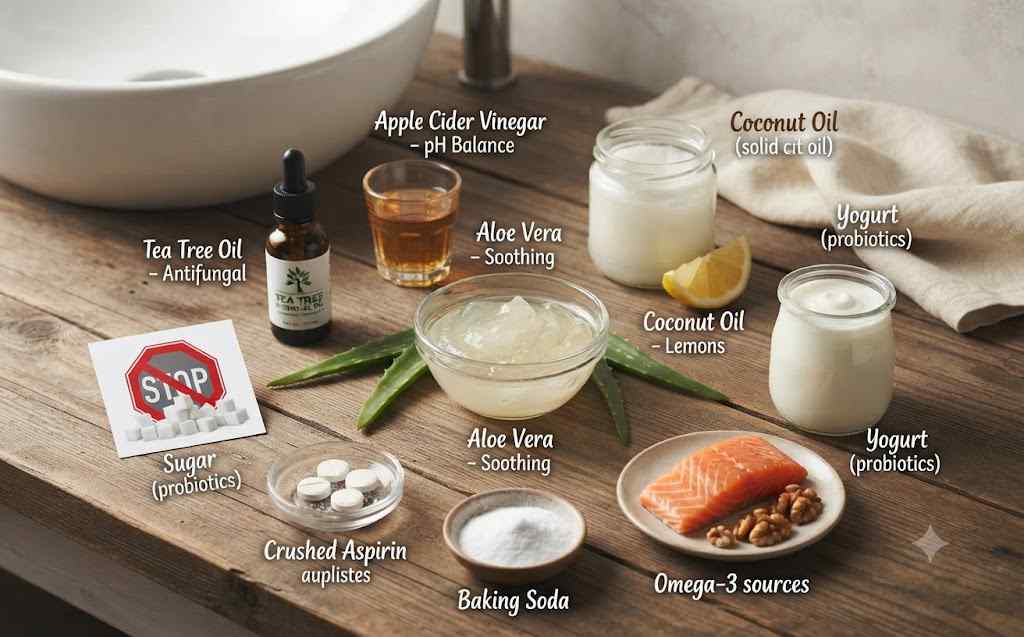
About 1 in 4 people deal with bad breath. That's not a hygiene failure — it's a kitchen problem hiding in plain sight. Mints and mouthwash spray perfume over it. Your kitchen has tools that remove it.
Most bad breath — 85 to 90% — starts right here: on the back of your tongue, where bacteria break down last night's food into sulfur gas. Dry mouth, low water, and a few food habits feed it.
Here are nine things that live in your kitchen and fix the root.
Quick takeaway: If your tongue has a white coating in the morning, that's the source. Clean the tongue, bring back saliva, and use what your spice box already has.
1. Tongue Scraping — The One Everyone Skips
This is the biggest lever.
The back third of your tongue holds more odor bacteria than any other part of your mouth. A toothbrush pushes it around. A scraper lifts it off.
A study in the Journal of Periodontology found scrapers cut sulfur compounds by 75% vs 45% for a toothbrush.
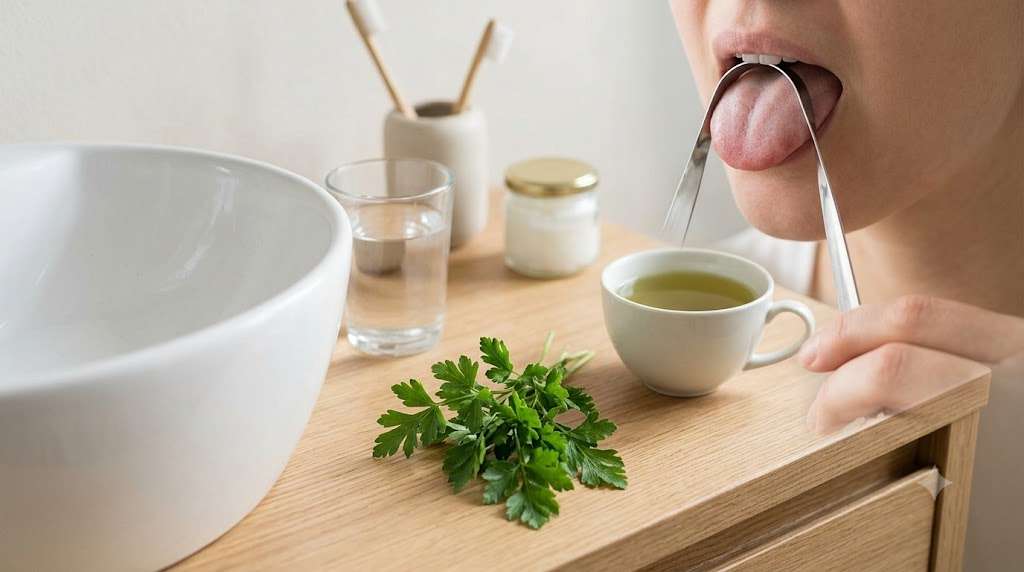
In the kitchen: Get a U-shaped stainless steel or copper scraper — $3 to $9 at any US pharmacy. Keep it next to your toothbrush, not in a drawer. Every morning before water, scrape from back to front 5-7 times, rinse between. You will see the coating. That's what was causing morning breath.
2. Water First — Your Mouth Is Dry All Night
Saliva is your self-cleaning rinse. It washes food, kills bacteria, neutralizes acid. At night you make almost none — that's why morning breath is worse for everyone.
One glass of water right after scraping does two jobs at once: rehydrates and washes away what you just lifted.
The ritual: Glass by the sink the night before. Scrape, then water, then brush. Not the other way.
3. Coconut Oil Pulling — The 10-Minute Swish
Old Ayurvedic practice, simple mechanics: oil traps bacteria that water misses.
Take one tablespoon virgin coconut oil, swish slowly around teeth and gums for 10-15 minutes in the morning before brushing. Spit into trash, not sink. Brush normally.
Research in the Journal of Traditional and Complementary Medicine showed lower bacteria counts after two weeks of daily oil pulling. The lauric acid in coconut oil is the workhorse.
4. Fresh Herbs, Not Mint Candy
Parsley, mint, cilantro, basil — all chlorophyll-rich. Chlorophyll binds sulfur compounds instead of masking them.
Chewing a small sprig of fresh parsley after a meal is more effective than mint gum. Mint leaves have actual antimicrobial compounds. Mint candy just has sugar that feeds bacteria.
In the kitchen: Keep a small pot of mint on windowsill. One leaf after coffee.
5. Apple Cider Vinegar — Occasional, Not Daily
A tablespoon of ACV in a cup of water makes the mouth acidic for bacteria that hate acid. Swish 30 seconds, then rinse with plain water.
Use this twice a week at most — undiluted ACV softens enamel. Think of it as a reset, not a daily routine.
6. Green Tea — The Polyphenol Rinse
Green tea catechins slow down sulfur gas production better than peppermint in lab tests.
One to two cups unsweetened, hot or iced. No sugar. Sugar feeds the exact bacteria you are trying to reduce.
Kitchen tip: Brew morning batch, keep in fridge, sip after lunch.
7. Baking Soda Brush
Baking soda makes your mouth alkaline — bacteria that cause bad breath love acid. It also polishes away biofilm that traps odor.
Wet toothbrush, dip in baking soda, brush normally. Or use baking soda toothpaste. 3-4 times a week is enough.
8. Cloves, Fennel, Cardamom — Why Indian Restaurants Give You Fennel
These are not just nice smells — they are antimicrobials.
Cloves have eugenol — dentists use it
Fennel seeds have anethole
Cardamom has 1,8-cineole
Chew 2-3 whole pieces after a meal. That's why you get fennel seeds at the exit of an Indian restaurant — it's functional, not decoration.
The tool box: Small steel dabba with three compartments: cloves, fennel, cardamom. Keep by dining table.
9. Eat Smart Around Garlic and Onion
Some breath comes from lungs, not mouth. Garlic and onion sulfur goes into blood and is exhaled for up to 72 hours. No brushing fixes that until your body clears it.
Trick that works: Eat raw apple, spinach, or fresh mint with garlic-heavy food. The enzymes partly neutralize garlic compounds. Green tea with the same meal helps too.
When It Stays Despite All This
If you scrape daily, hydrate, and try the above for two weeks and breath still persists — look at gums, sinuses, postnasal drip, acid reflux, or tonsil stones. That's dentist first, not more mouthwash.
FAQ
Does mouthwash fix it?
Most alcohol mouthwash masks for 20 minutes then dries your mouth, which makes bacteria grow more later. Chlorhexidine works but stains teeth and is short-term prescription only.
Why worse in the morning?
Saliva drops 90% when you sleep. No saliva = bacteria feast all night. Mouth breathing makes it worse. Scrape + water first thing is the fastest morning fix.
What is the fastest remedy from your kitchen?
Tongue scraper + glass of water + 2 fennel seeds after meals. Takes 30 seconds, costs under $5, fixes majority of cases.