Omega-3 fatty acids are among the most widely studied nutrients in nutritional science — with strong research support for their role in reducing cardiovascular disease risk, supporting brain health and cognitive function, reducing chronic inflammation, and supporting fetal brain development during pregnancy. The challenge for the approximately 16% of Americans who follow vegetarian or vegan diets — and the millions more who simply dislike or avoid fish — is that the most bioavailable omega-3 forms (EPA and DHA) are found almost exclusively in fatty fish and seafood.
Plant foods primarily provide ALA (alpha-linolenic acid) — a precursor omega-3 that the body must convert to EPA and DHA. This conversion is inefficient (typically 5–10% of ALA converts to EPA, and even less to DHA) but is meaningful when ALA intake is high and consistent. Here are the best omega-3 plant sources and strategies to maximize their benefit.
Quick TakeawayThe three most practical daily omega-3 plant sources for non-fish eaters are flaxseed (highest ALA per serving), chia seeds, and walnuts. For those needing direct EPA and DHA without fish, algae-based omega-3 supplements provide the exact same forms found in fish oil — because fish get their omega-3s from algae in the first place.
Understanding the Three Omega-3 Forms
Not all omega-3s are equal in the body. ALA (alpha-linolenic acid) is the plant form — an essential fatty acid your body cannot make and must obtain from diet. EPA (eicosapentaenoic acid) and DHA (docosahexaenoic acid) are the long-chain forms found in fish and algae — these are the forms most directly used by the body for anti-inflammatory signaling, heart protection, and brain health. The body can convert ALA to EPA and DHA, but inefficiently. This is why plant-based eaters who rely solely on ALA sources need higher intake and may benefit from direct algae-based EPA/DHA supplementation.
1. Flaxseeds and Flaxseed Oil — Highest ALA Plant Source
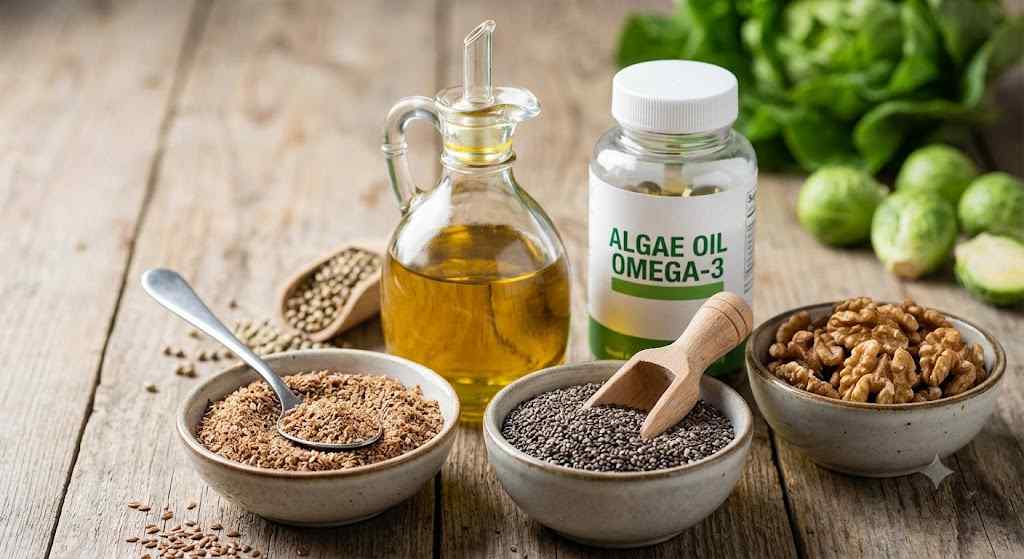
Ground flaxseeds are the richest plant source of ALA omega-3s, providing approximately 6,400 mg of ALA per tablespoon — significantly more than any other plant food. Flaxseed oil provides even more: approximately 7,200 mg per tablespoon. For non-fish eaters seeking to maximize omega-3 plant sources, ground flaxseed is the most practical daily option.
Critical note: whole flaxseeds pass through the digestive tract largely intact — you must use ground flaxseed (or freshly grind whole seeds in a coffee grinder) to access the omega-3 content. Add one to two tablespoons of ground flaxseed daily to oatmeal, smoothies, yogurt, or baked goods. Store ground flaxseed in the refrigerator as the omega-3 fats oxidize quickly at room temperature. Flaxseed oil should not be heated — use it in salad dressings or drizzled on food after cooking.
2. Chia Seeds
Chia seeds provide approximately 5,000 mg of ALA per two-tablespoon serving — making them the second-richest plant omega-3 source per serving and one of the most versatile. Unlike flaxseeds, chia seeds can be eaten whole (their outer shell is soft enough for complete digestion), and they form a gel when combined with liquid that makes them uniquely useful in puddings, overnight oats, and smoothies.
Two tablespoons of chia seeds daily provides more than double the adequate intake for ALA. They also contribute significant fiber (10 grams per two tablespoons), calcium, and magnesium — making them one of the most nutritionally comprehensive additions available for plant-based eaters.
3. Walnuts
Walnuts are the only tree nut that provides a significant amount of ALA omega-3s — approximately 2,570 mg per one-ounce serving (about 14 walnut halves). They are also the most widely researched nut for cardiovascular benefits, with multiple large studies finding associations between regular walnut consumption and reduced LDL cholesterol, lower inflammatory markers, and reduced cardiovascular mortality.
A daily handful of walnuts is one of the easiest ways to incorporate omega-3 plant sources into a typical American diet without any preparation or recipe modification. Add to oatmeal, salads, yogurt, or eat as a snack.
4. Hemp Seeds
Hemp seeds (hemp hearts) provide approximately 1,000 mg of ALA per three-tablespoon serving in an ideal 3:1 ratio of omega-6 to omega-3 — a ratio that supports rather than competes with omega-3 utilization. This ratio matters because excessive omega-6 intake (common in the American diet from vegetable oils) competes with omega-3 for the same metabolic enzymes, reducing conversion efficiency.
Hemp seeds are also a complete protein source (all nine essential amino acids) and have a mild, nutty flavor that blends easily into virtually any food. Three tablespoons sprinkled on salads, grain bowls, or blended into smoothies adds approximately 10 grams of protein alongside meaningful omega-3s.
5. Algae Oil — Direct EPA and DHA Without Fish
For non-fish eaters who want the direct, long-chain EPA and DHA forms of omega-3 without relying on inefficient ALA conversion, algae oil is the answer. Fish are rich in EPA and DHA specifically because they eat microalgae — algae is where these fatty acids originate in the marine food chain. Algae oil supplements bypass the fish entirely and deliver the exact same EPA and DHA forms directly.
Research has found algae oil supplementation produces the same increases in blood EPA and DHA levels as fish oil supplementation. Algae oil is widely available at US health food stores and pharmacies. This is the recommended supplementation approach for vegans, vegetarians, and anyone who wants the full cardiovascular and neurological benefits of omega-3s without consuming fish or fish oil.
6. Brussels Sprouts and Leafy Greens
While not omega-3 powerhouses like flaxseed or chia, cruciferous vegetables — particularly Brussels sprouts — and leafy greens like spinach and kale contain small but meaningful amounts of ALA. A cup of cooked Brussels sprouts provides approximately 135 mg of ALA. Consumed as part of a diet already rich in flaxseed, chia, and walnuts, these foods contribute to a cumulative daily ALA intake that supports meaningful conversion to EPA and DHA.
Maximizing Omega-3 Conversion from Plant Sources
Several strategies improve the efficiency of ALA-to-EPA/DHA conversion for plant-based eaters:
Reduce omega-6 intake: Excess omega-6 (from corn oil, soybean oil, sunflower oil) competes for the same conversion enzymes. Replace refined vegetable oils with olive oil or avocado oil.
Eat multiple ALA sources daily: Combining flaxseed + chia + walnuts provides a combined ALA intake of 14,000+ mg — enough to support meaningful EPA and DHA production despite inefficient conversion.
Consider algae oil: For brain health, pregnancy, or cardiovascular disease risk reduction, algae-based EPA/DHA supplementation ensures you have the direct forms regardless of conversion efficiency.
Frequently Asked Questions
Can I get enough omega-3 from plants without supplements?
For general anti-inflammatory support and heart health, consistently eating the plant omega-3 sources above — particularly 1–2 tablespoons of ground flaxseed, 2 tablespoons of chia seeds, and a handful of walnuts daily — provides meaningful benefit. However, for optimal brain health, pregnancy, or significant cardiovascular disease risk reduction, the research most strongly supports direct EPA and DHA intake — which algae oil supplementation provides reliably without fish.
Is flaxseed oil better than ground flaxseed for omega-3s?
Flaxseed oil provides more ALA per tablespoon (7,200 mg vs. 6,400 mg for ground seeds) and is more immediately bioavailable. However, ground flaxseed provides fiber, lignans (plant compounds with hormone-balancing and cancer-protective properties), and other nutrients not present in the oil. For omega-3 content specifically, both are excellent — flaxseed oil is preferable for those who want maximum ALA without the added fiber, while ground flaxseed is preferable for a more complete nutritional profile. Never heat flaxseed oil — its omega-3s oxidize rapidly at cooking temperatures.
Medical Disclaimer: This article is for informational and educational purposes only. It is not intended to provide medical or nutritional advice. Consult a healthcare provider or registered dietitian for personalized omega-3 recommendations, particularly during pregnancy or if you have cardiovascular disease.