Potassium is arguably the most underappreciated essential mineral in the American diet. The USDA identifies it as a nutrient of public health concern — one whose widespread deficiency poses a significant risk to population health. Yet only about 3% of American adults meet the recommended adequate intake of 2,600–3,400 mg per day. The consequences of this gap are significant: chronically low potassium intake is directly associated with elevated blood pressure, increased risk of stroke, kidney stones, muscle weakness, and impaired bone density.
Here's why potassium matters so much, why Americans fall so short, and the most practical potassium-rich foods to add to your weekly grocery list.
Quick TakeawayPotassium works in direct opposition to sodium — it relaxes blood vessel walls, promotes sodium excretion through the kidneys, and helps maintain healthy blood pressure. The American diet's extreme sodium-to-potassium ratio (too much sodium, too little potassium) is a primary driver of hypertension in the US.
What Potassium Does in Your Body
Potassium is an electrolyte — a mineral that carries an electrical charge in body fluids — and is the primary positively charged ion inside cells. Its key roles include regulating fluid balance between cells and their environment, maintaining the electrical gradients that allow nerve signals to fire and muscles to contract, supporting kidney function by promoting sodium excretion in urine, and relaxing blood vessel walls to support healthy blood pressure.
The relationship between potassium and blood pressure is one of the most well-established in nutritional science. Research consistently finds that higher potassium intake is associated with lower blood pressure, independent of sodium intake — and that increasing potassium while reducing sodium produces greater blood pressure reductions than either intervention alone. The DASH diet, one of the most evidence-backed dietary approaches for hypertension, is built significantly around increasing potassium-rich foods.
Why Most Americans Are Low in Potassium
The American dietary pattern is structurally low in potassium for several reasons. Ultra-processed foods — which make up approximately 57% of US calorie intake — are inherently low in potassium because food processing removes naturally occurring potassium from whole food ingredients. Simultaneously, these same processed foods are extremely high in sodium (used as a preservative and flavor enhancer), creating a double imbalance that elevates blood pressure risk.
Whole fruits and vegetables — the richest dietary sources of potassium — are consistently underconsumed in the US. The CDC estimates that only 12% of American adults eat enough fruit and only 10% eat enough vegetables to meet federal dietary guidelines.
Best Potassium-Rich Foods at US Grocery Stores
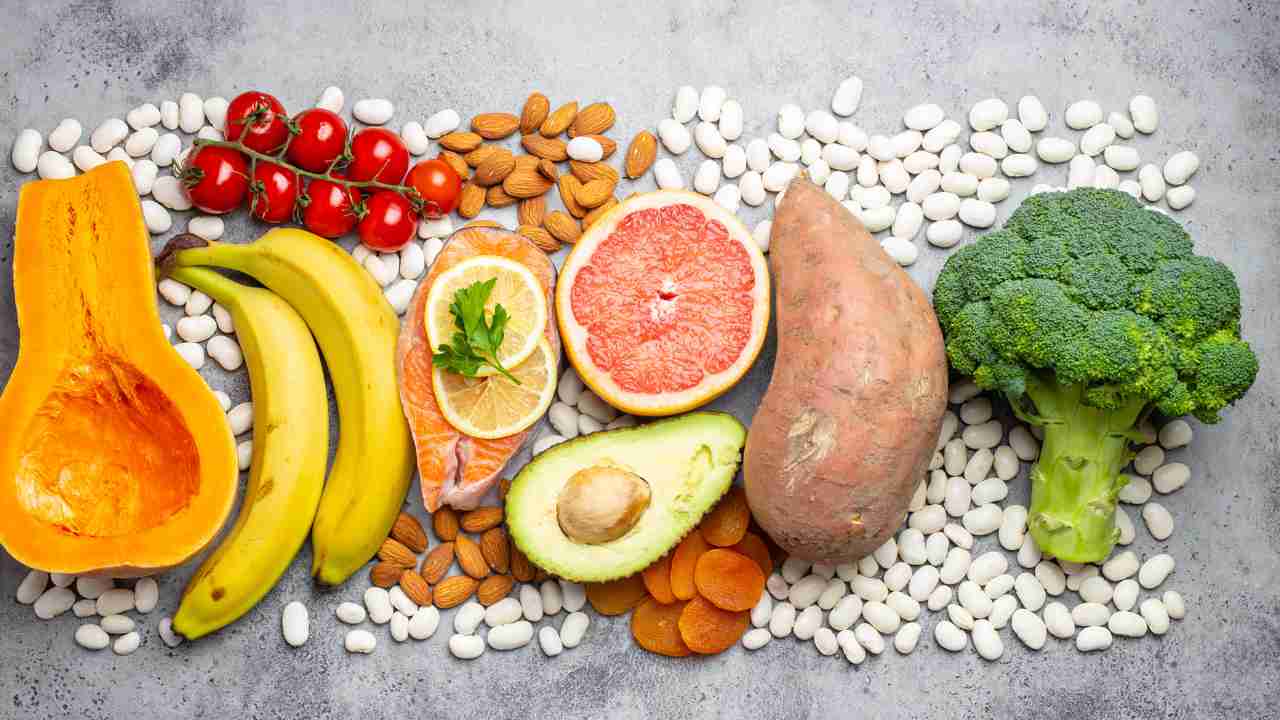
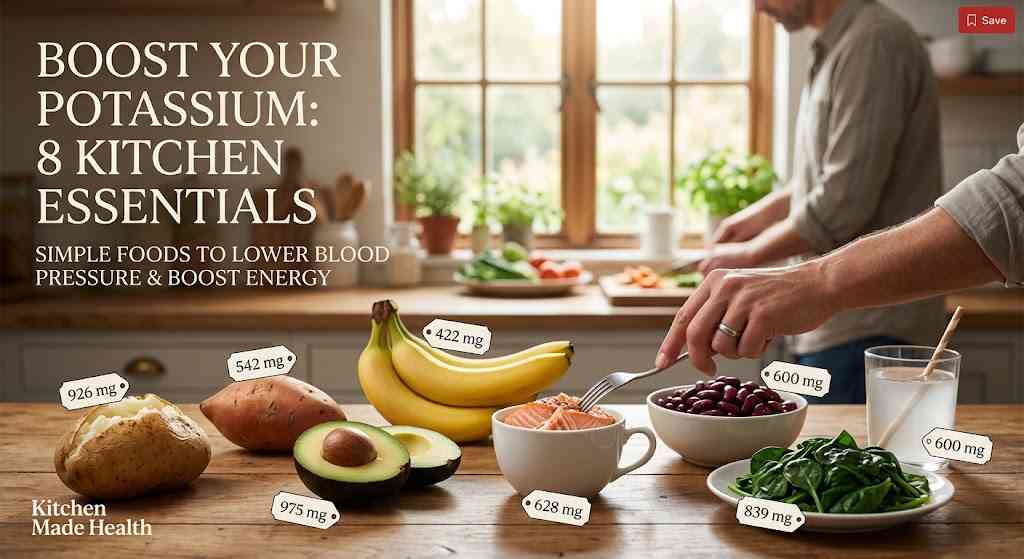
White Potato (Baked with Skin) — 926 mg per medium potato
The baked white potato is actually the highest-potassium whole food per serving available in most US grocery stores — surpassing bananas by a factor of more than two. The key is eating the skin, which contains the majority of the potato's potassium, and avoiding the butter, sour cream, and salt that undermine its cardiovascular benefits. A baked potato topped with plain Greek yogurt and chives is a genuinely heart-healthy meal.
Sweet Potato — 542 mg per medium potato
Sweet potatoes provide significant potassium alongside beta-carotene, fiber, and vitamin C. They are one of the most nutrient-dense starchy vegetables available and an excellent choice for people managing blood sugar who still want the potassium benefits of potatoes — sweet potatoes have a lower glycemic index than white potatoes when eaten with skin and prepared without added sugar.
Avocado — 975 mg per medium avocado
A medium avocado contains more potassium than two bananas — making it one of the most potassium-dense foods in the American diet and one of the few that is also rich in heart-healthy monounsaturated fat. The combination of potassium and oleic acid makes avocado particularly valuable for blood pressure management.
Spinach (Cooked) — 839 mg per cup
Cooked spinach concentrates its nutrients dramatically compared to raw — a cup of cooked spinach delivers nearly as much potassium as a banana at a fraction of the calories. Add to soups, omelets, pasta dishes, or sauté with garlic and olive oil as a side dish.
Kidney Beans and White Beans — 600–750 mg per cup cooked
Legumes are among the most potassium-rich foods in the plant kingdom and are accessible at every US grocery store. A cup of cooked white beans provides 750 mg of potassium — more than 20% of the daily adequate intake — alongside significant fiber and plant protein. Add to soups, stews, salads, or mash as a high-potassium alternative to mashed potato.
Salmon — 628 mg per 3-ounce serving
Salmon is one of the few animal foods that is a genuinely excellent potassium source, providing 628 mg per serving alongside omega-3 fatty acids that independently support blood pressure and cardiovascular health. The combination makes salmon particularly valuable for blood pressure management.
Banana — 422 mg per medium banana
Bananas are the most recognized potassium-rich food in American culture, though as the comparisons above show, they're far from the highest-potassium option available. They remain valuable as a convenient, portable, affordable source and contain approximately 12% of the daily adequate intake per banana. Particularly useful pre- and post-exercise for electrolyte replacement.
Coconut Water — 600 mg per cup
Coconut water is the most potassium-rich beverage widely available in the US — providing approximately 600 mg per cup alongside natural electrolytes. It is particularly useful for replacing electrolytes after exercise, illness, or in hot weather. Choose plain, unsweetened varieties — flavored coconut water products often have significant added sugar.
Practical Ways to Increase Potassium This Week
Swap chips for a baked potato with Greek yogurt at one meal this week
Add half an avocado to your daily breakfast — on eggs, toast, or in a smoothie
Replace one side dish per week with a cup of cooked beans or lentils
Add a large handful of spinach to every dinner, wilted in or alongside
Replace sports drinks with coconut water after workouts
Frequently Asked Questions
Can you get too much potassium from food?
For people with healthy kidneys, consuming high amounts of potassium from food is safe — the kidneys efficiently excrete excess potassium. However, people with chronic kidney disease (CKD) have impaired potassium excretion and may need to limit potassium-rich foods to prevent dangerous blood levels (hyperkalemia). If you have kidney disease, always work with your healthcare provider and a renal dietitian to determine appropriate potassium intake for your level of kidney function.
Should I take a potassium supplement?
Potassium supplements require more caution than most other mineral supplements. Over-the-counter supplements in the US are limited to 99 mg per tablet (far below the daily adequate intake) specifically because high-dose potassium supplementation can cause serious cardiac arrhythmias if taken incorrectly. Higher-dose potassium supplementation should only be used under medical supervision with blood level monitoring. For most people, food sources are the safer and more effective approach to increasing potassium intake.
Medical Disclaimer: This article is for informational and educational purposes only. People with kidney disease, heart conditions, or those taking potassium-affecting medications (ACE inhibitors, ARBs, potassium-sparing diuretics) should consult their healthcare provider before significantly increasing potassium intake.