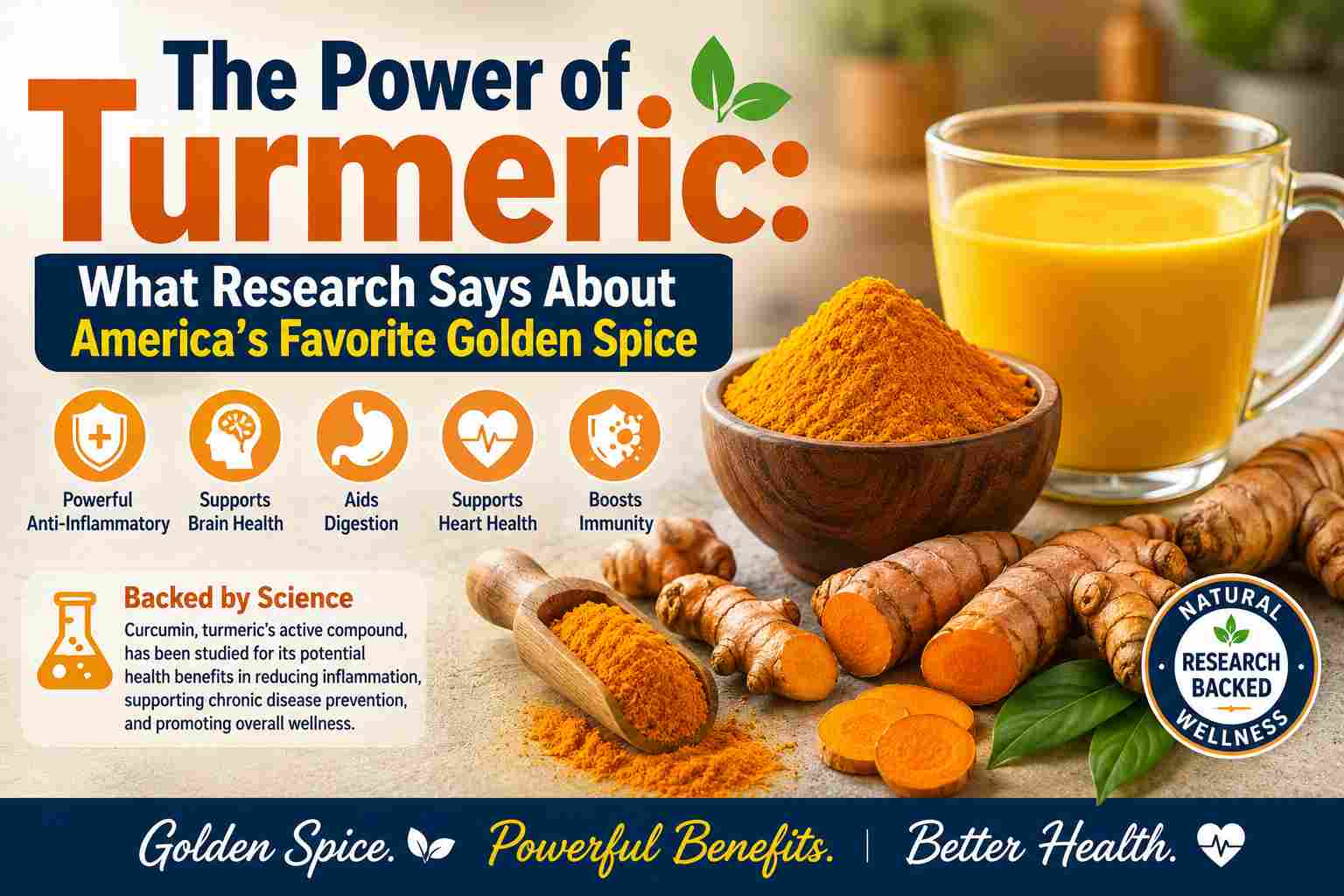
Walk into any American grocery store and you'll find turmeric in the spice aisle, the supplement section, the tea aisle, and increasingly — blended into lattes, protein powders, and snack bars. It's one of the fastest-growing functional food ingredients in the US market, driven largely by its long history in Ayurvedic medicine and a growing body of scientific research on its active compound: curcumin.
But what does the research actually say? And how do you get the most out of this ancient golden spice? Here's a clear-eyed, evidence-informed look at turmeric — the benefits with real support, the caveats worth knowing, and the best ways to use it in your kitchen.
Quick TakeawayTurmeric's active compound — curcumin — has been studied for anti-inflammatory, antioxidant, and other health-supporting properties. Results are promising in many areas, though curcumin's poor absorption is a key limitation. Combining it with black pepper and fat significantly improves uptake.
What Is Curcumin — and Why Absorption Matters
Turmeric gets most of its research attention because of curcumin, a polyphenol that gives turmeric its vivid yellow color. Curcumin makes up only about 2–8% of turmeric by weight — so a pinch of turmeric in your cooking delivers relatively small amounts of curcumin compared to concentrated supplements.
More importantly, curcumin is poorly absorbed by the body on its own. Research has found that combining it with piperine — a compound in black pepper — increases curcumin's bioavailability by up to 2,000%. Fat also helps, since curcumin is fat-soluble. This is why traditional golden milk (turmeric + black pepper + fat from milk) has always included these ingredients together — long before the science explained why.
Anti-Inflammatory Properties
Perhaps the most studied aspect of curcumin is its potential anti-inflammatory activity. Chronic low-grade inflammation is associated with a wide range of health conditions — from joint pain to metabolic disease — and curcumin appears to interact with several molecular pathways involved in the inflammatory process.
Multiple studies and systematic reviews have found that curcumin supplementation was associated with reductions in markers of inflammation, such as C-reactive protein (CRP). While most of this research uses concentrated curcumin supplements rather than food-level doses, it supports the long-standing traditional use of turmeric as a remedy for inflammatory discomfort.
Joint Comfort and Mobility
One of the most practically relevant areas of turmeric research for Americans is its potential role in supporting joint health. Several clinical trials have explored curcumin in the context of osteoarthritis — one of the most common conditions affecting American adults, particularly those over 50.
A number of these trials found that curcumin supplementation was associated with reductions in self-reported joint pain and improved mobility scores, with some studies comparing favorably to anti-inflammatory medications in terms of patient-reported outcomes. Results vary, and more large-scale research is needed, but this is one of the stronger areas of evidence for curcumin.
Antioxidant Activity
Curcumin is a potent antioxidant — it can neutralize free radicals directly and also appears to stimulate the body's own antioxidant enzyme systems. Oxidative stress (an excess of free radicals relative to antioxidants) is linked to aging and a range of chronic health conditions.
Including turmeric regularly in your diet — alongside other antioxidant-rich foods like berries, leafy greens, and nuts — contributes to a diet that broadly supports your body's antioxidant defenses.
Brain Health — Emerging Research
Some of the most exciting — and most preliminary — research on curcumin involves the brain. Curcumin can cross the blood-brain barrier, and researchers have explored its potential role in supporting cognitive function and reducing neuroinflammation. Studies in populations with mild cognitive concerns have shown some promising signals, but this is an emerging area and the science is not yet definitive.
What is well-established is that the lifestyle factors most protective of long-term brain health — regular physical activity, quality sleep, social connection, and a diet rich in antioxidants — all support each other, and turmeric fits naturally into that broader dietary picture.
Digestive Health
Turmeric has a long history of use for digestive complaints in traditional medicine, and some research supports this application. Curcumin appears to support bile production (which aids fat digestion) and has been studied for its potential to reduce symptoms of indigestion and bloating. A few studies have explored its use in inflammatory bowel conditions, with early but not yet conclusive results.
What Turmeric Is NOT a Treatment For
It's worth being clear: while the research on curcumin is genuinely interesting, it does not support the idea that turmeric cures cancer, reverses Alzheimer's disease, or replaces medical treatment for any serious condition. Much of the early research was done in lab settings or animal models, and human trials — while growing — often use highly concentrated curcumin supplements, not culinary amounts of turmeric.
Turmeric is best understood as a valuable component of an anti-inflammatory, nutrient-rich diet — not a standalone cure.
Best Ways to Use Turmeric in Your Kitchen
Golden milk: Warm milk + ½ tsp turmeric + pinch black pepper + ginger + honey. The classic format, and the most bioavailable.
Scrambled eggs: Add a pinch of turmeric and black pepper to your morning eggs — the fat in the eggs aids absorption.
Rice and grains: Stir a teaspoon into cooking water for rice, quinoa, or lentils — adds color, subtle flavor, and nutrients.
Soups and curries: The most traditional use. Turmeric pairs naturally with coconut milk, tomatoes, garlic, and ginger.
Smoothies: A small pinch blends easily into fruit-based smoothies without overpowering the flavor.
Always pair with black pepper and a fat source to maximize curcumin absorption.
Frequently Asked Questions
Should I take a turmeric supplement or just use the spice?
Culinary turmeric delivers lower doses of curcumin than supplements, but it also comes with all the other compounds in the whole spice and is generally safe for daily use. Supplements offer higher, more concentrated doses — useful if you're seeking the levels used in clinical research. If you're considering a supplement, look for one with piperine (black pepper extract) included, and always consult your healthcare provider first, especially if you take medications.
Can you take too much turmeric?
Culinary amounts of turmeric (the amounts used in cooking) are considered safe for most people. High-dose curcumin supplements, however, can cause digestive upset in some people and may interact with blood thinners, diabetes medications, and certain other drugs. High doses are not recommended during pregnancy. Always check with a healthcare provider before starting any supplement regimen.
Medical Disclaimer: This article is for informational and educational purposes only. It is not intended to diagnose, treat, cure, or prevent any health condition. Turmeric and curcumin supplements are not FDA-approved treatments for any disease. Always consult a qualified healthcare provider before beginning any supplement program.Start writing your guide…