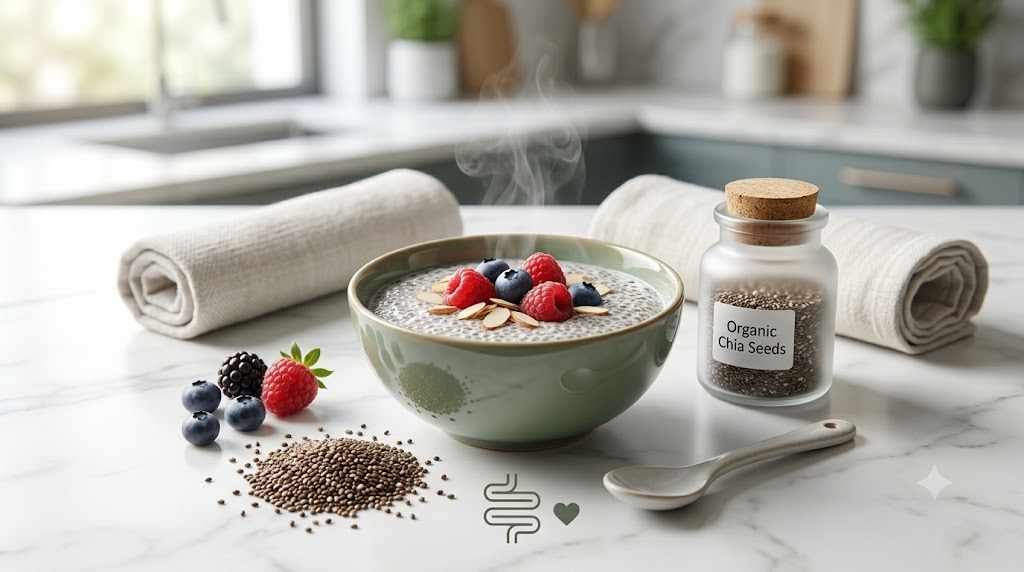
Chia seeds have had quite a journey — from ancient Aztec superfood to trendy American health staple found in everything from smoothie bowls to overnight oats. But do they actually live up to the hype? And what really happens in your body when you eat them consistently every day?
Here's an honest, research-informed look at what to expect — the benefits, the cautions, and the best ways to include them in your daily routine.
Chia Seeds — Nutrition per 1 oz (28g / ~2 tbsp)Fiber: 10g · Protein: 5g · Fat: 9g (of which 5g is omega-3 ALA) · Calcium: 18% DV · Magnesium: 23% DV · Calories: ~138
Your Digestion May Improve
The most noticeable daily change for many people is digestive. Chia seeds contain about 10 grams of fiber per ounce — roughly 36% of the daily recommended intake for adults. This includes both soluble fiber (which forms a gel in water and slows digestion) and insoluble fiber (which adds bulk to stool and supports regularity).
If you currently eat a low-fiber diet, introducing chia seeds gradually is wise. Going from very low to very high fiber intake too quickly can cause temporary bloating, gas, or digestive discomfort. Start with 1 tablespoon per day and increase from there.
You May Feel Fuller for Longer
Because chia seeds absorb up to 10–12 times their weight in water and form a thick gel, they expand in your stomach and may contribute to feelings of satiety. Research has explored their potential role in appetite management, with some studies finding reduced hunger and calorie intake in people who consumed chia seeds with meals compared to those who didn't.
This doesn't mean chia seeds are a weight loss solution on their own — calorie intake and overall diet pattern matter far more — but they can be a useful tool for managing hunger between meals.
Your Omega-3 Intake Will Increase
Chia seeds are one of the richest plant-based sources of alpha-linolenic acid (ALA), a type of omega-3 fatty acid. One ounce provides about 5 grams of ALA. Your body can convert ALA into EPA and DHA (the forms found in fatty fish), but this conversion is relatively inefficient in humans.
Still, regularly including ALA-rich foods supports your body's omega-3 status and may contribute to heart and brain health over time. For people who don't eat fish, chia seeds are a valuable plant-based omega-3 source.
You'll Get a Steady Calcium and Magnesium Boost
Many Americans fall short on calcium and magnesium intake. Chia seeds provide about 18% of your daily calcium needs and 23% of your daily magnesium needs per ounce. For people who don't consume much dairy, chia seeds can be a meaningful contributor to calcium intake.
Magnesium supports muscle function, nerve signaling, blood sugar regulation, and sleep quality — making chia seeds a quiet but valuable contributor to several body systems.
Your Hydration Habits May Improve
Because chia seeds absorb so much liquid, eating them with adequate water becomes especially important. Many people who add chia seeds to their diet naturally begin drinking more water — partly because of the gel-forming nature of the seeds, and partly because staying hydrated makes the seeds more comfortable to digest.
Avoid eating dry chia seeds in large amounts without liquid, as they can absorb moisture in the esophagus and potentially cause discomfort. Always consume them with sufficient fluid or after soaking.
Blood Sugar Response After Meals May Moderate
The soluble fiber in chia seeds slows the digestion of carbohydrates, which means blood sugar rises more gradually after a meal that includes chia seeds. Several small studies have explored this effect, with results suggesting that chia seeds may help moderate post-meal blood glucose levels — particularly when added to carbohydrate-containing foods like oatmeal or bread.
This is promising for people managing blood sugar, though chia seeds are not a medical treatment and should not replace any prescribed approach.
Who Should Be Cautious
People on blood thinners: Chia seeds' omega-3 content may have mild blood-thinning properties. Check with your doctor if you take anticoagulant medication.
People with swallowing difficulties: Dry chia seeds can expand and become difficult to swallow. Always consume them soaked or mixed into food with adequate liquid.
People with digestive conditions: High fiber intake may aggravate conditions like IBS in some people. Introduce slowly and monitor your response.
Best Ways to Eat Chia Seeds Every Day
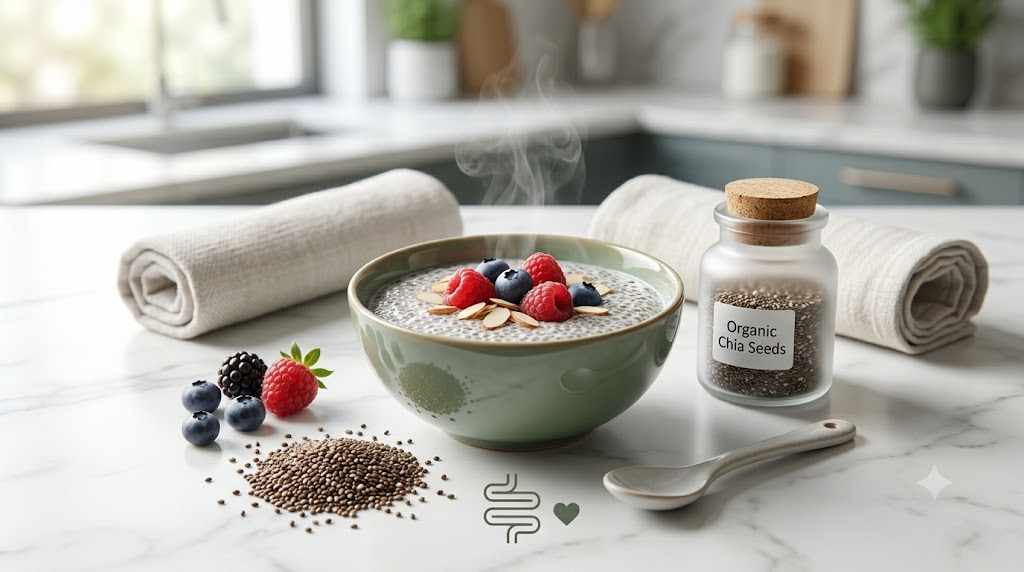
Overnight chia pudding: Mix 3 tablespoons of chia seeds with 1 cup of almond milk or regular milk. Refrigerate overnight and top with berries in the morning.
Smoothie boost: Add 1 tablespoon to any smoothie — they blend in seamlessly.
Oatmeal or yogurt topping: Sprinkle over your breakfast bowl for an easy fiber boost.
Egg substitute in baking: Mix 1 tablespoon of chia seeds with 3 tablespoons of water. Let sit for 5 minutes — this forms a "chia egg" that works in many baked goods.
Salad dressing thickener: Whisk into homemade vinaigrettes to add body without extra calories.
Frequently Asked Questions
How much chia seeds should I eat per day?
Most research uses 1–2 tablespoons (15–28 grams) per day. Starting with 1 tablespoon is a good approach if you're not used to high-fiber foods. Gradually increasing gives your digestive system time to adjust.
Do chia seeds need to be ground to absorb nutrients?
Unlike flaxseeds, chia seeds do not need to be ground to access their nutrients. Their outer shell is soft enough that your digestive system can process them whole. That said, soaking them in liquid before eating improves digestibility and makes them more comfortable to consume.
Can I eat too many chia seeds?
Very large amounts of chia seeds could lead to digestive discomfort due to their extremely high fiber content. Sticking to 1–2 tablespoons per day is a reasonable and well-studied amount for most healthy adults.
Medical Disclaimer: This article is for informational and educational purposes only. It is not intended to diagnose, treat, cure, or prevent any health condition. Always consult a qualified healthcare provider before making significant changes to your diet, particularly if you have a medical condition or take prescription medication.Start writing your guide…