Headaches are one of the most common health complaints in the United States — the American Migraine Foundation estimates that over 39 million Americans experience migraines alone, and tension headaches are even more widespread. While over-the-counter pain relievers are a go-to solution for many, a growing number of Americans are looking for natural approaches to prevent and manage everyday headaches.
Here are seven home remedies that many people find effective for common, non-serious headaches — along with a note on when a headache may signal something that needs medical attention.
Quick TakeawayMost common headaches are triggered by dehydration, muscle tension, sleep disruption, or stress. Many respond well to simple home interventions before medication is needed. Identifying your personal triggers is the most powerful long-term strategy.
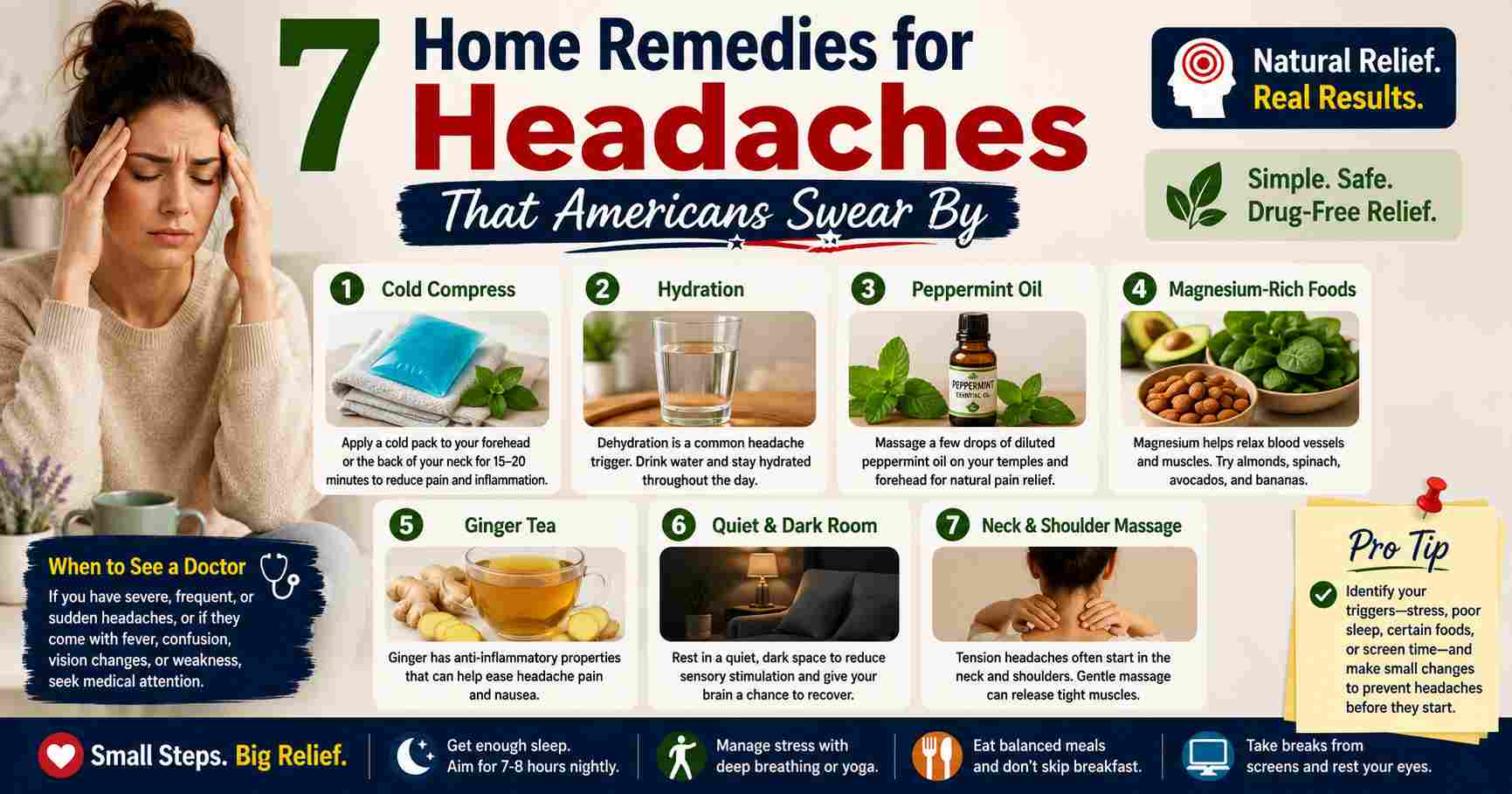
1. Drink Water — Dehydration Is the Most Common Culprit
If you have a headache, the first thing to do is drink a large glass of water. Dehydration is one of the most frequent triggers of both tension and migraine headaches, and many people are mildly dehydrated by mid-morning without realizing it — particularly if they've had coffee (a mild diuretic) without compensating with water.
Research has found that increasing daily water intake reduced both the intensity and duration of headaches in participants who experienced frequent headaches. Aim for at least 8–10 cups of water daily, and more if you're physically active or in a hot climate.
2. Peppermint Oil Applied to the Temples
Peppermint essential oil is one of the most researched natural remedies for tension headaches. Its active compound, menthol, creates a cooling sensation that may help relax the muscles around the forehead and temples and reduce pain signals. A clinical study published in the journal Cephalalgia found that a 10% peppermint oil solution applied to the forehead was as effective as acetaminophen in reducing tension headache pain.
Dilute a few drops of peppermint essential oil in a carrier oil (like coconut or jojoba oil) and massage gently into your temples, forehead, and the back of your neck. Avoid contact with eyes.
3. Cold or Warm Compress
Temperature therapy is a simple and effective tool for different types of headaches:
Cold compress: A cold pack or bag of frozen vegetables wrapped in a cloth, applied to the forehead or back of the neck, can numb pain and constrict blood vessels — particularly helpful for migraines, which involve blood vessel dilation.
Warm compress: A warm towel or heating pad applied to the neck and shoulders is more effective for tension headaches, where muscle tightness is a primary cause. A warm shower letting water run over the neck and upper back can have a similar effect.
4. Ginger Tea
Ginger has been studied for its potential anti-inflammatory and anti-nausea properties, both of which are relevant to headache and migraine relief. A study published in Phytotherapy Research found that ginger powder was comparable to sumatriptan (a common migraine medication) in reducing migraine severity, though the study was small and more research is needed.
For everyday use, brew a cup of fresh ginger tea (steep sliced fresh ginger in hot water for 10 minutes) at the first sign of a headache. The warmth, hydration, and ginger compounds together may provide meaningful relief for mild to moderate headaches.
5. Magnesium-Rich Snack or Supplement
Magnesium deficiency has a well-established connection to headaches and migraines. Research has found that people who experience frequent migraines often have lower magnesium levels than those who don't. The American Migraine Foundation notes that magnesium supplementation has been studied as a preventive approach for migraines.
If headaches are recurring, increasing magnesium-rich foods in your diet — pumpkin seeds, dark chocolate, spinach, almonds, avocado, and black beans — is a worthwhile dietary strategy. Magnesium glycinate or magnesium citrate supplements are commonly used for headache prevention, but always consult your doctor before starting supplements, especially at higher doses.
6. Caffeine — Used Carefully
Caffeine has a complex relationship with headaches. In small amounts, it can relieve headache pain — which is why caffeine is an ingredient in many over-the-counter headache medications like Excedrin. It constricts blood vessels (which can help with vascular headaches) and increases the effectiveness of pain relievers.
However, regular caffeine consumption also creates dependency, and the most common cause of a morning headache for habitual coffee drinkers is caffeine withdrawal. If you're experiencing frequent morning headaches and drink coffee daily, this is worth considering. Using caffeine as a remedy works best for occasional, not daily, use.
7. Rest in a Dark, Quiet Room
Light sensitivity and noise sensitivity are hallmarks of migraines in particular, and even for tension headaches, sensory stimulation can intensify pain. Resting in a darkened, quiet room removes these aggravating inputs and gives your nervous system a chance to calm down.
Combine this with an eye mask if needed, and use the time to practice slow, deep breathing — which activates the parasympathetic nervous system and may reduce the pain intensity through the same mechanism that makes stress relief effective for headaches.
Identify Your Personal Triggers
The most powerful long-term headache management strategy is identifying what triggers your headaches. Common American headache triggers include:
Dehydration or skipping meals
Poor sleep or changes in sleep schedule
Screen time and eye strain
Alcohol (particularly red wine and beer)
Processed meats containing nitrates
Aged cheeses and fermented foods (for some people)
Strong scents or perfumes
Weather and barometric pressure changes
Emotional stress and anxiety
Keeping a simple headache diary — noting when headaches occur, what you ate and drank, your sleep the night before, and your stress level — can reveal patterns within a few weeks.
When to Seek Medical Attention
Most headaches are benign, but see a doctor promptly if you experience:
A sudden, severe headache described as "the worst headache of your life"
Headache accompanied by fever, stiff neck, confusion, or vision changes
Headache following a head injury
Progressive headaches that worsen over days or weeks
Headaches that wake you from sleep
Frequently Asked Questions
What's the difference between a tension headache and a migraine?
Tension headaches typically cause a dull, pressing pain on both sides of the head — like a tight band around the forehead. They're usually related to muscle tension, stress, or posture. Migraines are typically more severe, often one-sided, and may include pulsating pain, nausea, vomiting, and sensitivity to light and sound. Migraines may also be preceded by an "aura" — visual or sensory disturbances. If you're unsure which type you experience, a neurologist or your primary care doctor can help clarify.
Can certain foods cause headaches?
Yes — for some people. Common dietary headache triggers include aged cheeses, red wine, processed meats with nitrates, artificial sweeteners (particularly aspartame), MSG, and caffeine withdrawal. Food triggers are highly individual — what triggers a headache in one person may have no effect in another. A food-headache diary is the most reliable way to identify personal triggers.
Medical Disclaimer: This article is for informational and educational purposes only. It is not intended to diagnose, treat, cure, or prevent headaches or migraines. Always consult a qualified healthcare provider for frequent, severe, or unusual headaches. Start writing your guide…