If you've ever woken up in the middle of the night unable to breathe through your nose, you know how miserable sinus congestion can be. For millions of Americans, it's a seasonal reality — made worse by dry indoor heating in winter, aggressive air conditioning in summer, and year-round allergens from coast to coast.
While over-the-counter decongestants are always an option, many people prefer to start with what's already in their kitchen. Below are seven home remedies that have been popular in American households for good reason — some have research to support them, others are time-tested traditions. As always, these are informational suggestions, not a substitute for medical advice.
Quick Takeaway Sinus congestion often responds well to simple home strategies like steam, hydration, and warm liquids. Most remedies below can be tried safely at home, though persistent symptoms should always be evaluated by a healthcare provider.
1. Steam Inhalation with Eucalyptus
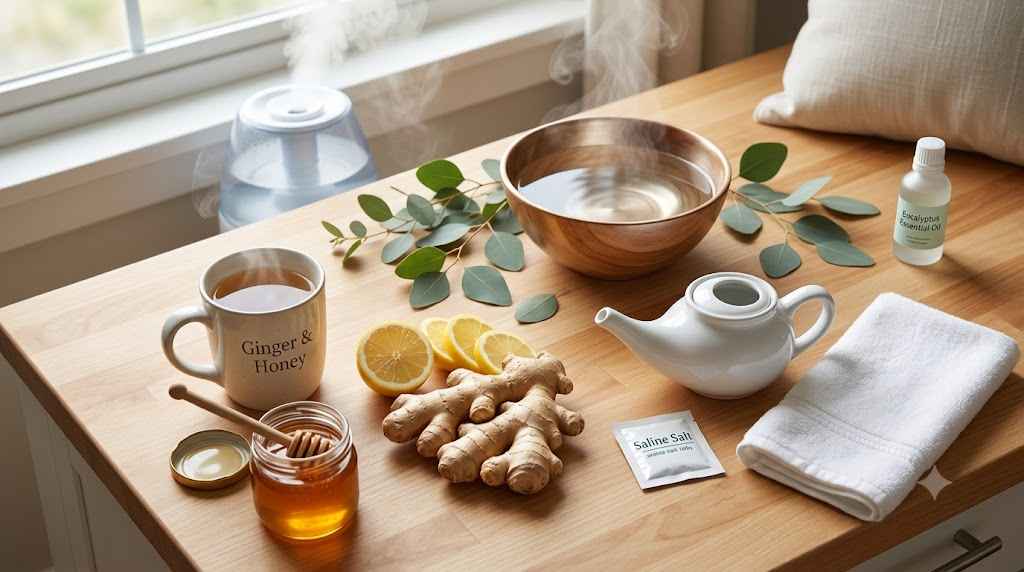
One of the oldest and most widely used remedies for sinus congestion is steam inhalation. Breathing warm, moist air can help loosen mucus and ease the pressure behind your nose and eyes. Add a few drops of eucalyptus oil to a bowl of hot (not boiling) water, drape a towel over your head, and breathe slowly for 5–10 minutes.
Eucalyptus contains a compound called cineole, which some research suggests may support respiratory comfort. Even plain steam without any essential oils can provide noticeable short-term relief.
2. Saline Nasal Rinse
Nasal irrigation — using a saline solution to flush out the nasal passages — has become one of the most mainstream home remedies in the US, largely thanks to the popularity of neti pots and squeeze bottles. A simple saline rinse (salt dissolved in distilled or previously boiled water) can help clear mucus and irritants from nasal passages.
Important: always use distilled, sterile, or previously boiled water in nasal rinse devices. Tap water is not recommended for this purpose.
3. Warm Ginger and Honey Tea
Ginger has been used in traditional medicine across many cultures for its warming, soothing properties. A cup of freshly grated ginger steeped in hot water — sweetened with a spoonful of raw honey — is a comforting remedy many Americans reach for at the first sign of congestion.
Ginger contains compounds like gingerols and shogaols that researchers have studied for their potential anti-inflammatory properties. Honey, meanwhile, is valued for its soothing effect on irritated throat tissue. Together, they make one of the most pleasant home remedies on this list.
4. Elevate Your Head While Sleeping
This one requires no ingredients at all. Sleeping flat can allow mucus to pool in your nasal passages, making congestion worse overnight. Simply propping yourself up with an extra pillow — or elevating the head of your bed slightly — can make a real difference in how you feel by morning.
Many people find that this one simple adjustment improves their sleep quality noticeably during a congested period.
5. Apple Cider Vinegar Steam
Apple cider vinegar (ACV) has a devoted following in US wellness communities, and one popular use is adding a small amount to a bowl of hot water for a steam inhalation session. The acetic acid in ACV is thought by some to help thin mucus, though formal research on this specific use is limited.
If you'd like to try it, add 1–2 tablespoons to a bowl of hot water and inhale the steam gently. Some people also add a tablespoon of ACV to warm water with honey and drink it as a tonic — though this is a matter of personal preference rather than established evidence.
6. Stay Generously Hydrated
This might be the least glamorous tip on the list, but it may be one of the most important. When you're dehydrated, mucus becomes thicker and harder to clear. Drinking plenty of water throughout the day — warm liquids in particular — can help keep mucus thin and moving.
Warm broths, herbal teas, and even plain warm water are all excellent choices. Avoid excessive caffeine and alcohol, which can contribute to dehydration.
7. Use a Cool-Mist Humidifier
Dry indoor air — especially common in American homes during winter months when heating systems run constantly — can irritate nasal passages and make congestion worse. A cool-mist humidifier in your bedroom adds moisture back into the air, which may reduce nasal dryness and help you breathe more comfortably overnight.
Keep your humidifier clean and change the water daily to prevent mold and bacteria from building up in the reservoir.
When to See a Doctor
Home remedies can be a helpful first step, but they have their limits. Consider reaching out to a healthcare provider if:
Your symptoms last longer than 10 days without improvement
You develop a fever above 102°F
You experience severe facial pain or headache
You notice green or yellow nasal discharge that worsens after initially improving
You have a weakened immune system or other underlying health conditions
Sinus infections (sinusitis) sometimes require medical treatment, and a doctor can help determine the right course of action.
Frequently Asked Questions
How long does sinus congestion typically last?
Congestion related to a cold usually peaks within 2–3 days and starts improving within a week. Allergy-related congestion can persist as long as the allergen is present. If symptoms last more than 10 days or worsen after improving, it's worth speaking with a doctor.
Can I use these remedies alongside medication?
Most of these remedies are gentle and unlikely to interfere with common over-the-counter medications, but it's always a good idea to check with a pharmacist or healthcare provider — especially if you take prescription medications.
Does spicy food help with sinus congestion?
Many people find that spicy foods like chili peppers provide temporary relief by triggering a runny nose, which can help clear congestion briefly. Capsaicin, the active compound in hot peppers, has been studied for its effects on nasal passages, though the relief is generally short-lived.
Medical Disclaimer: This article is for informational and educational purposes only. It is not intended to diagnose, treat, cure, or prevent any health condition. Always consult a qualified healthcare provider before making changes to your health routine, especially if you have underlying medical conditions or take prescription medications.Start writing your guide…