Seasonal allergies — hay fever, or allergic rhinitis — affect more than 50 million Americans every year, making them one of the most common chronic health conditions in the country. The familiar misery of sneezing, runny nose, itchy eyes, and congestion follows predictable seasonal patterns: tree pollens in spring, grass pollens in summer, and ragweed in fall. Many Americans deal with one or more of these seasons every year.
While antihistamines and nasal corticosteroids remain the most evidence-supported treatments, a growing number of Americans prefer to complement or reduce their medication use with natural approaches. Here are nine remedies with practical applications and varying degrees of research support.
Quick TakeawayNatural remedies work best for seasonal allergies as preventive and supportive measures — reducing the overall allergic burden rather than replacing medical treatment during severe symptoms. The most evidence-backed natural approaches include nasal saline irrigation, local honey (with caveats), quercetin-rich foods, and air filtration.
1. Nasal Saline Irrigation
Saline nasal rinses — using a neti pot or squeeze bottle with a sterile saline solution — are one of the most evidence-backed natural interventions for allergic rhinitis. They physically wash allergens (pollen, dust, mold spores) out of the nasal passages before they can trigger an immune response, and reduce nasal inflammation and mucus buildup.
Multiple clinical studies have found saline nasal irrigation reduces allergy symptoms and medication use. The American Academy of Allergy, Asthma and Immunology includes it as a recommended complementary approach. Use distilled or previously boiled water — never tap water. Once or twice daily during peak pollen season provides the most consistent benefit.
2. Local Raw Honey
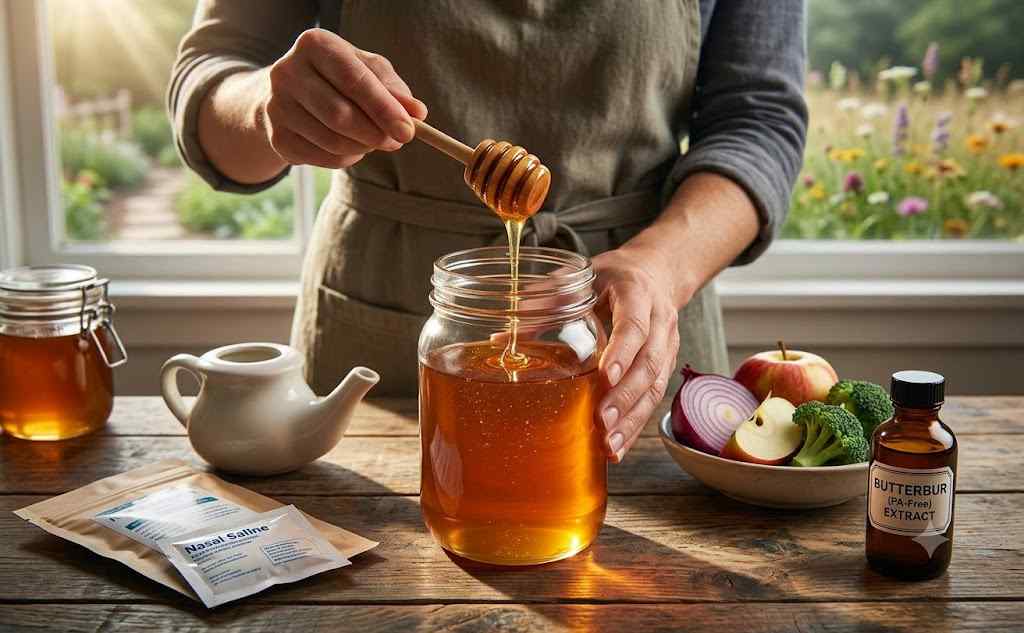
Local raw honey is one of the most popular natural allergy remedies in America, based on the theory that consuming small amounts of local pollen through honey gradually desensitizes the immune system — similar in concept to allergen immunotherapy. The clinical research is mixed: some small studies have found modest benefits, while others have found no significant effect compared to placebo.
The key word is local — honey must contain pollen from your specific geographic region's plants to have any potential effect. Generic commercial honey from distant regions offers no allergy benefit. A teaspoon of local raw honey daily, started several weeks before allergy season, is how most people approach it.
3. Quercetin-Rich Foods
Quercetin is a naturally occurring flavonoid antioxidant found abundantly in apples (with skin), onions, capers, berries, broccoli, and green tea. Research has found that quercetin inhibits the release of histamine from immune cells — the same mechanism targeted by antihistamine medications, though through a gentler pathway and at a much smaller magnitude.
Eating quercetin-rich foods regularly throughout allergy season may contribute modestly to reducing allergic reactions. Quercetin is also available as a supplement, typically combined with bromelain (which enhances absorption) — but as with all supplements, discuss with your doctor before use.
4. Butterbur Extract
Butterbur (Petasites hybridus) is one of the most well-researched herbal remedies for seasonal allergies. Several randomized controlled trials have found that butterbur extract was as effective as cetirizine (Zyrtec) and fexofenadine (Allegra) for reducing hay fever symptoms — a notable finding for an herbal remedy. It works by inhibiting leukotrienes and histamine, similar to prescription allergy medications.
Important: only use commercially prepared butterbur extracts that are certified "PA-free" (pyrrolizidine alkaloid-free). Unprocessed butterbur contains compounds that can cause liver damage. PA-free extracts are widely available at US health food stores. Always consult your doctor before using, particularly if you take other medications.
5. HEPA Air Purifier Indoors
One of the most practically effective interventions for seasonal allergies is also one of the simplest: a HEPA (High-Efficiency Particulate Air) filter in your bedroom. HEPA filters remove 99.97% of particles 0.3 microns or larger — including pollen, mold spores, dust mite particles, and pet dander. Running a HEPA purifier in your bedroom creates a low-allergen sleeping environment, which is particularly important since poor allergy-related sleep compounds immune reactivity the next day.
Change filters according to manufacturer recommendations. Keep windows closed during high-pollen periods, particularly in the morning when pollen counts are typically highest.
6. Stinging Nettle Leaf
Stinging nettle (Urtica dioica) has a history of use in traditional medicine for allergies, and some research supports this application. A double-blind study published in Planta Medica found that freeze-dried nettle leaf was rated as moderately effective for relieving hay fever symptoms by the majority of participants. Nettle appears to inhibit several inflammatory pathways involved in allergic reactions.
Stinging nettle tea and freeze-dried nettle capsules are widely available. The freeze-dried form has more research support than cooked or dried nettle. Drink nettle tea 2–3 times daily during allergy season as a gentle preventive support.
7. Shower and Change Clothes After Being Outdoors
This isn't a herbal remedy — but it's one of the most effective practical strategies for reducing allergen exposure. Pollen adheres to skin, hair, and clothing and continues to trigger allergic reactions long after you've come indoors. Showering and changing clothes immediately after spending time outside during high-pollen periods can dramatically reduce your total daily allergen exposure.
Wash hair before bed rather than in the morning — pollen in your hair transfers to pillowcases and results in nighttime allergen exposure during sleep, worsening next-day symptoms. This single habit change is free and consistently reported as effective by allergy sufferers.
8. Spicy Foods and Capsaicin
Capsaicin — the active compound in chili peppers — triggers the nasal mucous membranes to produce a watery secretion that can help flush allergens and reduce nasal congestion. While the effect is temporary, spicy foods provide immediate relief from stuffy nasal passages during allergy season. Capsaicin nasal sprays have also been studied clinically with positive results for nonallergic rhinitis.
A bowl of spicy soup during allergy season is both comforting and practically effective for temporary congestion relief. The hot steam provides additional benefit through the same mechanism as steam inhalation.
9. Omega-3 Rich Diet
Emerging research suggests that a diet high in omega-3 fatty acids — from fatty fish, walnuts, flaxseed, and chia seeds — may help modulate the inflammatory response underlying allergic reactions. Several population studies have found associations between higher omega-3 intake and lower rates of hay fever and allergic sensitization. The proposed mechanism involves omega-3s shifting the balance of immune signaling away from the Th2 response that drives allergic inflammation.
This is a long-term dietary pattern effect rather than an acute remedy. Consistently eating omega-3-rich foods year-round — not just during allergy season — is where the benefit accrues.
When to See a Doctor
Natural remedies are best used as complements to, not replacements for, medical care when symptoms are severe. See a doctor or allergist if: symptoms significantly impair your daily function or sleep, over-the-counter antihistamines are not providing adequate relief, you develop asthma symptoms (wheezing, shortness of breath), or you'd like to explore allergen immunotherapy (allergy shots or sublingual tablets) for long-term desensitization — the only treatment that addresses the underlying allergic response rather than just managing symptoms.
Frequently Asked Questions
When is pollen count highest during the day?
Pollen counts are typically highest between 5 AM and 10 AM, particularly on dry, warm, windy days. Counts are lowest after rain (which washes pollen from the air) and in the evening. Scheduling outdoor exercise and activities for late afternoon or evening during peak pollen season can meaningfully reduce allergen exposure. Many weather apps and the National Allergy Bureau website (pollen.com) provide daily local pollen counts.
Can seasonal allergies get worse over time?
Yes — for some people, allergies do worsen over years due to increasing sensitization. Climate change has also extended pollen seasons and increased pollen production from many plants. People who have mild seasonal allergies in their 20s sometimes develop more significant symptoms in their 30s and 40s. Allergen immunotherapy (allergy shots) remains the most effective long-term treatment for preventing this progression and can reduce allergic sensitivity over a 3–5 year treatment course.
Medical Disclaimer: This article is for informational and educational purposes only. It is not intended to diagnose, treat, cure, or prevent seasonal allergies or any related condition. Always consult a qualified healthcare provider or allergist for persistent or severe allergy symptoms.