Snacking with diabetes is a topic that generates significant confusion. Some healthcare providers recommend avoiding snacks entirely to minimize blood sugar fluctuations. Others recommend strategic snacking to prevent the blood sugar dips that lead to overeating at meals. The right approach depends on the individual — their medications, their meal timing, their blood sugar patterns — but the quality of snacks chosen matters enormously regardless of strategy.
Here is a practical guide to the best and worst snack options for people managing blood sugar, based on glycemic impact, protein and fiber content, and real-world accessibility at US grocery stores.
Quick TakeawayThe best snacks for blood sugar control combine protein, healthy fat, and fiber — the three macronutrients that slow glucose absorption and prevent spikes. A snack of protein + fat + fiber produces a dramatically different blood sugar response than a snack of refined carbohydrates alone, even at the same calorie count.
The Best Snacks for Blood Sugar Control
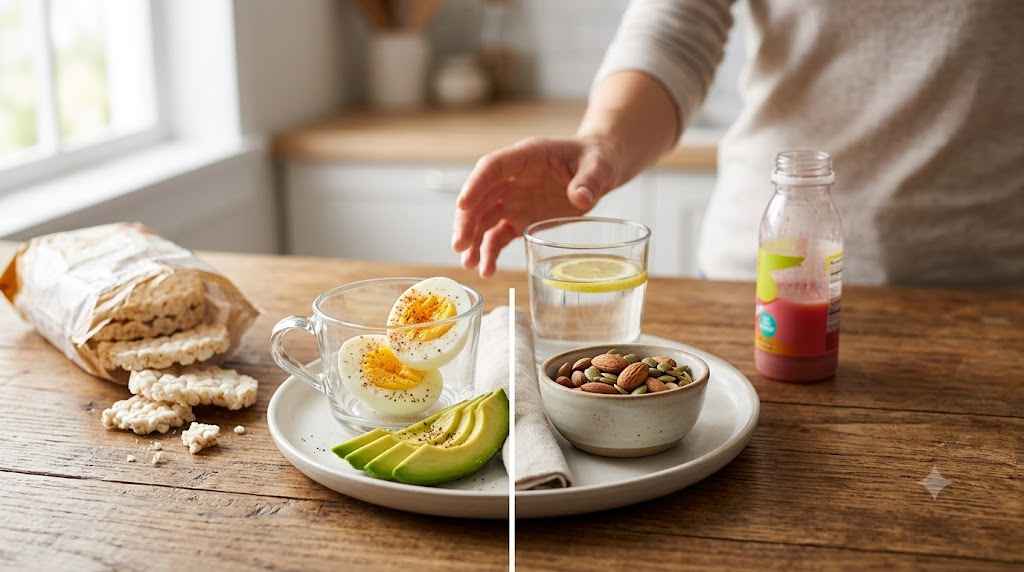
Hard-Boiled Eggs with Avocado
This combination delivers complete protein (from eggs) and monounsaturated fat (from avocado) with virtually no digestible carbohydrates — producing essentially no blood sugar response. Two hard-boiled eggs with a quarter of an avocado provides approximately 15 grams of protein and 10 grams of healthy fat, creating sustained satiety for 2–3 hours. Batch-cook eggs at the start of the week for a grab-and-go option.
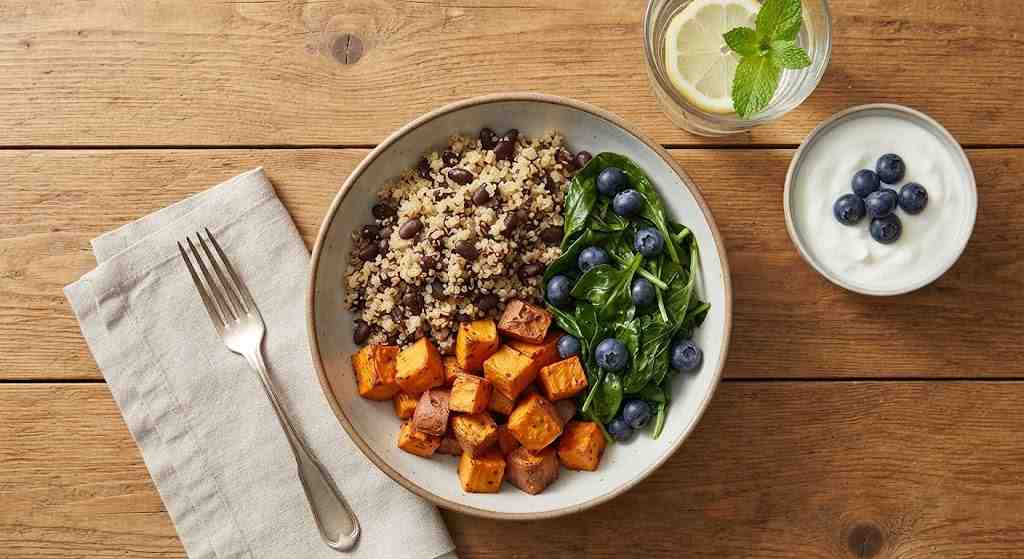
Plain Greek Yogurt with Berries (No Added Sugar)
Plain Greek yogurt provides 15–18 grams of protein per ¾-cup serving with a low glycemic index (around 11–23). Adding a small handful of berries provides fiber and antioxidants that further slow glucose absorption. The protein in Greek yogurt makes it one of the most satiating low-glycemic snacks available. Always choose plain, unsweetened varieties — flavored Greek yogurts can contain 15–20 grams of added sugar per serving, negating the benefit entirely.
Nuts and Seeds
Almonds, walnuts, cashews, and pumpkin seeds are low-glycemic, high in healthy fat, and provide moderate protein — a combination that produces minimal blood sugar impact. Research has found that eating a small handful of nuts before or alongside carbohydrate-containing foods meaningfully reduces the post-meal blood sugar response. A 1-ounce portion (approximately a small handful) is the appropriate serving size for snacking with diabetes.
Celery or Bell Pepper with Nut Butter
Non-starchy vegetables like celery, cucumber, and bell peppers have essentially no impact on blood sugar while providing fiber, volume, and crunch. Pairing with a tablespoon of natural almond or peanut butter (no added sugar) adds healthy fat and protein that makes the snack genuinely satisfying rather than just low-calorie. This combination provides roughly 4–6 grams of protein, 8–10 grams of healthy fat, and only 3–5 grams of net carbohydrates.
Cottage Cheese with Cucumber
Half a cup of low-fat cottage cheese provides approximately 12–14 grams of protein with minimal carbohydrates and a very low glycemic index. Pairing with sliced cucumber adds water content and crunch with essentially no blood sugar impact. Cottage cheese is particularly valuable as a snack because its casein protein digests slowly, providing sustained satiety and stable blood sugar for 2–3 hours after eating.
Tuna Pouch on Cucumber Rounds
A single-serve pouch of light tuna (in water) provides 20–22 grams of protein with zero carbohydrates. Served on cucumber slices instead of crackers eliminates the carbohydrate load while maintaining texture and crunch. This is one of the highest-protein, lowest-glycemic snack options available — useful when blood sugar control is the primary concern.
Cheese with a Small Apple
A 1-ounce portion of hard cheese (cheddar, gouda, Swiss) paired with half a small apple creates a balanced snack where the protein and fat from cheese slows the absorption of the apple's natural sugars. The combination is more blood-sugar-friendly than the apple alone and more satisfying than the cheese alone. This is also one of the most portable snack options for people managing blood sugar away from home.
The Worst Snacks for Blood Sugar Control
Rice Cakes and Crackers
Rice cakes are frequently chosen as a "diet" snack, but they have a glycemic index of approximately 82 — higher than white bread. Plain crackers, pretzels, and most savory snack foods are made from refined flour and have similarly high glycemic indexes that cause rapid blood sugar spikes. When combined with a fat or protein topping (nut butter, cheese, tuna) their impact is moderated — but eaten alone, they are among the worst snack choices for people snacking with diabetes.
Fruit Juice and Fruit Smoothies
A glass of orange juice or apple juice contains 25–30 grams of rapidly absorbed sugar with no fiber to slow it down. Even "100% natural" juice spikes blood sugar quickly. Commercial smoothies — particularly store-bought versions — often contain 40–60 grams of sugar per bottle. Whole fruit is significantly better than juice for blood sugar management because the fiber structure slows glucose absorption.
Low-Fat Flavored Yogurt
Despite its health reputation, flavored low-fat yogurt typically contains 20–28 grams of added sugar per serving — equivalent to eating a candy bar. The removal of fat requires significant sugar addition to maintain palatability. For snacking with diabetes, this is one of the most deceptive choices in any grocery store.
Granola Bars and "Protein" Bars
Most commercial granola bars and protein bars are nutritionally closer to candy bars than health foods, containing 15–30 grams of sugar alongside refined oats, honey, or high-fructose corn syrup. Even bars marketed as "low sugar" often contain sugar alcohols that can cause digestive discomfort. If using bars for convenience, look for fewer than 5 grams of added sugar, at least 10 grams of protein, and a short, recognizable ingredient list.
Dried Fruit
Dried mango, raisins, cranberries, and other dried fruits are highly concentrated sources of natural sugar — a small handful of raisins contains as much sugar as a full bunch of grapes. The water removal concentrates sugars dramatically, and most commercial dried fruits have additional sugar added. A small portion of fresh, whole fruit is always a better choice for blood sugar management.
Should Everyone With Diabetes Snack?
Not necessarily. Whether snacking is beneficial depends on your medications, your blood sugar patterns, your meal timing, and your goals. People on insulin or sulfonylureas may need snacks to prevent hypoglycemia between meals. People using only metformin or lifestyle management may do better avoiding snacks to reduce total daily carbohydrate load. This is an individual decision best made with your diabetes care team.
Frequently Asked Questions
How many carbohydrates should a diabetic snack contain?
General guidance from diabetes organizations suggests 15–30 grams of total carbohydrates per snack, though individual tolerance varies significantly. Someone using a continuous glucose monitor (CGM) can directly observe how different snack choices affect their specific blood sugar response — a powerful tool for personalized snack planning. Always discuss specific carbohydrate targets with your registered dietitian or diabetes care team, as appropriate amounts vary by medication, weight, activity level, and blood sugar control goals.
Is it okay to snack before bed with diabetes?
A small bedtime snack may help prevent overnight hypoglycemia in people on certain insulin regimens — particularly those taking long-acting insulin. A small amount of protein and fat (such as a tablespoon of nut butter or a few nuts) is generally preferable to carbohydrate-heavy bedtime snacks. However, routine bedtime snacking is not necessary or beneficial for everyone with diabetes. Discuss bedtime eating with your healthcare provider based on your specific medication regimen and overnight blood sugar patterns.
Medical Disclaimer: This article is for informational and educational purposes only. Dietary management of diabetes should be individualized and guided by your healthcare team. Never adjust diabetes medications based on dietary changes without consulting your doctor. Always work with a registered dietitian for personalized meal and snack planning.