Most people managing blood sugar have heard of the glycemic index (GI) — a ranking of foods based on how quickly they raise blood glucose compared to pure glucose. But the glycemic index has a significant limitation that makes it misleading in real-world eating: it measures the blood sugar impact of a standardized amount of carbohydrate, not the amount you actually eat in a typical serving. This is where glycemic load becomes a far more practical tool.
Quick TakeawayGlycemic Load (GL) = (Glycemic Index × grams of carbohydrate per serving) ÷ 100. A GL under 10 is low, 11–19 is medium, and 20+ is high. This single number tells you both how fast and how much a real-world portion of food will raise your blood sugar — making it a far more practical guide than GI alone.
Why Glycemic Index Alone Is Misleading
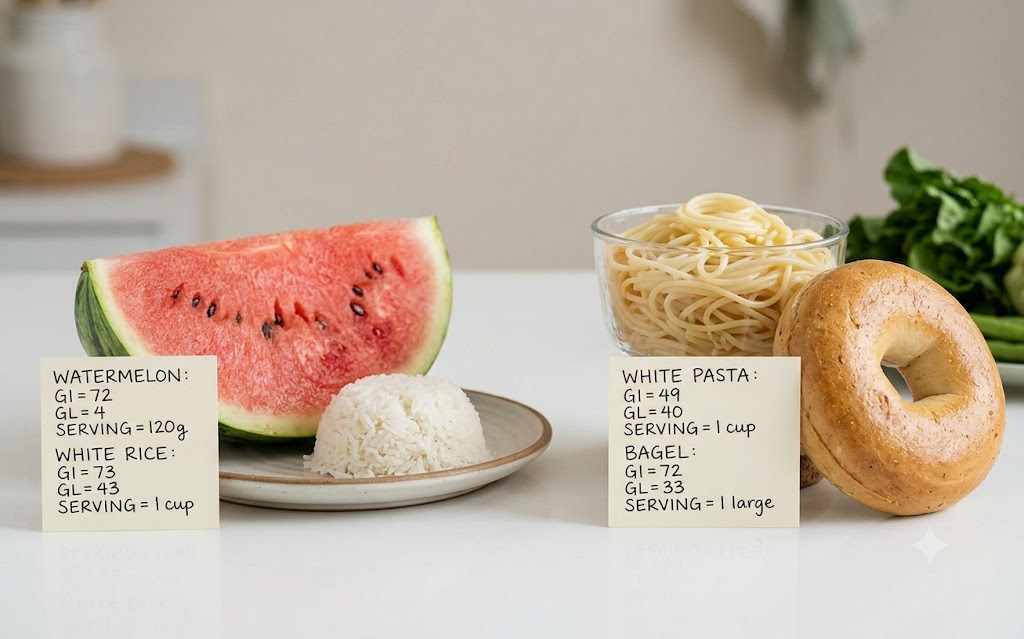
The classic example that illustrates GL's superiority over GI is watermelon. Watermelon has a high glycemic index of approximately 72 — suggesting it would significantly spike blood sugar. This alarmed many diabetes patients and dieters into avoiding watermelon entirely. But a standard serving of watermelon (about 120g, a reasonable slice) contains only 6 grams of digestible carbohydrates due to its very high water content. Its glycemic load is therefore approximately 4 — very low — meaning a real serving has a minimal blood sugar impact despite its high GI ranking.
Conversely, white pasta has a moderate glycemic index of around 49 — suggesting it's reasonably blood-sugar friendly. But a typical American serving of pasta (2–3 cups cooked) contains 80–120 grams of carbohydrates, giving it a glycemic load of 40–60 — very high. The GI alone would suggest pasta is fine; the GL reveals it's one of the highest-impact foods in the diet at typical serving sizes.
How to Calculate Glycemic Load
The formula is simple: GL = (GI × grams of carbs per serving) ÷ 100. You need two pieces of information — the food's glycemic index (available at glycemicindex.com) and the net carbohydrate content of the serving you're actually eating (from the nutrition label or a food database).
Interpretation: GL of 1–10 = low (minimal blood sugar impact); GL of 11–19 = medium; GL of 20 or above = high (significant blood sugar impact). For a full day of eating, a total daily GL under 80 is considered low-GL and associated with better blood sugar control and reduced type 2 diabetes risk in research.
High GL Foods to Be Aware Of
White rice (1 cup cooked): GI 73, GL ≈ 43 — one of the highest GL foods in the American diet
Cornflakes cereal (1 cup): GI 81, GL ≈ 21
Bagel (1 large): GI 72, GL ≈ 33
Baked potato (1 medium, no skin): GI 85, GL ≈ 26
White bread (2 slices): GI 75, GL ≈ 20
Soft drink (12 oz): GI 65, GL ≈ 26
Low GL Foods for Blood Sugar Control
Lentils (1 cup cooked): GI 32, GL ≈ 8 — excellent protein + fiber combination
Apple (1 medium): GI 38, GL ≈ 6
Chickpeas (½ cup): GI 28, GL ≈ 6
Rolled oats (½ cup dry): GI 55, GL ≈ 13 — medium, but much better than instant oats
Watermelon (120g): GI 72, GL ≈ 4 — the classic example of high GI, low GL
Sweet potato (1 medium, with skin): GI 54, GL ≈ 11 — medium GL
Non-starchy vegetables (most): GL 1–3 per serving — eat freely
Practical Strategies to Lower the GL of Any Meal
You don't have to avoid high-GI foods entirely — you can reduce their glycemic load impact through several practical strategies:
Reduce portion size: Halving a serving of white rice from 1 cup to ½ cup roughly halves its GL. Simple and immediately effective.
Add protein and fat: Eating carbohydrate-containing foods alongside protein and healthy fat slows gastric emptying and glucose absorption, effectively reducing the functional GL of the meal. Rice with chicken and avocado has a much lower blood sugar impact than rice alone.
Add fiber: Fiber slows glucose absorption. Adding vegetables, beans, or flaxseed to any meal reduces its effective GL.
Choose less processed versions: Rolled oats have a lower GL than instant oats. Whole grain bread has a lower GL than white bread. Al dente pasta has a lower GL than overcooked pasta — cooking breaks down starch structures and raises GI.
Add vinegar or lemon: Acids slow gastric emptying and reduce blood sugar response. A vinaigrette salad dressing or lemon juice on food measurably lowers the GL impact of the meal.
Frequently Asked Questions
Should people with diabetes track glycemic load daily?
Tracking precise GL values for every food is more detail than most people need or can sustainably maintain. A more practical approach is developing a working knowledge of which foods are high, medium, and low GL — and consistently building meals around low-to-medium GL choices with protein, healthy fat, and fiber at each meal. For people who use a continuous glucose monitor (CGM), direct glucose tracking is more personalized and actionable than any glycemic index or load calculation. Always work with your diabetes care team to develop the dietary approach most appropriate for your medications and blood sugar patterns.
Does cooking method change glycemic load?
Yes, significantly. Cooking breaks down starch structures and increases digestibility, raising GI and therefore GL. Al dente pasta has a meaningfully lower GI than well-cooked pasta. Cooling cooked starches (rice, potatoes, pasta) in the refrigerator and eating them cold or reheated produces resistant starch — a form of starch that resists digestion and acts more like fiber, lowering the GL substantially. Cold potato salad has a lower GL than a freshly baked hot potato, for example.
Medical Disclaimer: This article is for informational and educational purposes only. Dietary management of blood sugar should be guided by your healthcare team. Never adjust diabetes medications based on dietary changes without consulting your doctor. Work with a registered dietitian for personalized meal planning.