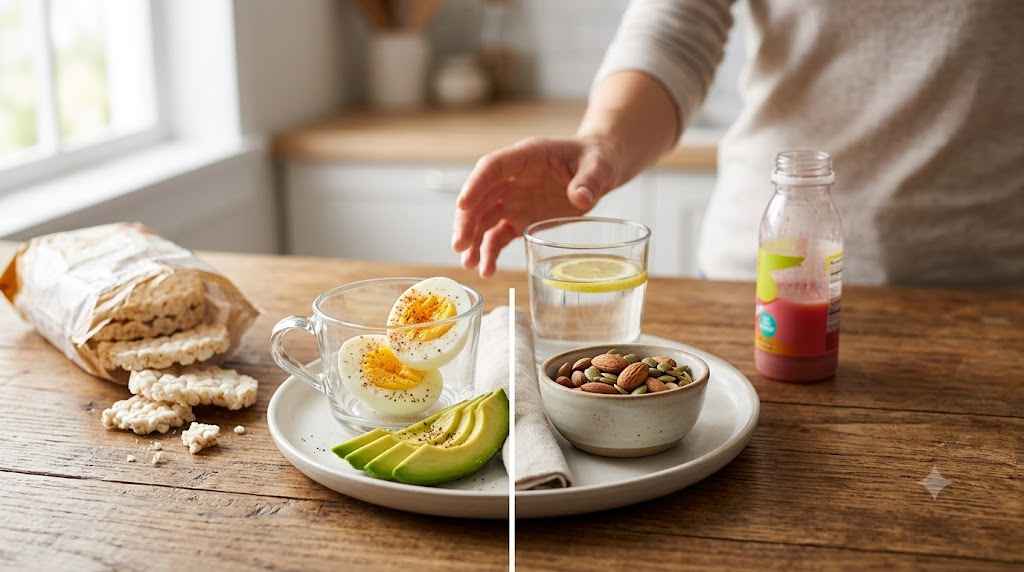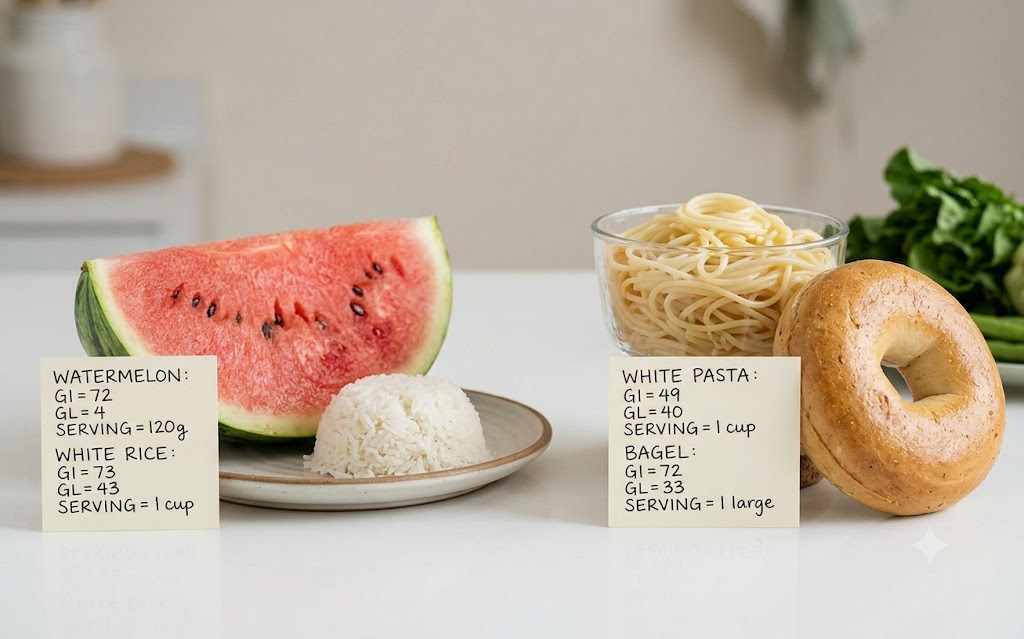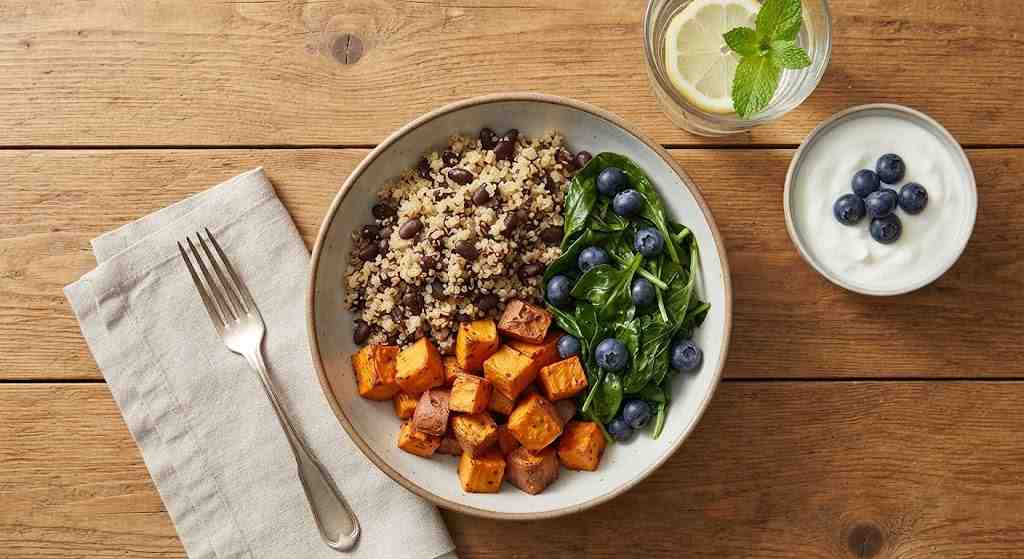
The nutrition facts label on packaged foods contains everything needed to make informed blood-sugar-smart choices — but only if you know what to look for and what to ignore. Front-of-package claims like "natural," "whole grain," "low fat," "heart healthy," and "light" are marketing language with no standardized regulatory meaning for blood sugar impact. The back-of-package nutrition facts label, by contrast, contains precise, regulated information. Reading food labels for blood sugar control is a skill that transforms every grocery shopping trip into a blood sugar management opportunity.
Quick TakeawayThe four most important numbers on any food label for blood sugar control are: Total Carbohydrates, Dietary Fiber, Added Sugars, and Serving Size. Net carbs (total carbs minus fiber) is the most practically useful calculation. Ignore the front of the package entirely — always go straight to the nutrition facts panel on the back.
Step 1 — Always Check Serving Size First
Every number on the nutrition facts label applies to one serving — and the serving size defined on the label is frequently much smaller than what most people actually consume. A bag of crackers may list a serving as 5 crackers (28g) — but most people eat 15–20 crackers in a sitting, consuming 3–4 times the carbohydrates, sugars, and calories listed per serving. A "single-serving" bottle of juice or iced tea often contains 2.5 servings, meaning the sugar content on the label must be multiplied by 2.5 to reflect what you're actually drinking.
Always check serving size first, then multiply all other values by the number of servings you'll actually consume. This single habit prevents the most common and consequential food label misreading for blood sugar management.
Step 2 — Total Carbohydrates
Total carbohydrates is the master number for blood sugar management — it represents all carbohydrates in a serving, including fiber, sugar, and starch. This is the number that most directly predicts the blood sugar response to a food, and it is what carbohydrate counting for diabetes is based on. Many people with diabetes have been given a target range of carbohydrates per meal (commonly 45–60g for many adults, though individual targets vary significantly) — total carbohydrates on the label is what counts toward this target.
Step 3 — Calculate Net Carbs
Net carbs = Total Carbohydrates − Dietary Fiber. Dietary fiber is a form of carbohydrate that the body cannot digest and therefore does not raise blood sugar. Subtracting fiber from total carbohydrates gives net carbs — the portion of carbohydrates that will actually be absorbed and impact blood glucose. A food with 25g total carbs and 10g fiber has 15g net carbs — and will raise blood sugar roughly half as much as a food with 25g total carbs and 1g fiber.
This calculation is particularly important when comparing foods: a high-fiber bread (20g total carbs, 5g fiber = 15g net carbs) is significantly more blood-sugar-friendly than a low-fiber white bread (20g total carbs, 1g fiber = 19g net carbs), even though the total carbohydrate count on the label appears identical.
Step 4 — Added Sugars vs. Total Sugars
Since 2020, US nutrition labels are required to separately list "Added Sugars" below "Total Sugars." This distinction is critical for blood sugar management. Total sugars includes naturally occurring sugars in whole foods (lactose in dairy, fructose in fruit) alongside added sugars. Added sugars are the sugars manufacturers add during processing — these provide no nutritional benefit beyond calories and directly spike blood glucose.
Target: fewer than 5g of added sugars per serving for most packaged foods. Products with 0g added sugars are preferable. Be aware that "no added sugar" on the front of a package does not mean "no sugar" — it means no sugar was added, but the product may still contain significant natural sugars from concentrated fruit juice, dates, or other naturally sweet ingredients that raise blood sugar.
Step 5 — Ingredient List: Finding Hidden Sugar
Sugar appears on ingredient lists under more than 60 different names. Manufacturers sometimes use multiple sugar sources in a single product — spreading them across the ingredient list to prevent any single "sugar" from appearing near the top (ingredients are listed in order of quantity by weight). Common disguised sugar names include: high fructose corn syrup, maltodextrin, dextrose, sucrose, evaporated cane juice, fruit juice concentrate, brown rice syrup, agave nectar, maltose, and molasses.
A practical rule: if any form of sugar appears in the first three ingredients, the product is likely high in added sugar regardless of what the front label claims. Count how many different sugar names appear — a product with five different sugar aliases has significant total added sugar even if each one appears to be a small amount individually.
Step 6 — Protein and Fat Content
Protein and fat slow gastric emptying and blunt the blood sugar response to the carbohydrates in the same meal. When comparing two products with similar carbohydrate counts, the one with more protein and/or fat will produce a more gradual, lower blood sugar response. This is why Greek yogurt (15g protein per serving) raises blood sugar more slowly than flavored low-fat yogurt (5g protein) despite similar carbohydrate counts — the protein difference fundamentally changes how the carbohydrates are absorbed.
For blood sugar-conscious label reading: prefer products where protein is at least 10% of total calories, and where fat comes from unsaturated sources (polyunsaturated and monounsaturated fats listed near the bottom of the fat breakdown) rather than saturated or trans fats.
Step 7 — What to Ignore on the Front of the Package
"Whole grain": Products can be labeled "whole grain" with as little as 51% whole grain flour — and still contain significant refined flour and added sugar. Check the ingredient list: the first ingredient should be "100% whole wheat flour" or "whole grain [grain name]."
"Natural": Has no regulated meaning whatsoever for nutritional content.
"Low fat" or "fat free": Fat removal is typically compensated with added sugar. Always check the added sugars line on the nutrition panel for low-fat products.
"Diabetic-friendly" or "suitable for diabetics": Not a regulated claim — requires verification through the actual nutrition facts panel.
"No sugar added": Does not mean no sugar is present — it means no sugar was added during manufacturing.
Frequently Asked Questions
Should people with diabetes count total carbs or net carbs?
Both approaches are used clinically. The American Diabetes Association generally recommends counting total carbohydrates for simplicity and consistency, as this is the approach used in most diabetes meal planning guidelines and medication dosing calculations. Net carb counting (subtracting fiber) is more nuanced and can be useful for comparing foods and understanding the blood sugar impact of high-fiber foods. Some people subtract only soluble fiber (which has the greatest blood sugar buffering effect) rather than all fiber. Discuss carbohydrate counting approach with your registered dietitian or diabetes care team — the best method is the one you'll consistently use.
Are sugar alcohols safe for people with diabetes?
Sugar alcohols (erythritol, xylitol, sorbitol, maltitol) are carbohydrates that are partially or minimally absorbed — producing less blood sugar impact than regular sugar. Erythritol has essentially no blood sugar effect. Maltitol, however, has a significant blood sugar impact (roughly half that of regular sugar) despite often being marketed as "diabetic-friendly." When counting net carbs, subtract only half of sugar alcohol grams (except erythritol, which can be fully subtracted). Sugar alcohols in large amounts cause digestive distress (gas, bloating, diarrhea) in many people — this limits their practical use.
Medical Disclaimer: This article is for informational and educational purposes only. Carbohydrate targets and dietary management for diabetes are highly individual. Always work with your healthcare team and a registered dietitian for personalized dietary guidance. Never adjust diabetes medications based on dietary changes without consulting your doctor.