About this article: Written by [Author name / team]. Fact-checked against the sources below on [date]. [Add 'Medically reviewed by Name, credentials' ONLY if a qualified professional has actually reviewed it. Otherwise delete this note.]
Key takeaways
Walking after meals has the strongest support and costs nothing.
Eating vegetables and protein before carbs looks promising in small studies.
Vinegar shows a modest effect, cinnamon is mixed, and blend supplements have limited evidence.
None of these replace medication or medical care. Test your own response instead of guessing.
How we ranked the hacks
Human studies count more than lab or animal studies. Larger, longer trials count more than small, short ones. We also weighed safety and cost. A high rank means the evidence is stronger, not that the hack works for everyone.
TierHackEvidence in briefSWalking after mealsStrongest support, freeAVegetables and protein before carbsPromising, small studiesBVinegar before mealsModest effectCCinnamonMixed resultsDBlend supplements and berberineLimited, check interactions
S tier: walking after meals
Muscles take up glucose from the blood during activity, so a walk after eating can reduce the after-meal rise. Studies and reviews have found benefits even from short walks, and about 10 minutes after your biggest meal is a practical start. An indoor walking pad works too. If you have foot problems, dizziness or heart conditions, ask your doctor what activity is right for you.
A tier: vegetables and protein before carbs
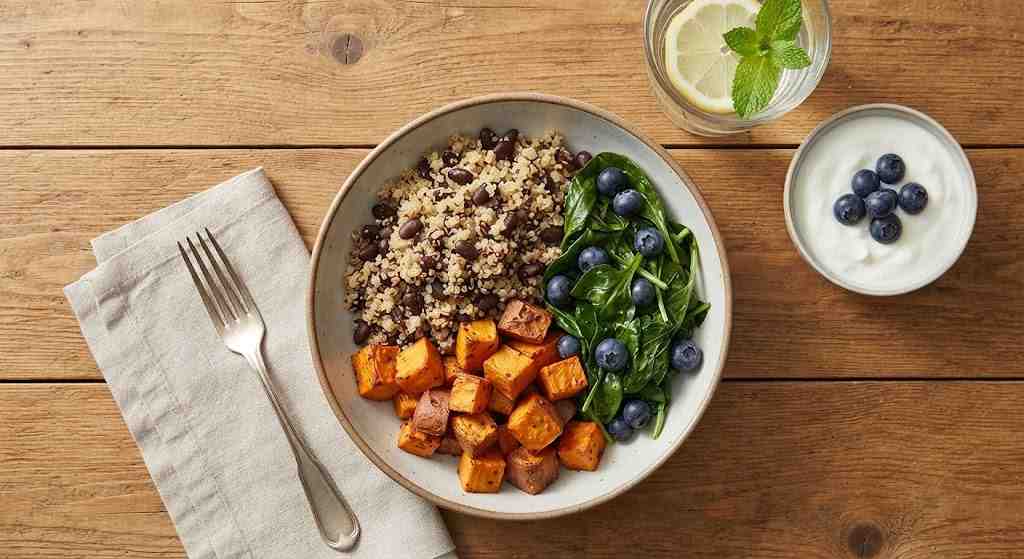
In small studies, people who ate vegetables and protein before carbohydrates had lower glucose after the meal than when they ate carbs first. The studies are small, so this ranks A, not S. It costs nothing and does not require giving up any food.
B tier: vinegar before meals
Small studies suggest taking vinegar before a carbohydrate-rich meal can modestly lower the after-meal glucose rise. The effect is small. If you try it, dilute it in water rather than drinking it straight, rinse your mouth afterwards to protect tooth enamel, and tell your doctor first if you take insulin or water pills, as vinegar may interact.
C tier: cinnamon
Some studies show a small fall in fasting glucose, but larger reviews have not found strong, consistent proof. The common cassia type also contains coumarin, which can stress the liver in large amounts. Cinnamon is fine as flavouring, but do not rely on it to manage blood sugar.
D tier: blend supplements and berberine
Ingredients such as gymnema, chromium and berberine have some small, short trials, but quality varies and the evidence is limited. Some can lower glucose too far when combined with diabetes medicine, and licorice root can raise blood pressure. Supplements are not medicines and are not intended to diagnose, treat, cure or prevent any disease. Talk to your doctor or pharmacist first, and look for products with third-party testing.
Test, don't guess
People respond differently, so the most reliable way to judge any hack is to check your glucose before a meal and again two hours later. A glucose meter or an over-the-counter CGM can show your own pattern, a walking pad makes daily walks easier, and a food scale helps with portions. Ask your doctor which monitor suits you. [affiliate links]
When to see a doctor
Speak to your doctor if your fasting readings stay at 126 mg/dL or higher, if you have frequent lows, or before making changes if you take diabetes medicine.
FAQ
Does cinnamon lower blood sugar? Evidence is mixed. Any effect is small, and it should not replace medical care.
Is apple cider vinegar safe for diabetes? Diluted and in small amounts it is generally tolerated, but it can irritate the throat and teeth and may interact with some medicines, so ask your doctor.
What is the best natural way to lower blood sugar? Regular activity, especially a short walk after meals, has the strongest support, alongside balanced meals and good sleep.
Sources to cite (link the exact pages)
ADA Standards of Care: Physical activity and nutrition
NIH National Center for Complementary and Integrative Health: dietary supplements and blood sugar
Cochrane reviews on cinnamon and diabetes
Peer-reviewed studies on vinegar and post-meal glucose [link the exact studies]
Medical disclaimer: This article is for general education only and is not medical advice. It does not replace your doctor, diabetes educator, dietitian or pharmacist. Never start, stop or change medication or insulin, or add a supplement, without professional advice. If you think you are having a medical emergency, call your local emergency number.
Affiliate disclosure: Some links on this page may be affiliate links. If you buy through them we may earn a commission at no extra cost to you. Our recommendations do not depend on commissions.Start writing your guide…