Hormones are chemical messengers that regulate virtually every biological process in the female body — from metabolism and mood to sleep, skin, fertility, and energy levels. When even one hormone shifts out of its optimal range, the downstream effects can touch multiple body systems simultaneously — producing symptoms that feel unrelated but trace back to the same root cause. Hormonal imbalance in women is remarkably common across all life stages, and yet it is frequently dismissed, misattributed to stress or aging, or identified only after years of symptoms.
Here's a plain-English guide to the most common hormonal imbalances women experience, the signs to recognize, and the natural lifestyle strategies with the most evidence for supporting hormonal health.
Quick TakeawayThe most commonly imbalanced hormones in women are estrogen, progesterone, cortisol, thyroid hormones, and insulin. These systems interact with each other — chronic stress elevates cortisol, which disrupts estrogen and progesterone balance; insulin resistance affects androgen levels; thyroid dysfunction affects virtually everything. Addressing root causes (sleep, stress, diet, exercise) produces more durable results than targeting individual hormones in isolation.
Common Signs of Hormonal Imbalance in Women
Hormonal imbalances produce different symptom patterns depending on which hormones are affected. These are among the most common presentations:
Persistent fatigue — particularly fatigue that is unresolved by adequate sleep, often associated with thyroid or adrenal imbalance
Weight gain or difficulty losing weight — especially around the abdomen, associated with cortisol excess, insulin resistance, or low thyroid
Irregular or heavy periods — estrogen and progesterone imbalance, common in perimenopause, PCOS, or high stress
Mood changes — anxiety, irritability, depression, or emotional sensitivity, often related to estrogen/progesterone fluctuations
Sleep disturbances — difficulty falling or staying asleep, associated with low progesterone or elevated cortisol
Skin changes — adult acne (particularly on the chin and jaw — a hormonal pattern), dry skin, or oily skin, linked to androgen and estrogen balance
Hair thinning or excessive hair growth — thyroid imbalance or androgen excess (as in PCOS)
Digestive issues — bloating, constipation, or IBS-like symptoms that worsen cyclically with the menstrual cycle
Brain fog — difficulty concentrating or remembering, associated with thyroid, estrogen, or cortisol dysregulation
Low libido — common with low testosterone (yes, women produce testosterone), low estrogen, or high cortisol
The Most Common Hormonal Imbalances in Women
Estrogen Dominance
Estrogen dominance — where estrogen is high relative to progesterone, rather than necessarily elevated in absolute terms — is one of the most common hormonal patterns in American women. It is associated with heavy, painful periods, PMS, bloating, breast tenderness, mood swings, and weight gain. Contributing factors include chronic stress (which suppresses progesterone), environmental estrogen-mimicking chemicals (xenoestrogens from plastics and pesticides), poor liver function (the liver clears excess estrogen), and low fiber intake (fiber helps excrete estrogen through digestion).
Low Thyroid (Hypothyroidism)
Thyroid hormone deficiency is estimated to affect 20 million Americans — with women being 5–8 times more likely to develop thyroid conditions than men. Hypothyroidism produces fatigue, weight gain, cold intolerance, constipation, brain fog, dry skin, hair loss, and depression — a symptom cluster that is frequently attributed to stress or aging before thyroid testing is performed. Hashimoto's thyroiditis (autoimmune hypothyroidism) is the most common cause in the US.
PCOS and Androgen Excess
Polycystic ovary syndrome (PCOS) affects approximately 1 in 10 women of reproductive age in the US and is characterized by elevated androgens (testosterone-like hormones), irregular periods, and often insulin resistance. Symptoms include acne, excess facial or body hair, hair thinning on the scalp, irregular cycles, and difficulty conceiving. PCOS has a strong dietary and lifestyle component — insulin resistance is a central driver, and dietary approaches that improve insulin sensitivity (lower-carbohydrate, higher-protein eating patterns) often significantly improve symptoms.
Perimenopause Hormonal Shifts
Perimenopause — the transition period before menopause, typically beginning in the early-to-mid 40s — involves fluctuating and eventually declining estrogen and progesterone levels that can produce irregular periods, hot flashes, sleep disruption, mood changes, vaginal dryness, and accelerated bone loss. This transition can last 4–10 years and is associated with significant quality of life impact for many women.
Natural Lifestyle Strategies for Hormonal Balance
Prioritize Sleep — Hormones Are Built During Sleep
Growth hormone, melatonin, and cortisol all follow circadian rhythms that are disrupted by inadequate sleep. Cortisol — when chronically elevated by poor sleep — directly suppresses progesterone production and impairs thyroid function. Seven to nine hours of consistent, quality sleep is the foundational intervention for hormonal health — before supplements, before dietary changes, before anything else.
Eat Enough Healthy Fat
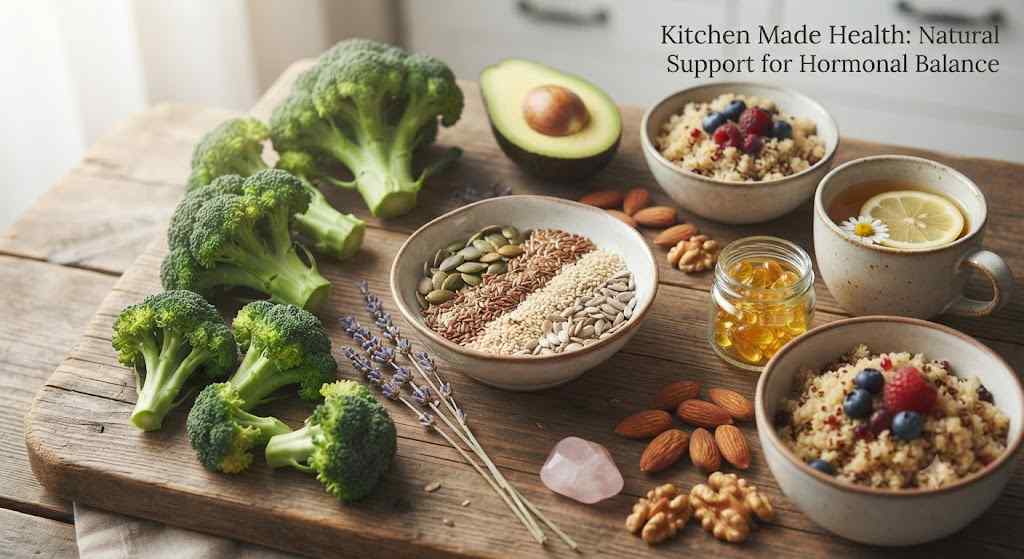
Steroid hormones — including estrogen, progesterone, testosterone, and cortisol — are all synthesized from cholesterol. Diets chronically low in fat (particularly the ultra-low-fat diets popular in the 1990s) have been associated with disrupted menstrual cycles and hormone production. Healthy fat sources — avocado, olive oil, nuts, seeds, fatty fish, eggs — provide the raw materials for hormone synthesis. Many women who experience hormonal symptoms are significantly undereating fat.
Support Estrogen Clearance Through Diet
The liver processes and clears excess estrogen — a function that requires adequate B vitamins, antioxidants, and cruciferous vegetables. Broccoli, Brussels sprouts, cauliflower, and cabbage contain compounds (indole-3-carbinol and DIM) that support healthy estrogen metabolism and clearance. Adequate fiber (25–30g daily) ensures cleared estrogen exits through the digestive tract rather than being reabsorbed. These dietary approaches are particularly relevant for estrogen dominance patterns.
Manage Blood Sugar for Androgen Balance
Insulin spikes stimulate the ovaries to produce more androgens — a primary mechanism in PCOS. Keeping blood sugar stable through a lower-glycemic, higher-protein diet, regular meals, and avoiding refined sugars is one of the most evidence-backed dietary interventions for androgen excess and PCOS symptom management.
Reduce Chronic Stress
Chronic cortisol elevation from sustained stress steals the precursor molecules needed for sex hormone production — a phenomenon sometimes called "pregnenolone steal." Cortisol and progesterone share a precursor (pregnenolone), and when the body is under sustained stress, it prioritizes cortisol production at the expense of progesterone. This is a primary driver of the low progesterone/estrogen dominance pattern. Stress management is hormonal medicine.
Frequently Asked Questions
How do I know if my hormones are actually imbalanced?
Symptom patterns are suggestive but not diagnostic — the only reliable way to assess hormonal status is through blood testing. A comprehensive hormonal panel may include thyroid function (TSH, free T3, free T4, thyroid antibodies), sex hormones (estradiol, progesterone, testosterone, DHEA-S, FSH, LH), and metabolic markers (fasting insulin, glucose, HbA1c). Timing matters for sex hormone testing — progesterone and estrogen should ideally be tested on specific days of the menstrual cycle. Request testing through your gynecologist, primary care provider, or an integrative/functional medicine practitioner.
Do seed cycling and other natural hormone-balancing protocols work?
Seed cycling — eating specific seeds at different phases of the menstrual cycle to support estrogen and progesterone — is widely discussed in natural health communities. Flaxseeds and pumpkin seeds in the follicular phase, sesame and sunflower seeds in the luteal phase. The theoretical basis involves lignans and zinc content of these seeds. Clinical research on seed cycling specifically is limited. However, these seeds provide genuine nutritional value (omega-3s, zinc, magnesium, fiber) that supports hormonal health through general nutritional pathways — making seed cycling a low-risk practice with reasonable nutritional rationale even without strong clinical evidence specifically for its cyclical protocol.
Medical Disclaimer: This article is for informational and educational purposes only. Hormonal imbalances require diagnosis and treatment by a qualified healthcare provider. Do not self-diagnose or self-treat hormonal conditions. Always consult your gynecologist, endocrinologist, or primary care provider for evaluation and personalized treatment recommendations.