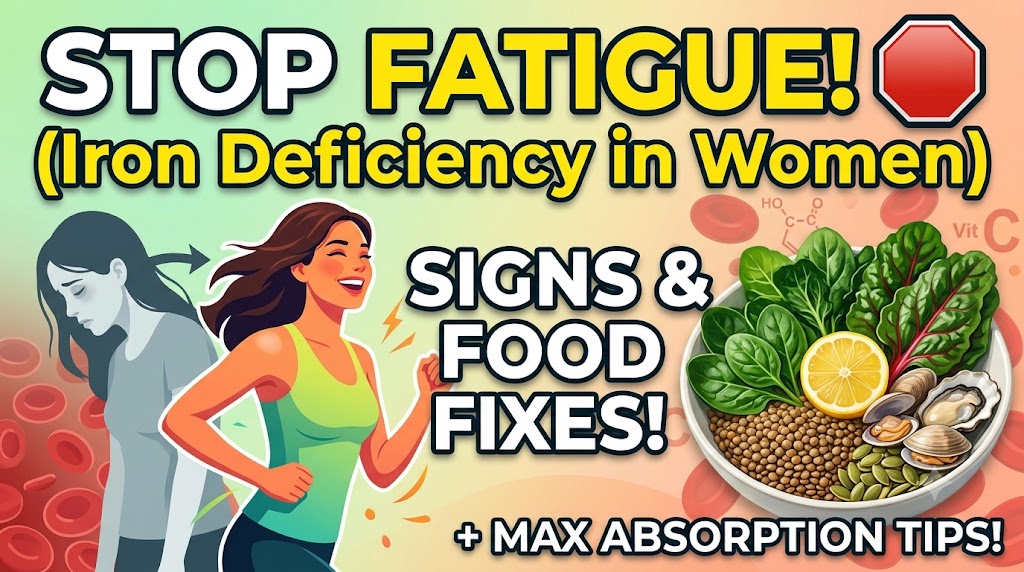
Iron deficiency in women is the most common nutritional deficiency worldwide and disproportionately affects women of reproductive age. The reason is straightforward: menstruation creates monthly iron losses that most women's diets don't fully replace — particularly in women with heavy periods, low meat intake, or high physical activity. Yet despite its prevalence, iron deficiency frequently goes unrecognized for years because its symptoms — fatigue, brain fog, shortness of breath, cold intolerance — are easy to attribute to busy modern life rather than a correctable nutritional problem.
Quick TakeawayWomen aged 19–50 need 18 mg of iron daily — more than double the 8 mg recommended for men of the same age. This higher requirement, combined with monthly menstrual losses, makes iron deficiency in women structurally common rather than exceptional. The most impactful dietary strategy is combining iron-rich foods with vitamin C in the same meal to maximize absorption.
Why Women Are at Higher Risk
Several factors make iron deficiency in women significantly more common than in men. Monthly menstrual losses remove 30–80ml of blood per cycle in most women — and in women with heavy periods (menorrhagia), losses can be 2–3 times higher. Pregnancy dramatically increases iron requirements (27mg daily during pregnancy) while simultaneously expanding blood volume. Vegetarian and vegan women — a growing demographic — have no heme iron in their diet, requiring nearly double the dietary iron of meat-eating women for the same absorbed amount. Female athletes have additional iron losses through foot-strike hemolysis (red blood cell breakdown during impact exercise), sweat losses, and increased iron turnover for oxygen transport.
Signs of Iron Deficiency in Women
Persistent, unexplained fatigue — the most universal symptom; fatigue that sleep doesn't resolve and that worsens with physical activity
Breathlessness during activity — climbing stairs or light exercise producing disproportionate breathlessness
Brain fog and difficulty concentrating — iron is essential for dopamine synthesis and oxygen delivery to the brain
Cold hands and feet — reduced red blood cell count impairs circulation to extremities
Pale inner eyelids, gums, or nail beds — pallor visible in the mucous membranes reflects low hemoglobin
Brittle nails or spoon-shaped nails (koilonychia) — a classic physical sign
Hair thinning — discussed in the previous article; ferritin below 30–40 ng/mL impairs hair follicle function
Restless leg syndrome — involuntary urge to move the legs at night is strongly associated with iron deficiency
Pica — craving and eating non-food substances (ice, clay, dirt) is a classic iron deficiency symptom; ice craving (pagophagia) is particularly common
Frequent headaches — from reduced oxygen delivery to the brain
Stages of Iron Deficiency
Iron deficiency progresses through stages before reaching anemia. First, iron stores (measured by ferritin) become depleted without any symptoms or blood count changes. Second, iron-deficient erythropoiesis occurs — red blood cell production becomes impaired but hemoglobin remains normal. Finally, iron-deficiency anemia develops — hemoglobin drops below normal and symptoms become pronounced. Many women are told their blood count is "normal" when they are actually in stage one or two — with depleted stores that produce real symptoms but haven't yet produced anemia. Request a serum ferritin test for the most sensitive assessment of iron stores.
Best Foods to Fix Iron Deficiency in Women
Red Meat — Most Bioavailable Heme Iron
Beef provides 2–3mg of highly bioavailable heme iron per 3-ounce serving. Women who eat red meat 2–3 times per week alongside other iron sources can typically meet their 18mg daily requirement. Lean cuts (sirloin, round, extra-lean ground beef) provide the iron benefit while minimizing saturated fat intake.
Shellfish — Highest Iron Density Available
Clams (24mg per 3oz serving), oysters (8mg), and mussels (6mg) are the most iron-dense foods available, providing multiple times the daily requirement in a single serving. Even canned clams added to pasta or chowder provide extraordinary iron density.
Lentils and Legumes — Best Plant Sources
A cup of cooked lentils provides 6.6mg of non-heme iron alongside fiber and protein. Always pair with vitamin C — a squeeze of lemon juice in lentil soup, or a side of roasted bell peppers — to maximize absorption of the non-heme iron.
Dark Leafy Greens
Cooked spinach (3.7mg per cup), Swiss chard, and kale all provide meaningful non-heme iron. Cooking increases bioavailability by breaking down oxalates that inhibit absorption in raw greens. Sauté with lemon juice for a simple vitamin-C-enhanced iron meal.
Pumpkin Seeds
An ounce of pumpkin seeds provides 2.5mg of iron alongside zinc and magnesium — making them one of the most micronutrient-dense snacks available for women with iron deficiency.
Frequently Asked Questions
What ferritin level is optimal for women?
Standard laboratory reference ranges consider ferritin as low as 12–15 ng/mL as "normal" — but research on hair loss, fatigue, and restless leg syndrome suggests that symptoms improve most reliably when ferritin is above 50–70 ng/mL, and some practitioners target above 100 ng/mL for women with significant symptoms. If your ferritin is "within range" but you have symptoms consistent with iron deficiency, discuss with your doctor whether a higher ferritin target is appropriate for you specifically.
Can I take iron supplements without a doctor's guidance?
Iron supplementation without confirmed deficiency is not recommended. Iron overload is a genuine risk — particularly for postmenopausal women and men — and excess iron is pro-oxidant and associated with increased cardiovascular and liver disease risk. Always confirm iron deficiency through blood testing before supplementing. If deficiency is confirmed, iron supplements are most effective taken on an empty stomach with vitamin C, on alternate days (alternate-day dosing has been found to improve absorption and reduce side effects compared to daily dosing). Common side effects include constipation and nausea — taking with a small amount of food reduces these at some cost to absorption.
Medical Disclaimer: This article is for informational and educational purposes only. Iron deficiency requires medical diagnosis through blood testing. Do not self-supplement iron without confirmed deficiency. Always consult a healthcare provider for diagnosis and treatment of iron deficiency or iron-deficiency anemia.