Fat loss requires one thing: consuming fewer calories than your body expends over time. This is not debated in nutrition science. What is debated — and what the evidence clearly supports — is that precise calorie counting is not the only way to achieve this deficit. It's one method, and for many people it's not the best method: research has found that rigid calorie counting increases food preoccupation, dietary anxiety, and the likelihood of binge-restrict cycles. For people who have tried calorie counting and abandoned it, or who know they won't sustain it, these behavioral and dietary strategies achieve the same calorie deficit through a different route.
Quick TakeawayThe most effective strategies for creating a calorie deficit without counting rely on four principles: choosing high-satiety foods that fill you up on fewer calories (protein and fiber), reducing energy density (more volume per calorie), changing eating behaviors that drive overconsumption (eating speed, distraction, environment), and eliminating the highest-calorie, lowest-satiety items from the diet (liquid calories, ultra-processed snacks).
Strategy 1 — Prioritize Protein at Every Meal
Protein is the most satiating macronutrient — it reduces hunger hormones (ghrelin) and increases satiety hormones (GLP-1, PYY, CCK) more powerfully than carbohydrates or fat at equivalent calories. Research has found that increasing protein to 25–30% of total calories reduces daily calorie intake by 441 calories on average — without any deliberate restriction. Simply ensuring a substantial protein source at every meal and snack naturally reduces total daily intake through superior hunger control.
Practical target: Include at least one palm-sized serving of protein at every meal — eggs, chicken, fish, Greek yogurt, cottage cheese, legumes, or lean beef. When you're full of protein, you eat less of everything else.
Strategy 2 — Eat High Volume, Low Calorie Foods First
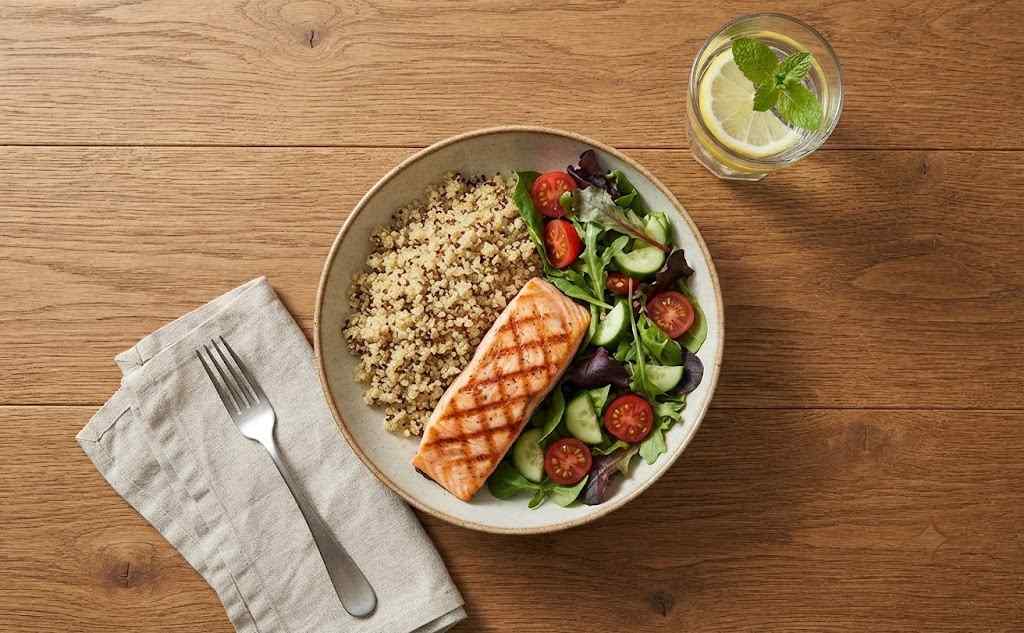
Volume eating — prioritizing foods with high water and fiber content that create physical stomach volume without dense calories — is one of the most evidence-backed non-counting strategies for calorie reduction. Non-starchy vegetables (cucumber, lettuce, zucchini, broccoli, celery, peppers) contain 15–30 calories per cup while providing significant physical volume that activates stretch receptors in the stomach and generates early satiety signals. Eating a large vegetable course before the calorie-dense portion of a meal consistently reduces total calorie intake at that meal.
Practical target: Start every main meal with a large salad or vegetable soup before serving the protein and starch. Research has found this reduces total meal calorie intake by 100–200 calories without the reduction feeling like restriction.
Strategy 3 — Eliminate Liquid Calories
Liquid calories are the single easiest and most impactful category to remove for a natural calorie deficit. The average American consumes 350–400 calories per day from beverages — sodas, juices, sweetened coffees, sports drinks, and alcohol. Critically, liquid calories produce minimal satiety response — the stomach doesn't register them the same way solid food is registered, so they add to rather than replace food intake. Replacing caloric beverages with water, plain sparkling water, black coffee, or unsweetened tea creates a 350–400 calorie daily deficit — equivalent to a moderate weight loss diet — from a single change.
Practical target: Make water and unsweetened beverages the default. If giving up sweetened coffee entirely feels too abrupt, reduce sweetener by half each week rather than eliminating immediately.
Strategy 4 — Choose Foods That Require Chewing
The texture and physical structure of food significantly affects satiety signaling. Foods that require prolonged chewing — whole fruits versus juice, whole nuts versus nut butter, whole grain bread versus liquid smoothies — produce stronger satiety signals per calorie because the act of chewing itself initiates cephalic phase satiety responses. Research has found that the same number of calories in solid form produces greater satiety than in liquid or processed form — meaning a calorie from an apple is more filling than a calorie from apple juice, even though both are "natural."
Practical target: Choose the least-processed version of any food: whole fruit over juice, whole nuts over nut butter where reasonable, intact grains over flour-based products. The more a food requires chewing, the more satiating it is per calorie.
Strategy 5 — Swap Ultra-Processed Snacks for Whole Food Alternatives
Ultra-processed snack foods — chips, crackers, cookies, candy, packaged granola bars — are engineered to override satiety signals and encourage overconsumption. They are calorie-dense, low in fiber and protein, and processed to a texture that requires minimal chewing and digestion. Replacing them with whole food snacks provides comparable satisfaction at significantly lower calorie cost: an apple with almond butter (approximately 200 calories, high satiety) versus a bag of chips (approximately 300–400 calories, low satiety).
Practical target: Replace one ultra-processed snack per day with a whole food alternative. An apple, a hard-boiled egg, a handful of nuts and a piece of fruit, or cucumber slices with hummus all provide superior satiety per calorie compared to packaged snack foods.
Strategy 6 — Eat Slowly and Without Screens
Eating speed is directly related to calorie intake — research finds that fast eaters consistently consume significantly more calories than slow eaters at the same meal. The 20-minute delay in satiety hormone signaling means that slow eaters allow the feedback system to function before they've overeaten. Similarly, distracted eating (while watching television or scrolling a phone) reduces awareness of food intake and consistently results in 10–15% more calories consumed than focused eating.
Practical target: Put the phone face-down and turn off the screen during meals. Aim for at least 20 minutes per main meal. Put your fork down between bites. These single changes reduce calorie intake at meals without touching what you eat.
Strategy 7 — Shrink Your Plates and Bowls
The Delboeuf optical illusion means the same food portion looks like less on a large plate and more on a small plate. Research has found that reducing plate diameter by 2 inches reduces self-served portions by approximately 22% without participants noticing or feeling deprived. This environmental redesign requires no willpower — it works by changing the visual cues that determine "enough" before the food is even tasted.
Frequently Asked Questions
How do I know if I'm in a calorie deficit without tracking?
The most reliable signal is consistent, gradual weight loss over time — 0.5 to 1 pound per week indicates a moderate deficit of 250–500 calories daily. If weight is stable over 3–4 weeks of implementing these strategies, add one more (typically reducing one additional liquid calorie source or adding one more vegetable volume serving). If weight is dropping faster than 1.5 pounds per week, you may be in too aggressive a deficit — increase protein and vegetable volume to restore satiety without abandoning the strategies. Weekly weigh-ins (same day, same time, same conditions) are more informative than daily weigh-ins, which fluctuate with water retention.
Is it possible to lose weight without any form of tracking or measuring?
Yes — population studies of cultures with low obesity rates historically show no calorie counting, and research on intuitive eating programs finds that participants can achieve and maintain healthy body weight through attuned eating without tracking. The key distinction is that these populations and programs develop strong internal hunger and satiety awareness — something that's partly natural and partly trainable. The strategies in this article accelerate the development of this awareness by choosing foods that make satiety signals clearer (protein, fiber, volume) and removing behaviors that suppress them (screens, speed, ultra-processed foods). Most people who implement all seven strategies simultaneously find their intake naturally reduces to a healthy level within 3–4 weeks.
Medical Disclaimer: This article is for informational and educational purposes only and does not constitute medical or nutritional advice for weight management. Consult a qualified healthcare provider or registered dietitian before beginning any weight loss program.