Breakfast has an outsized influence on your blood sugar levels throughout the entire day. Research suggests that a blood sugar spike in the morning can trigger a cascade of energy fluctuations, hunger cycles, and cravings that continue well into the afternoon. For people managing prediabetes, type 2 diabetes, or simply trying to maintain steady energy levels, what you eat — and what you avoid — in the first meal of the day matters enormously.
Here's a practical guide to building a blood-sugar-friendly breakfast, covering both the best choices available at any US grocery store and the common breakfast foods most likely to cause glucose spikes.
Quick TakeawayThe ideal blood-sugar-friendly breakfast combines protein, healthy fat, and fiber — with minimal added sugar and refined carbohydrates. This combination slows digestion, moderates the glucose response, and supports sustained energy for hours.
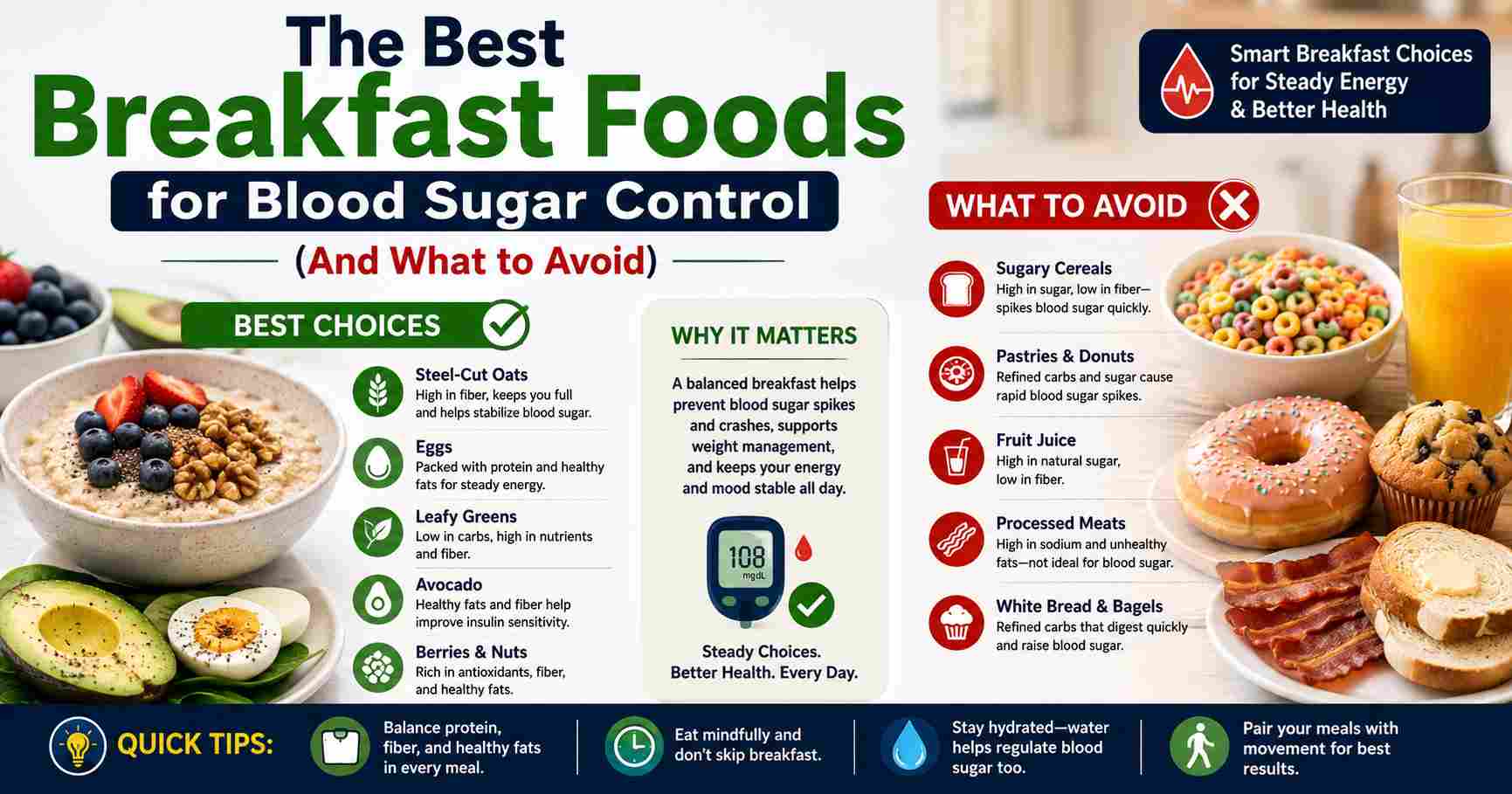
The Best Breakfast Foods for Blood Sugar Control
Eggs
Eggs are one of the most consistently recommended breakfast foods for blood sugar management. They contain virtually no carbohydrates, are rich in high-quality protein and healthy fats, and have been found in research to support better blood sugar control and satiety in the hours following breakfast. A two-egg breakfast sets a strong foundation for a stable morning.
Best preparation: Scrambled, poached, or as an omelet with non-starchy vegetables (spinach, peppers, mushrooms). Avoid pairing with refined white toast or high-sugar condiments.
Plain Greek Yogurt
Full-fat or low-fat plain Greek yogurt (unsweetened) is an excellent blood-sugar-friendly breakfast option. Its high protein content slows digestion and blunts the glucose response, while its low glycemic index (around 11–23) means it has minimal impact on blood sugar on its own. The probiotics it contains may also support insulin sensitivity over time.
Best preparation: Top with a small handful of berries, a tablespoon of chia seeds, and a few walnuts for added fiber, antioxidants, and healthy fats. Avoid flavored or fruit-on-the-bottom varieties, which can contain significant added sugar.
Steel-Cut or Rolled Oats
Not all oatmeal is created equal. Steel-cut and old-fashioned rolled oats have a lower glycemic index than instant or quick-cook oats because they are less processed and digest more slowly. The soluble fiber beta-glucan in oats has been specifically studied for its ability to moderate post-meal blood glucose responses.
Best preparation: Cook with water or unsweetened almond milk. Add protein (a scoop of plain protein powder, Greek yogurt stirred in after cooking, or a side of eggs) and healthy fat (a handful of walnuts or a spoonful of almond butter) to further slow glucose absorption. Top with cinnamon — which has been studied for potential blood sugar-moderating effects — rather than brown sugar or syrup.
Avocado
Avocado is high in monounsaturated fat and fiber, with almost no digestible carbohydrates. Including avocado at breakfast — on a small portion of whole-grain toast, alongside eggs, or blended into a smoothie — adds healthy fat that slows the overall digestion of the meal and reduces the glycemic impact of anything it's paired with.
Nuts and Nut Butters
Almonds, walnuts, and natural nut butters (almond butter, peanut butter without added sugar) are low-glycemic, protein- and fat-rich additions to any breakfast. Research has found that eating a small amount of nuts alongside carbohydrate-containing foods can meaningfully reduce the post-meal blood sugar response.
Best preparation: Spread natural almond butter on a small portion of whole-grain toast, add walnuts to oatmeal, or eat a small handful as part of a balanced breakfast plate.
Berries
Among all fruits, berries are the most blood-sugar-friendly due to their high fiber content and relatively low sugar load. Strawberries, raspberries, blackberries, and blueberries all have glycemic indexes well below 55. They also deliver antioxidants that support overall metabolic health.
Best preparation: Add to plain Greek yogurt, oatmeal, or a smoothie — paired with protein and fat to minimize any glucose impact.
Chia Seeds
Just two tablespoons of chia seeds provide 10 grams of fiber, 5 grams of protein, and healthy omega-3 fats. Their gel-forming soluble fiber slows digestion significantly. Overnight chia pudding made with unsweetened almond milk and topped with berries is one of the most convenient and blood-sugar-friendly breakfast options you can prepare in advance.
Breakfast Foods to Limit or Avoid
Sugary Cereals and Granola
Many popular American breakfast cereals — including those marketed as "whole grain" or "heart healthy" — contain significant amounts of added sugar and refined carbohydrates that spike blood sugar rapidly. Even many granolas are high in added sugars. Check the nutrition label: look for less than 5g of added sugar per serving and at least 3g of fiber.
Flavored Instant Oatmeal Packets
Instant oatmeal is more heavily processed than steel-cut or rolled oats, giving it a higher glycemic index. Flavored varieties add substantial sugar — some packets contain as much as 12–15g of added sugar. Choose plain old-fashioned or steel-cut oats and add your own toppings.
Fruit Juice
Orange juice, apple juice, and other fruit juices remove the fiber from whole fruit and concentrate the natural sugars, leading to rapid blood sugar spikes. A glass of orange juice raises blood glucose significantly faster than eating a whole orange. Whole fruit is always a better choice than juice for blood sugar management.
Pastries, Muffins, and Bagels
White flour–based baked goods — muffins, croissants, bagels, donuts, and pastries — are high in refined carbohydrates and often sugar, causing rapid glucose spikes followed by energy crashes. Even "whole wheat" muffins from coffee shops typically contain substantial amounts of added sugar.
Flavored Coffee Drinks
A large flavored latte or blended coffee drink from a coffee chain can contain 40–60g of sugar — as much as a can of soda. These drinks can cause significant blood sugar spikes even without any food. Black coffee, unsweetened tea, or coffee with a small amount of whole milk are much better choices for blood sugar management.
A Sample Blood-Sugar-Friendly Breakfast
Two scrambled eggs cooked in olive oil with spinach and mushrooms
½ cup plain Greek yogurt on the side, topped with blueberries and a tablespoon of chia seeds
Black coffee or green tea
A small handful of walnuts
This breakfast provides protein, healthy fat, fiber, and antioxidants — with minimal refined carbohydrates — and is designed to support stable blood sugar for 3–4 hours.
Frequently Asked Questions
Is skipping breakfast better for blood sugar control?
This is debated. Some research supports time-restricted eating (including skipping breakfast) for blood sugar regulation in certain individuals. Others find that skipping breakfast leads to larger blood sugar spikes at subsequent meals. There's no universal answer — the best approach depends on your individual response, lifestyle, and any medical conditions. If you have diabetes, discuss meal timing with your healthcare provider before making changes.
Does cinnamon really help with blood sugar?
Several small studies have found that cinnamon supplementation was associated with modest improvements in fasting blood sugar and insulin sensitivity. The evidence is not yet strong enough to recommend cinnamon as a treatment for diabetes, but adding it to oatmeal, yogurt, or coffee as a flavorful spice is a low-risk addition with some potential upside. Ceylon cinnamon is generally preferred over cassia cinnamon for regular use.
Medical Disclaimer: This article is for informational and educational purposes only. It is not intended to diagnose, treat, cure, or prevent diabetes or any other health condition. Always consult your healthcare provider or a registered dietitian before making dietary changes to manage blood sugar, especially if you are on diabetes medication.Start writing your guide…