The human gut contains approximately 38 trillion microorganisms — bacteria, viruses, fungi, and other microbes — that collectively outnumber human cells and encode more genetic information than the human genome itself. This microbial community, called the gut microbiome, is not a passive passenger in the digestive tract. It actively produces neurotransmitters, metabolizes hormones, trains the immune system, communicates with the brain, and influences virtually every aspect of health. For women specifically, the interaction between the gut microbiome and female hormones, brain chemistry, and immune function creates a set of connections that makes gut health particularly central to overall wellbeing.
Quick TakeawayWomen have a distinct gut microbiome composition compared to men — influenced by estrogen, progesterone, and the menstrual cycle. The gut's "estrobolome" (the bacterial genes that metabolize estrogen) plays a direct role in hormonal balance. Poor gut health can contribute to estrogen dominance, PMS, PCOS symptoms, mood disorders, and increased autoimmune disease risk — all of which disproportionately affect women.
The Female Microbiome Is Different From the Male Microbiome
Research has established that women and men have measurably different gut microbiome compositions — and that these differences are driven partly by sex hormones. Estrogen promotes greater microbial diversity, which is associated with better health outcomes. The female gut microbiome also changes measurably across the menstrual cycle, during pregnancy, and through the perimenopause transition — reflecting the dynamic hormonal environment women experience throughout their lives.
Women also have higher rates of several gut-related conditions — including irritable bowel syndrome (IBS), inflammatory bowel disease, and autoimmune conditions affecting the gut — suggesting that the female gut-immune interface operates differently and may be more reactive to microbiome disruption.
The Estrobolome: How Gut Bacteria Regulate Estrogen
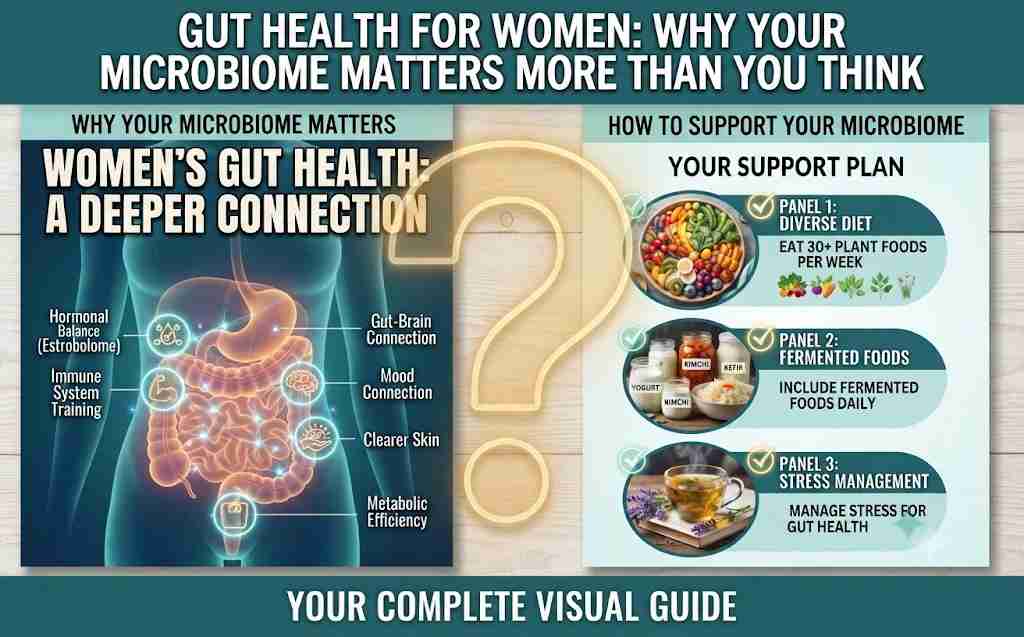
One of the most important — and least-known — connections between women's gut health and hormonal health is the estrobolome: the collection of gut bacterial genes that metabolize estrogen. The liver processes excess estrogen and packages it for excretion through the bile into the digestive tract. In the gut, estrobolome bacteria produce an enzyme called beta-glucuronidase that deconjugates estrogen — essentially unpacking it and allowing it to be reabsorbed into circulation rather than excreted.
When the estrobolome is disrupted by poor diet, antibiotics, or dysbiosis (bacterial imbalance), beta-glucuronidase activity can become dysregulated — either allowing too much estrogen to be reabsorbed (contributing to estrogen dominance, PMS, endometriosis, and certain hormone-sensitive cancers) or too little (contributing to estrogen deficiency symptoms). This mechanism makes gut health a direct participant in women's hormonal regulation — not just a digestive function.
The Gut-Brain Connection and Women's Mood
Approximately 95% of the body's serotonin is produced in the gut by enterochromaffin cells, with gut bacteria playing a key role in stimulating this production. Women are twice as likely as men to experience depression and anxiety — conditions strongly associated with serotonin and other neurotransmitter imbalances. Research has found that women with depression and anxiety show measurably different gut microbiome compositions compared to women without these conditions, and that gut microbiome interventions (including probiotic supplementation and dietary change) can improve mood symptoms in some populations.
The vagus nerve — the primary communication highway between the gut and the brain — transmits signals in both directions. Poor gut health (dysbiosis, inflammation, leaky gut) sends distress signals upward to the brain through this pathway, contributing to anxiety, mood instability, and cognitive symptoms that many women with gut problems recognize as going hand-in-hand with their digestive symptoms.
Gut Health and Women's Skin
The gut-skin axis — the bidirectional relationship between gut microbiome health and skin condition — is well-established in research. Gut dysbiosis promotes systemic inflammation that manifests in the skin as acne, rosacea, eczema, and accelerated aging. Research has found that women with acne have measurably different gut microbiome compositions than women with clear skin, and that probiotic supplementation and dietary improvement of the microbiome produces measurable improvements in skin condition over 8–12 weeks.
The connection is particularly relevant to hormonal acne — the chin and jawline breakouts that many women experience cyclically with their menstrual cycle. Since the estrobolome influences circulating estrogen, and estrogen influences skin oil production and inflammation, gut health directly affects the hormonal dynamics driving this type of acne.
How to Support Gut Health as a Woman
Eat 30 Different Plants per Week
The American Gut Project — one of the largest citizen science microbiome studies ever conducted — found that people who ate 30 or more different plant foods per week had significantly more diverse gut microbiomes than those who ate fewer than 10 plant varieties. Microbiome diversity is the strongest single predictor of gut health and resilience. "Plants" includes vegetables, fruits, whole grains, legumes, nuts, seeds, herbs, and spices — each counts as one. This diversity goal is more achievable than it sounds: adding different herbs to cooking, rotating between different vegetables, and eating a variety of legumes quickly accumulates variety.
Fermented Foods Daily
A 2022 Stanford study found that a high-fermented-food diet significantly increased microbiome diversity and reduced 19 inflammatory markers — more effectively than a high-fiber diet alone. For women, fermented dairy (yogurt, kefir) and fermented vegetables (kimchi, sauerkraut) provide the most practical daily probiotic support. Aim for at least one serving of a live-culture fermented food daily.
Protect Against Unnecessary Antibiotic Use
A single course of antibiotics dramatically reduces gut microbiome diversity, and research shows it can take months to years to fully recover — if recovery to pre-antibiotic baseline occurs at all. Antibiotics are lifesaving when necessary and should always be taken when medically indicated. But requesting antibiotics for viral infections (colds, flu, most sore throats) where they provide no benefit causes unnecessary microbiome damage. When antibiotics are genuinely necessary, taking a Lactobacillus-based probiotic (taken at least 2 hours apart from antibiotic doses to avoid the probiotic bacteria being killed immediately) may help protect microbiome diversity during treatment.
Manage Stress — The Gut Feels It Immediately
Acute and chronic stress measurably alter gut motility, permeability, and microbiome composition within hours. The stress-gut connection is direct: stress hormones change the gut environment, alter which bacteria thrive, and increase intestinal permeability ("leaky gut"). Chronic stress-driven microbiome disruption is a significant contributor to the IBS and functional gut symptoms that disproportionately affect women. The same stress management strategies that benefit mental health — sleep, exercise, mindfulness, social connection — produce parallel benefits for gut health.
Frequently Asked Questions
Should women take probiotic supplements for gut health?
Probiotic supplements can be beneficial for specific purposes but are not a substitute for dietary support of the microbiome. Research supports probiotic supplementation for: restoring microbiome after antibiotic treatment (Lactobacillus strains), reducing IBS symptoms (particularly Bifidobacterium strains), supporting vaginal microbiome health (Lactobacillus rhamnosus and reuteri), and improving mood symptoms in some women (specific strains studied in clinical trials). For general gut health maintenance, dietary fermented foods and fiber diversity are more effective and more sustainable than supplements. When choosing a supplement, look for multiple strains, at least 10 billion CFUs, and enteric coating or refrigeration for maximum viability.
How does the gut microbiome change during perimenopause?
Declining estrogen during perimenopause reduces microbiome diversity — estrogen actively promotes the growth of beneficial Lactobacillus species. The estrobolome also changes, altering estrogen metabolism and circulation patterns. Research has found that perimenopausal women have less diverse gut microbiomes than premenopausal women, and that this diversity loss correlates with worsening metabolic health, bone density loss, and mood symptoms. Prioritizing microbiome-supportive diet — fermented foods, diverse plant fiber, reduced ultra-processed food — during perimenopause may help buffer some of the gut changes associated with hormonal transition.
Medical Disclaimer: This article is for informational and educational purposes only. Gut health concerns including IBS, IBD, and persistent digestive symptoms should be evaluated by a qualified gastroenterologist or healthcare provider. Always consult your doctor before beginning probiotic supplementation if you have immune system conditions or are immunocompromised.