The thyroid gland — a small butterfly-shaped gland at the base of the neck — produces hormones that regulate virtually every cell in the body. Thyroid hormones (T3 and T4) control the rate of metabolism, body temperature, heart rate, digestive function, brain development, bone maintenance, and reproductive hormone balance. When thyroid function is impaired — either underactive (hypothyroidism) or overactive (hyperthyroidism) — the effects ripple through every body system simultaneously.
Women are 5–8 times more likely than men to develop thyroid disorders, with an estimated 20 million Americans affected — and up to 60% unaware of their condition. Understanding the warning signs, the dietary factors that influence thyroid function, and the natural lifestyle strategies that support a healthy thyroid is particularly valuable for women in their 30s, 40s, and beyond.
Quick TakeawayThe thyroid requires iodine and tyrosine to produce hormones, selenium to convert T4 to active T3, and zinc to regulate thyroid hormone signaling. Autoimmune thyroid disease (Hashimoto's hypothyroidism) — the most common cause in the US — also has a significant inflammatory and gut health component that dietary interventions may help address.
Signs of Underactive Thyroid (Hypothyroidism)
Hypothyroidism is by far the more common thyroid condition in women, affecting approximately 1 in 8 women over the course of their lifetime. The most common cause in the US is Hashimoto's thyroiditis — an autoimmune condition where the immune system attacks thyroid tissue. Because thyroid hormone affects every body system, the symptoms of hypothyroidism are wide-ranging and often attributed to aging, stress, or depression before thyroid testing is performed:
Persistent fatigue that sleep doesn't resolve
Unexplained weight gain or difficulty losing weight despite good diet and exercise
Feeling cold when others are comfortable — particularly cold hands and feet
Brain fog, poor concentration, and memory problems
Depression or low mood — thyroid hormone directly affects serotonin production
Constipation — thyroid hormone regulates gut motility
Dry skin, brittle nails, and hair thinning or loss
Slow heart rate and reduced exercise tolerance
Elevated cholesterol — thyroid hormone regulates cholesterol metabolism
Heavy or irregular periods
Puffiness around the eyes, face, or ankles
Signs of Overactive Thyroid (Hyperthyroidism)
Hyperthyroidism — most commonly caused by Graves' disease (autoimmune) or thyroid nodules — produces the opposite picture: the thyroid produces too much hormone, driving everything too fast:
Unexpected weight loss despite normal or increased appetite
Rapid or irregular heartbeat (palpitations)
Feeling excessively warm, sweating heavily
Anxiety, nervousness, irritability, and tremors
Difficulty sleeping despite fatigue
Frequent bowel movements or diarrhea
Muscle weakness — particularly in the thighs and upper arms
Changes in menstrual patterns (lighter, less frequent, or absent periods)
Best Foods for Thyroid Health
Iodine-Rich Foods
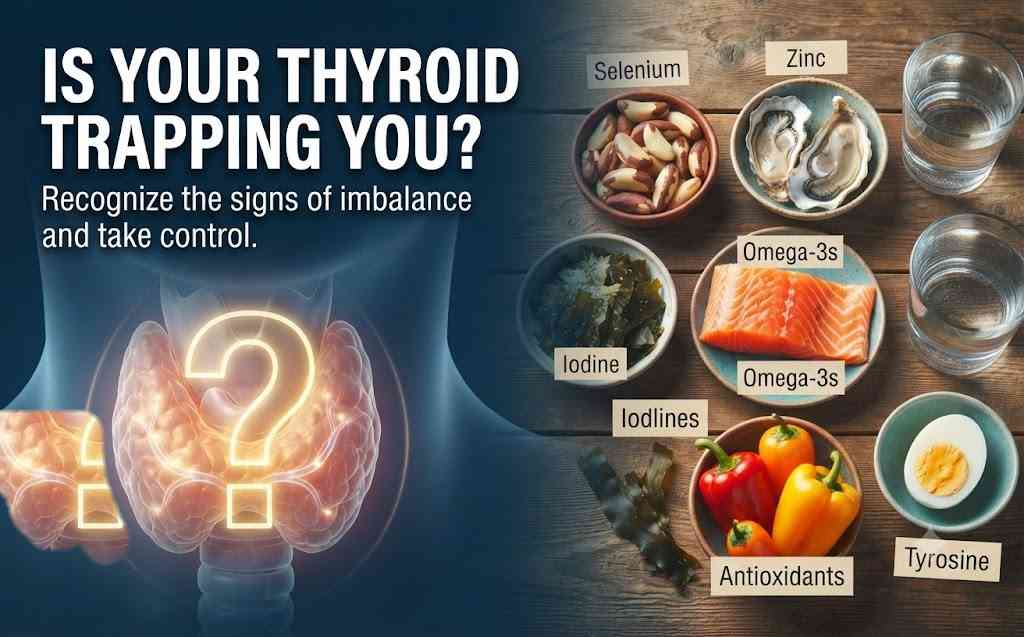
Iodine is the essential mineral the thyroid uses to manufacture T3 and T4 — without adequate iodine, the thyroid cannot produce sufficient hormone. Iodine deficiency was historically the most common cause of hypothyroidism worldwide before iodized salt was introduced. While severe deficiency is now rare in the US, mild insufficiency is more common than recognized — particularly in people who avoid iodized salt, eat little seafood, and don't consume dairy. Best sources: seaweed (kombu, nori, wakame — highest concentration), iodized salt, dairy products (cows concentrate environmental iodine in milk), eggs, and white fish.
Selenium-Rich Foods
Selenium is required for the enzyme that converts inactive T4 into active T3 — the form cells actually use. Selenium deficiency impairs this conversion, producing hypothyroid symptoms even when T4 production is adequate. Brazil nuts are the single richest selenium food source — one Brazil nut provides 96 mcg (174% of the daily value). Other sources: tuna, halibut, sardines, beef, eggs, and sunflower seeds. Research on Hashimoto's thyroiditis has found that selenium supplementation reduces thyroid antibody levels — suggesting benefit beyond just hormone conversion support.
Zinc-Rich Foods
Zinc plays a role in thyroid hormone signaling — specifically in the interaction between T3 and its nuclear receptor. Low zinc is associated with reduced thyroid hormone activity even when hormone levels appear normal. Zinc also supports the immune regulation that is relevant to autoimmune thyroid conditions. Best sources: oysters (highest food source), beef, pumpkin seeds, hemp seeds, and chickpeas.
Anti-Inflammatory Foods for Hashimoto's
Since Hashimoto's is an autoimmune-inflammatory condition, an anti-inflammatory dietary pattern directly addresses its driving mechanism. Prioritize: fatty fish (omega-3s reduce inflammatory cytokines), colorful vegetables (antioxidants reduce oxidative stress that damages thyroid tissue), olive oil, and berries. Research on gluten and Hashimoto's is ongoing and controversial — some women with Hashimoto's report significant symptom improvement on a gluten-free diet, and there is a documented association between celiac disease and autoimmune thyroid conditions. Discuss gluten elimination with your doctor if you suspect a connection.
What to Limit for Thyroid Health
Goitrogens in large raw amounts: Cruciferous vegetables (raw broccoli, raw kale, raw cabbage) contain goitrogens that can interfere with iodine uptake in very large raw amounts — cooking deactivates most goitrogenic compounds. For people with adequate iodine intake and normal thyroid function, cooked cruciferous vegetables pose no concern. For those with existing hypothyroidism, avoiding extremely large amounts of raw cruciferous vegetables is reasonable.
Excessive soy: Soy isoflavones may interfere with thyroid hormone absorption when consumed in large amounts close to thyroid medication. Moderate soy consumption (1–2 servings daily) is generally well-tolerated — but take thyroid medications at least 4 hours away from large soy meals.
Ultra-processed foods: High in inflammatory vegetable oils, refined carbohydrates, and additives that promote gut dysbiosis — all of which may worsen autoimmune thyroid conditions.
Frequently Asked Questions
What thyroid tests should women ask for?
A complete thyroid evaluation should include: TSH (thyroid-stimulating hormone — the primary screening test), free T4 (the main thyroid hormone produced), free T3 (the active form T4 converts to — often not tested but important for understanding conversion efficiency), and thyroid antibodies (TPO antibodies and anti-thyroglobulin antibodies — essential for detecting Hashimoto's, which can be missed without them). Many doctors test TSH only — if your symptoms persist despite a "normal" TSH, ask specifically for free T3 and thyroid antibodies. TSH in the "normal" reference range can still reflect suboptimal thyroid function for some individuals.
Can diet alone treat hypothyroidism?
For most women with clinical hypothyroidism — particularly Hashimoto's thyroiditis — thyroid hormone replacement medication (levothyroxine) is the standard of care and cannot be replaced by diet alone. However, dietary strategies can meaningfully reduce the autoimmune activity driving Hashimoto's (lower antibody levels), optimize thyroid hormone conversion (selenium), improve symptom control, and reduce the dose of medication needed. Think of nutritional support as working alongside medical treatment — not replacing it. Always consult your endocrinologist or primary care provider before making changes to thyroid medication.
Medical Disclaimer: This article is for informational and educational purposes only. Thyroid disorders require medical diagnosis and treatment. Never self-diagnose or self-treat thyroid conditions. Consult an endocrinologist or qualified healthcare provider for thyroid evaluation, diagnosis, and treatment planning. Do not adjust or discontinue thyroid medication without medical supervision.